Unfortunately, for almost two years now, Ukrainian men and women in various parts of the country have needed help. Sometimes, this support is urgent — like when the Russian Federation blew up the Kakhovka HPP dam and hundreds of volunteers from all over the country went to help at once. In other cases, this assistance ensures the preservation of culture and historic memory. Here are just three stories that the House of Europe has helped make happen.
“Volonterska” charitable fund
“Volonterska” is a charitable fund that provides aid to the military and residents of the Kharkiv region and Ukraine on the whole. It was formed around the community of the marketing and communications school “Bahazh” and Arriba! creative agency.
Right before the full-fledged invasion, we were working on the Pop-up Hub project — sort of a wandering delegation of the House of Europe in different cities. On 17 February, we held a grand opening event — with COVID-19 tests, can you still remember them? On the evening of 23 February, we watched French arthouse movies in that building. And on the next day, boxes with medications and other humanitarian cargo replaced all the beautiful books on the shelves.
Some spontaneous aid initiatives emerged almost instantly on 25 February. For instance, district chats were created on Telegram, full of messages like, “An elderly woman resides in this area, she has no food, who lives next to her?” And someone from nearby would just go and help her.
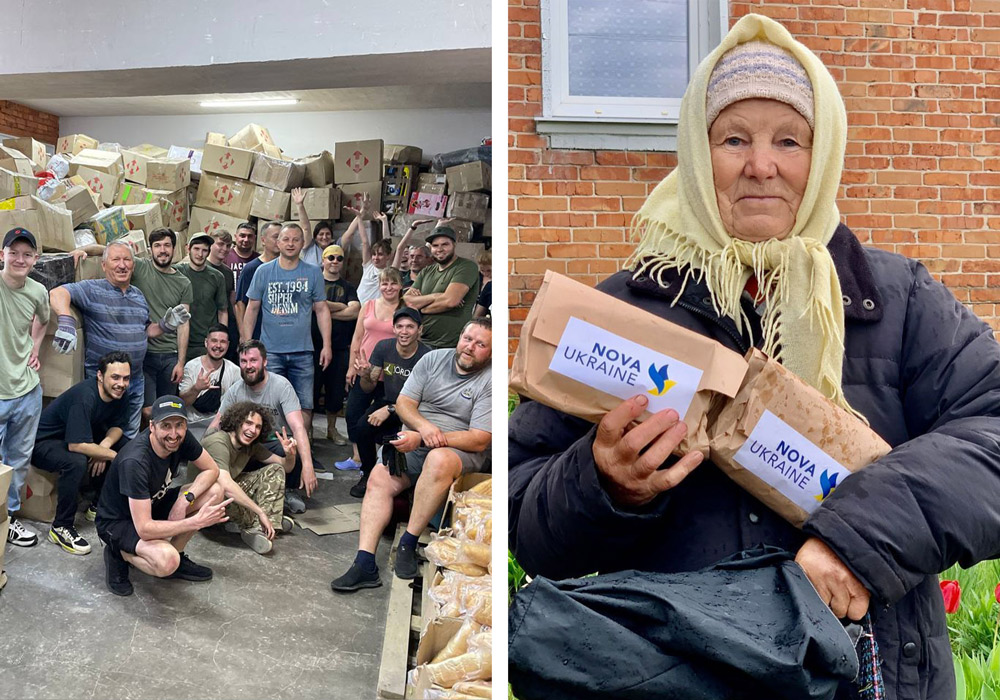
In mid-March, we launched our website and CRM-system to structure everything. We received aid from all over the country, and from Norway, for instance, we got a whole truck with salmon, around 20 tons. It was then that we set off for a real community journey instead of doing some spontaneous actions, and shortly afterwards, it turned into the “Volonterska” charity fund.
The House of Europe suggested redistributing the budget allocated earlier for the Pop-up Hub and a big festival we were about to hold. We spent all the costs on covering the humanitarian needs of the citizens of the Kharkiv region.
Within a short period, we had to get some basic knowledge in medicine to understand better what and who to provide the aid. And in the last half of the year, we have joked about renaming the fund into a construction company, as we do much reconstruction work in the deoccupied territories. We have helped over 100,000 people in total so far.
Naturally, when the tragedy at the Kakhovka Dam happened, we wanted to go and help there immediately. But we deliberately stopped ourselves in the next two days to understand what help was indeed needed. We got in touch with local volunteers and on the third day went to explore the situation ourselves.
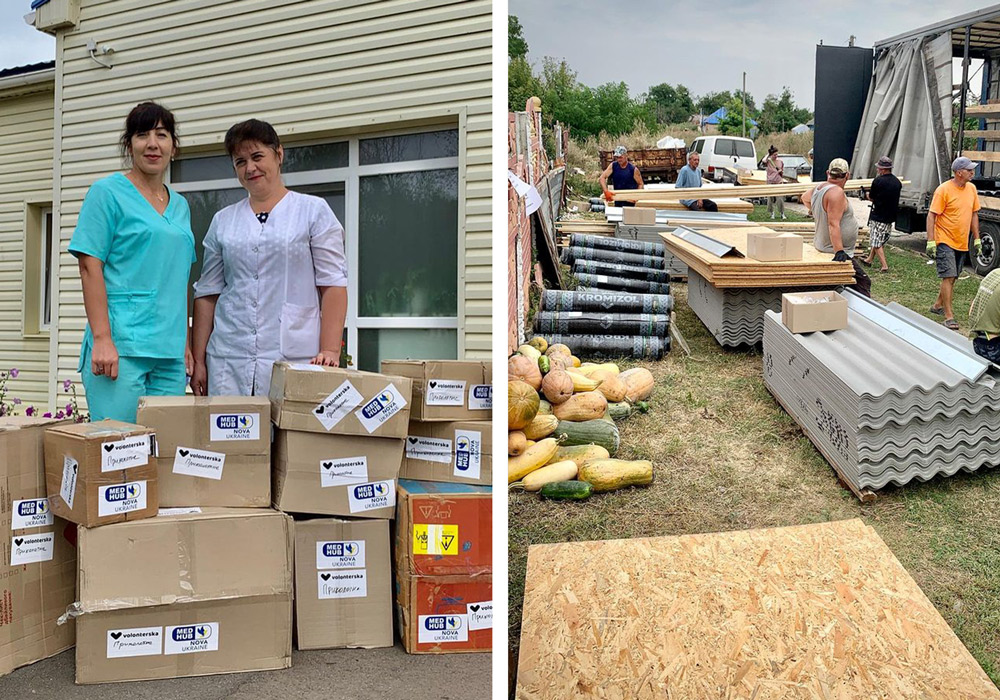
Meanwhile, the House of Europe announced an emergency support grant for the Kherson region. We applied, got the grant, and purchased precisely what the people on-site requested. The lion’s share of the budget was allocated for medical supplies.
At that time, I was in contact with a doctor from the Kherson region who patronised several first-aid centres in the affected villages. He simply couldn’t believe that we would be able to deliver everything. And when we did manage to deliver the cargo, he called me, clarifying, “Is it indeed for us? Can we simply hand it out to people?”
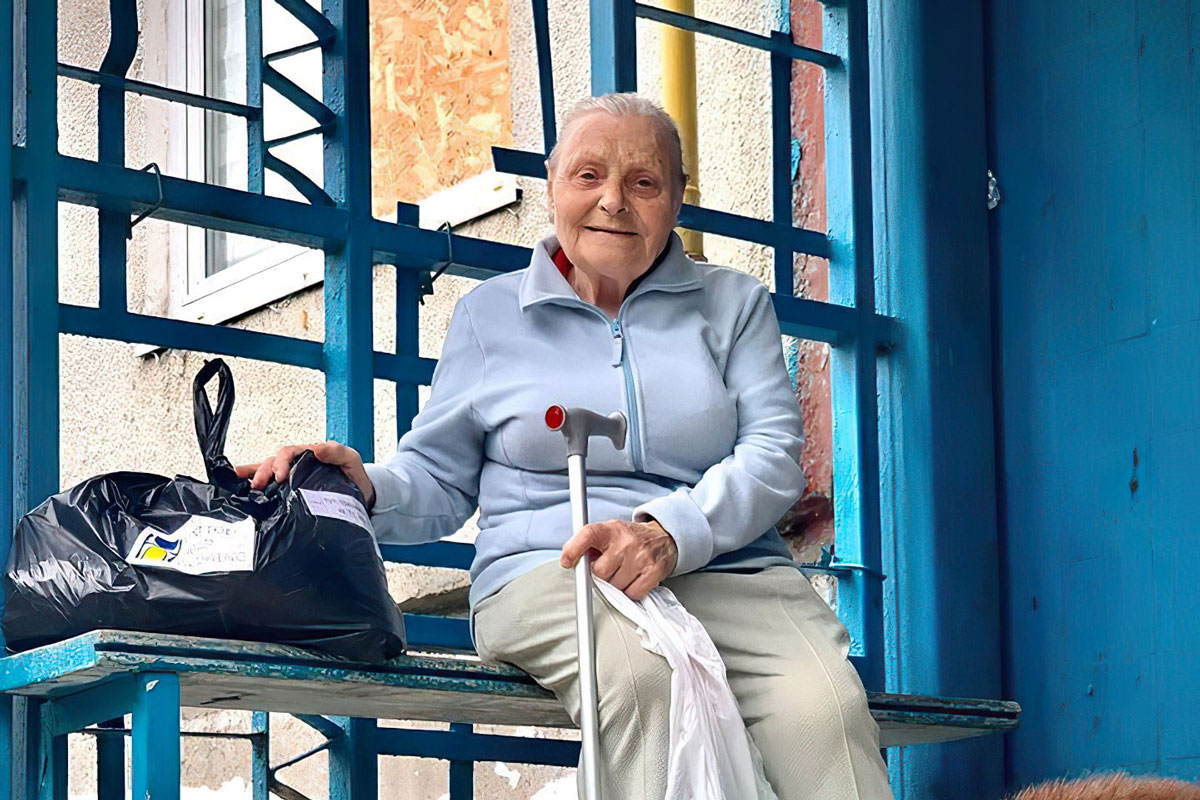
Who we really worry about are the elderly with disabilities or limited mobility. One of their critical needs are nappies and diapers for adults. They are expensive, and the demand is high. I remember bringing a batch of nappies to the Kherson region: People stood near all these boxes, taller than them — shocked, hardly believing it was for them.
We generally care about the elderly. Sometimes, they die, unfortunately. When this happens, we can get some of this person’s stuff that someone else can use. Once, we evacuated an elderly couple from the Kerson region, but the woman died shortly afterwards. And her husband collected all the medication left. He sorted and signed them: “From headache”, “From stomach ache”… He packed everything carefully into a box and sent it to us. We were moved to tears when we got it. At such moments, you realise that your good deeds encourage people to do good too. It’s kind of magic for me.
“Strong Communities”
Our organisation was established in 2015 as a union of activists from the Donetsk and Luhansk regions. Our main goal was to anchor in society the values and principles that emerged during the Revolution of Dignity. To do this, we at “Strong Communities” focused our activities on controlling local authorities, implementing grassroots initiatives, holding public events, and developing the east of Ukraine in general.
Most of the organisation’s members and partners were located on the contact line in cities like Shchastya, Popasna, Svitlovodsk, Toretsk, Avdiivka, and others. Over time, “Strong Communities”, together with other initiatives, even established the coalition “On the Collision Line”. We were deeply immersed in the local context; moreover, it helped globally — we advocated legislation change and participated in developing the Economic Development Strategy for the Donetsk and Luhansk Regions.
But then Russia’s full-scale invasion took place. Previous goals in the development of local democracy became far less urgent. Nevertheless, we instantly came up with an idea of specifically helping the civilians. “Strong Communities” had everything to do that — willingness, contacts, and understanding of the essential needs.
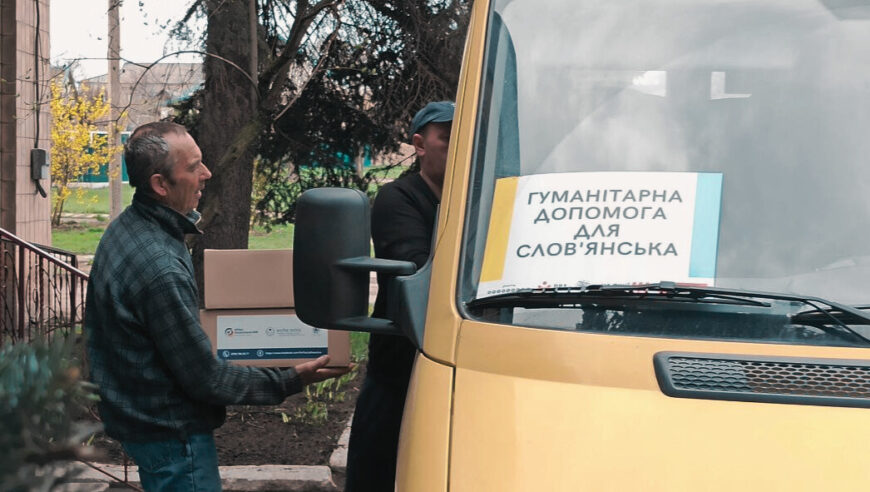
After the outbreak of the full-scale war, our organisation provided the local population with over 10,000 food and hygienic kits. The affected people got food, medications, water filtration systems, potbelly stoves, fuel briquettes, hygiene products, and much more. Kits from “Strong Communities” helped people in Bakhmut, Soledar, Avdiivka, Ocheretne, and other cities in the east of Ukraine.
When the Russians blew up the Kakhovka Dam, it became clear that we could not stay aside — although before, we had operated only within our own region. We immediately contacted the Tiahyn community (Kherson region) that is located right near the Dnipro River and is one of the first ones affected by the horrible attack. They told us about their urgent needs. Once we had created the list, we approached the House of Europe, who swiftly responded to our commitment to help the Kherson region.
With this support, we gathered the cargo — as quickly as possible — and sent the aid to the Tiahyn community. Here and there, the roads were damaged by the war and shoot-through. Still, we soon managed to deliver antifungal agents, disinfection tablets, detergents, sanitisers, antifungal base coating, shampoos, and gloves to the Kherson region.
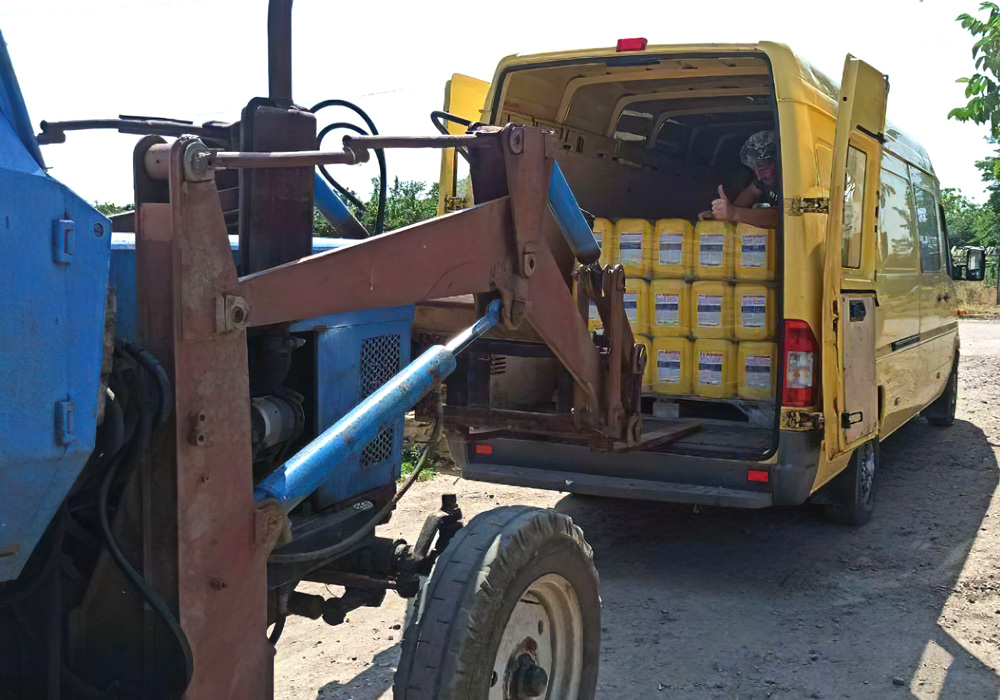
It was precisely the kind of aid the local residents required, as we brought what they needed back then. As a result, people became rescuers for themselves and their homes.
We often saw in people’s eyes that we were more than just an organisation that brought something — for it is always about the support and a true feeling of unity. We saw many tears and got lots of gratitude. Usually, people who react so sincerely and tenderly finish expressing their appreciation with the words “Glory to Ukraine”. Such moments strongly motivate us to continue helping others.
Currently, “Strong Communities” continue delivering aid; herewith, we often transport it to hard-to-reach areas, sometimes not accessed by local authorities and other humanitarian initiatives. However, we are still willing to return to our traditional activities, for which we once gathered together — to develop a civil society and support reforms.
The Territory of Terror Museum
The “Territory of Terror” Museum is located on the site of the former Soviet Prison No. 25 in Lviv. We explore the Nazi and Soviet regimes, and for the past ten years, we have also highlighted Russia’s war against Ukraine.
The museum serves as a place to reflect not only on the past but also on the present and future. “Territory of Terror” vividly illustrates how the evil committed by Russia affects every generation of Ukrainians. The main exhibition focuses on how our grandparents experienced repression, while most of the items we collect now are related to the full-scale invasion. These objects narrate stories of occupation and deoccupation, and military personnel provide us with combat artifacts. There is an exhibition about the terrorist attack in Olenivka, a project called “Wounded Culture,” documenting crimes against Ukrainian culture by occupiers, and an exhibition on encrypted post-war heritage called the “Museum of Ukrainian Victory.”
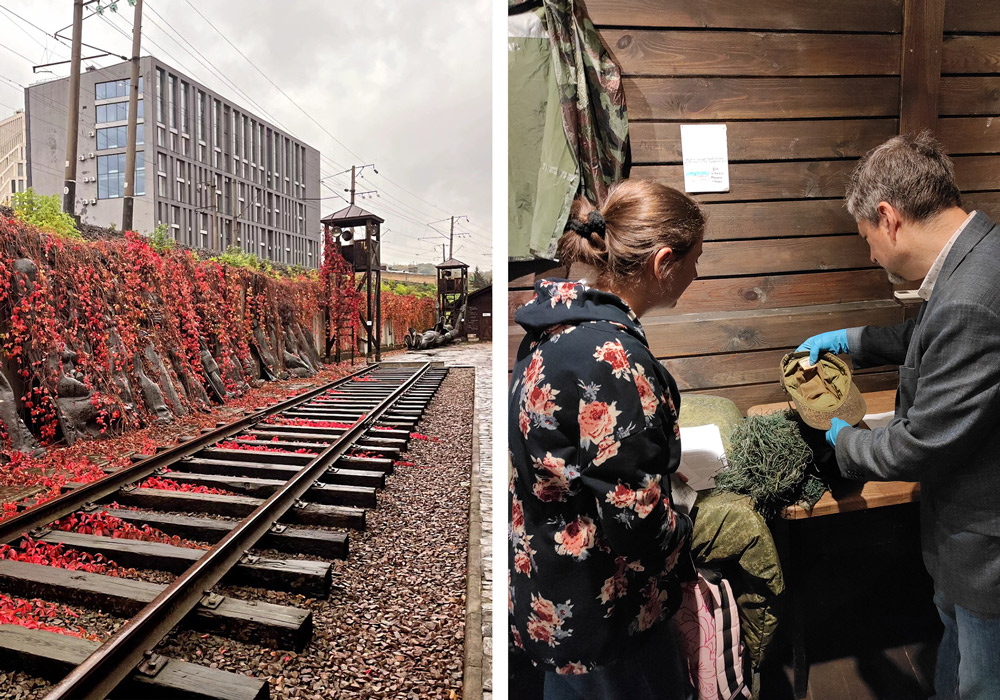
On 24 February 2022, we rang the Luhansk Regional Ethnographic Museum in Starobilsk on the first night, discussing a possible evacuation plan. Early in the morning, my mother from Brovary called and reported shelling. We contacted Starobilsk again, and they confirmed that it had begun. I urged family and colleagues to evacuate. In the end, some managed to leave, but the residents of Luhansk found themselves under occupation.
By 8 a.m., our entire museum was operational. We hid exhibits in shelters and discussed who could accommodate people coming to Lviv. Once the main tasks at the museum were completed, everyone scattered to volunteer: to the train station or warehouses. Simultaneously, several meetings were held with the city and regional leadership to coordinate actions.
This routine continued day by day. On 3 March, the museum began operating as a crisis center. In the same month, we resumed street tours, as many people came to Lviv, and there was an initiative for tours to acquaint people with the city’s culture. We also participated.
However, the museum itself remained closed. Nevertheless, the request to reopen it grew because more and more people pondered why all this had happened. Our museum cannot provide all the answers, but it can demonstrate the gravity of this evil. In September 2022, the “Territory of Terror” resumed its activities. Some parts of the exhibition are still in storage, but all virtual copies can be seen via QR codes.
The first exhibition featured photographs by Vera Blanish, a documentarian who captured images of de-occupied cities. We integrated her photos into the main exhibition because they resonated strongly. The room depicting World War II times, which tells about searches, features photos of looted apartments after the occupation. The section on prisoner of war camps and their writings on the walls includes images from contemporary prisons. You can see how “never again” turns into “again and again,” how unpunished evil returns.
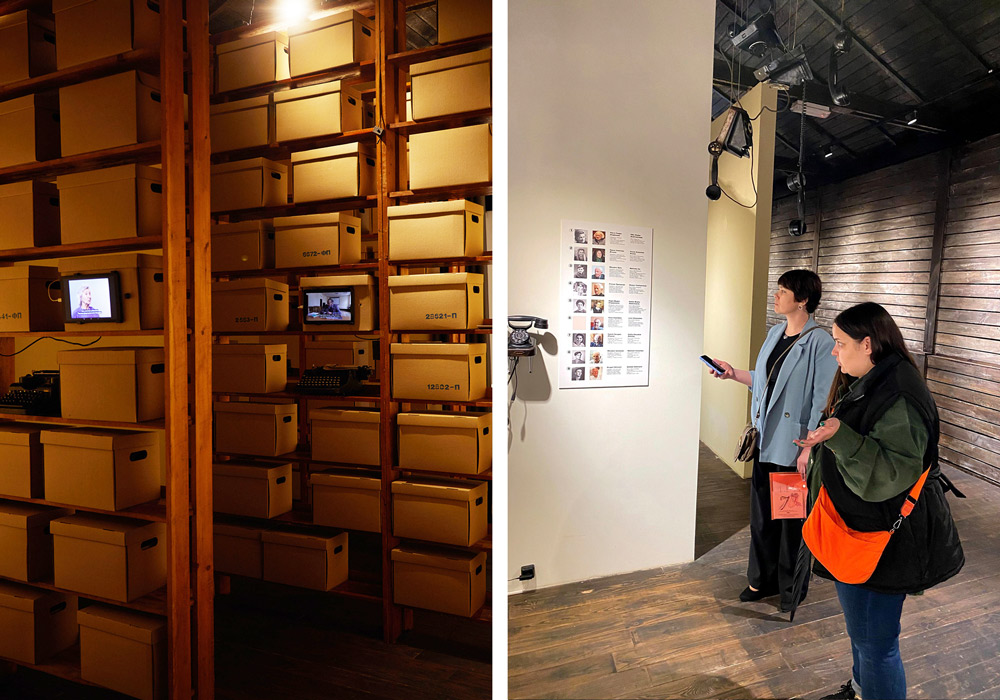
Looking at our feedback book, many thank us for learning about the tragic pages of Ukrainian history that were previously unknown to them. In fact, so many horrifying events occurred in Ukraine that you could almost open your own “Territory of Terror” in almost every city. Unfortunately, there is not much information about this in educational programs or museums.
One of our projects, “Lost Childhood,” is an online platform where you can learn what it’s like to be a child in war, in exile, or behind bars. House of Europe once supported this initiative. During the COVID era, the EU provided us with various equipment: drones, laptops. When the full-scale invasion began, the House of Europe assisted us with a unique anti-crisis grant, allowing us to enhance our safety and operational reliability: we installed surveillance cameras, shutters, purchased chemical protection for the team, underwent training, bought Ecoflow, flashlights, power banks. All this proved useful during blackouts. In reality, these are a series of essential things that cultural institutions need to continue operating.
Overall, even during the full-scale invasion, we grew significantly as an institution. We expanded our contacts and strengthened our infrastructure. We were able to support and provide space for evacuated collections from the Naked Room gallery and the Luhansk Regional Ethnographic Museum. Ukrainian museums are rapidly transforming. In addition to memorial functions, many are now engaged in educational and therapeutic activities. Some institutions even function as Points of Resilience. The task now is not only to preserve what was before us but also to document current events and influence them.
House of Europe is an EU-funded programme fostering professional and creative exchange between Ukrainians and their colleagues in EU countries and the UK. The programme focuses on different professional fields: culture and creative industries, education and youth work, social entrepreneurship, and media. House of Europe is implemented by Goethe-Institut Ukraine.