Horizontal ties are highly developed in Ukraine, with communities traditionally supporting their members. The House of Europe has also decided to help the alumni community members with stipends so they could resume work or work even more efficiently. Read on the three initiatives that have received such support.
Cedars of Ukraine
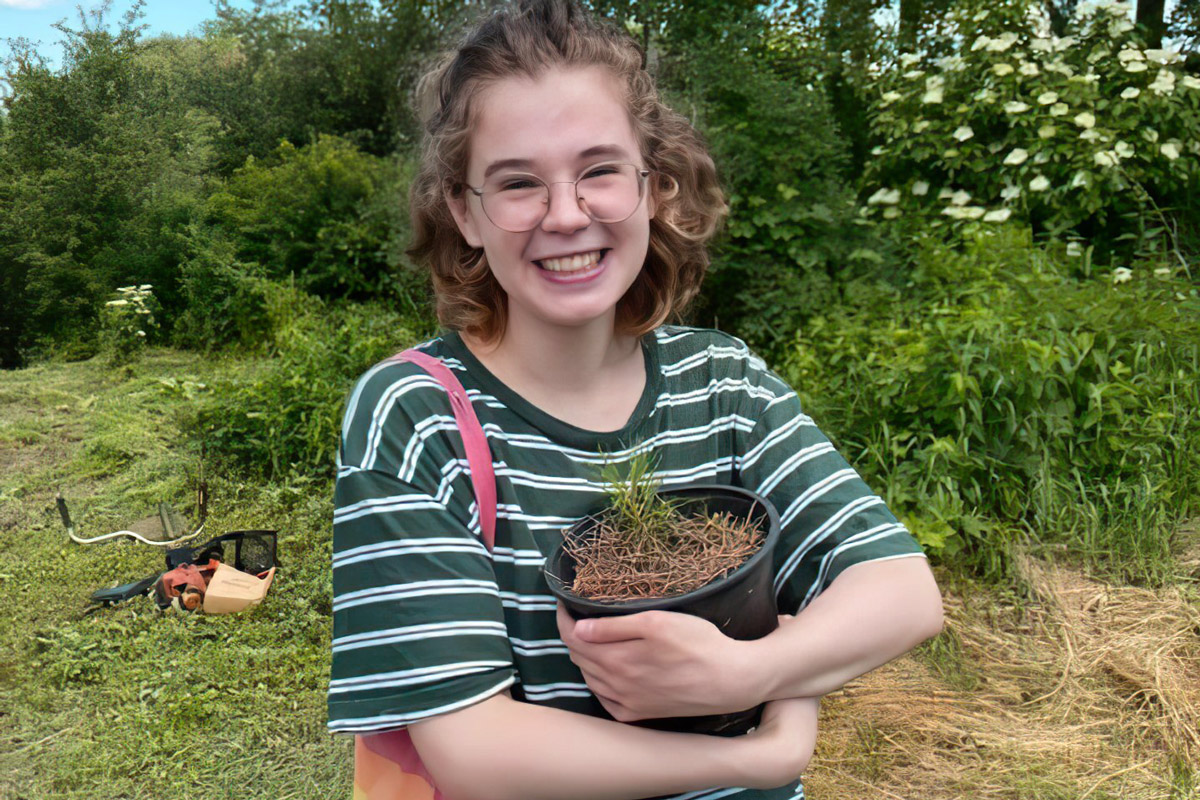
For our large family, we created a true family estate — on one hectare of land, we planted a living green fence, a forest, and a garden. We managed to arrange a perfect place, and we wanted to share this experience with other families. So I started giving eco-lessons in schools and kindergartens, telling children about the wealth of nature that used to exist on the territory of modern Ukraine and the way it could be restored.
I also talked a lot about cedars [i.e. Siberian pine or Swiss pine], the trees that once grew massively in our forests and provided food and shelter for a huge number of animals and birds. Cedars are unique in their strong phytoncide effect: A hectare of cedars is able to clean a large city of disease-causing microbes. However, over time, these trees were almost completely destroyed.
It was the pine nuts that we planted in peat pots with children during lessons so that later, they could grow a healing tree on their own. Thus, gradually, a whole nursery was created in our public organization. The project received support from the people who liked the goal and became the green patrons of living centuries-old gifts for the territories of educational institutions. During the six years of the existence of the social cedar nursery, we managed to master the technology of growing cedar seedlings in the climate of Ukraine and grow several thousand seedlings from nuts. We gave them to schools and botanic gardens and planted them in parks and on river banks.
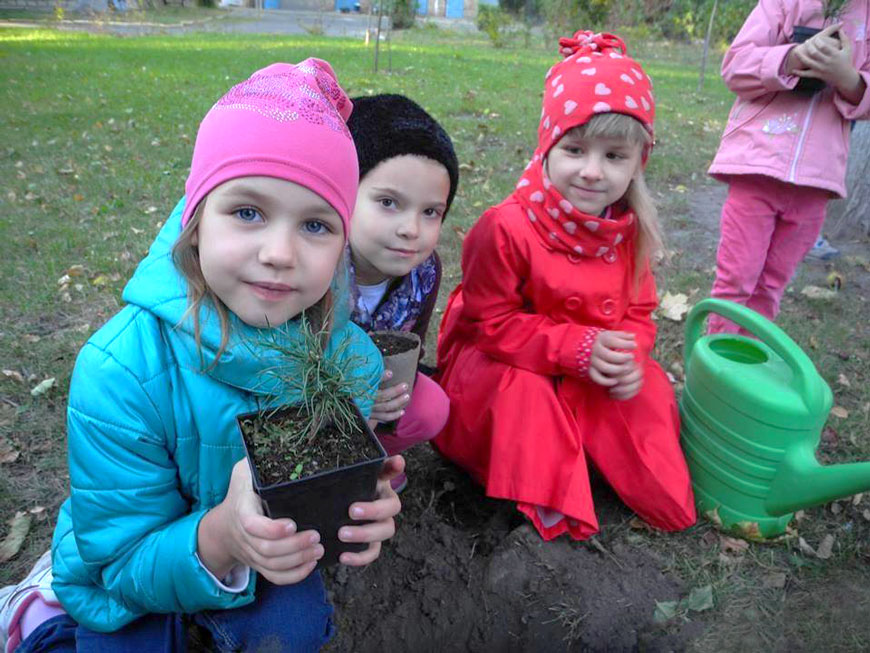
However, in February-March 2022, our nursery came under occupation and burned down along with our house, plot, and all the seedlings growing there. We had to move and restore it in a different place, where we had to dig a well for irrigation. The House of Europe helped solve this problem, as well as purchase some of the pots and peat. In the first years, cedars grow very slowly: It will take several years to fully restore the nursery. Still, thanks to constant watering, we can rest assured that it will definitely live.
When we shot our first social and environmental short film, The Evergreen Story, it resulted from the four years of our organisation’s work to introduce advanced New Year’s traditions — live conifer seedlings in pots instead of cut down trees. During this time, we gave several hundred live cedars and Christmas trees to children for holidays and held numerous eco-lessons and contests on novel New Year’s songs and tales, in which trees are planted rather than cut down for the New Year.
The Evergreen Story then participated in four international film festivals and even received some awards. Now, these are memories. Two years later, our house would burn down during the occupation — the first frames in that film show the very nursery on our plot. However, by some miracle, the other part of the nursery, also located on the site where the filming took place, would be preserved. Currently, it is the saved seedlings of the 6-year-old hero cedars that can be purchased by anyone who wants them.
Public activity is complicated and requires a lot of effort to inspire society with your ideas and attract people and resources. However, I have a phrase I say to myself in such cases, “Who but us?”. It helps to keep your chin up regardless of failures. And it also helps to see how, albeit in small steps, those changes happen. I love the collective energy swirling in our projects and gaining strength with each new participant. That’s an incredible feeling when together people create something nice, bright, and vital for the earth and our descendants.
Sounds of War
On 16 March 2022, my family and I were on duty in the bomb shelter when, at 6 a.m., Zaporizhzhia faced the first massive rocket attack. The rockets exploded not far from us, and the shrapnel, breaking the windows, got stuck in the walls of the space where we were sleeping. That horror and fear can’t be described in words — the shock wave seems to have fixed in my muscles and I constantly feel it physically. It was this sound of explosion that gave start to my acoustic project.
Actually, I head the Museum of Music Instruments History “Barabanza” and the same name project — it is a band, a music hub, and a workshop. So I had all the needed equipment to launch. I decided to take it with me and record the audio evidence of the war: explosions, eerie silence, and people singing in bomb shelters and talking about important things. The House of Europe provided much technical help as I was recording a lot of material and needed additional memory cards, software, and recording devices, which sometimes had to stay turned on for hours to record 20–30 seconds of sound.
I started talking to my colleagues abroad and couldn’t imagine that the project would arouse such interest. I was offered a collaboration with German artists who asked me to provide the sounds of sirens for their project. Then, people in Chernihiv learned about the “Sounds of War” and suggested cooperating with local musicians. Thus, the “Music under Siege” project was released in co-authorship with Volodymyr Balaba. The musicians used my field recordings in a jazz arrangement to illustrate the horrors of war. One of them is a recording from our Zaporizhzhia: the movement of machinery, the sounds of drone flights, and explosions.
Bit by bit, the project gained momentum. When the alarms went on, I would leave my family in the shelter, put on my accoutrements, and come back to turn on the equipment and record the sounds. Of course, that was psychologically difficult and scary, but I continued collecting sounds, because my heart told me that this — helping overcome traumas — is my duty as an artist, for otherwise they will become a great burden in the future.
Soon, I realized that this could become a source material for other artists — for example, in the creation of immersive theatrical performances, where the real sounds of sirens or airplanes should be reproduced. Hence, I made some of them freely available and now I can’t even count how many projects they were added to. Moreover, together with the Romanian writer Cosmin Perca, we created a joint project — I provided him with the “Sounds of War”, and he created his own material based on it while also adding much in terms of literature. And in summer, the producer of the music project Stasik approached me. They took my sounds for the “Heroes Die” video, which starts with my sound design based on field recordings.
Then another project was released in Britain — “How Do You Dance in a War Zone?”. I provided the sounds, recorded in Zaporizhzhia too, while the DJ created tracks on them, to which our Ukrainian dancers performed in various locations of Ukrainian cities. British artists filmed this and edited into a film that is now being submitted to European festivals.
Currently, the “Requiem. SOS Zaporizhzhia” project gains the most attention; it was translated into various languages, while its soundtrack was created based on the audio materials of the “Sounds of War”. This is a musical documentary film based on real events, commemorating the victims of the rocket bombing of Zaporizhzhia in 2022. Each part corresponds to one of the city’s locations affected by rocket attacks. Moreover, project participants used music instruments that had been also damaged by rocket strikes.
With my project, I am mainly trying to reach the European and world level to spread the works through my colleagues abroad and constantly keep the audience in the field of tension and awareness of the war going on. Now we should create a permanent newsmaker for the world so people out there could understand that Ukraine is not a colony of the Russian Empire and we are fighting for our own identity.
MlynPlatform
The MlynPlatform arose in 2015 as a grassroots initiative. Initially, we planned to make a DIY co-working workshop with a small open space for lectures and film screenings. However, this idea had to be postponed due to the fears of failing to ensure proper equipment handling and safety rules compliance. Gradually, all this crystallized into a wider range of activities and transformed into a full-fledged creative centre.
We are renting part of the industrial building of the Niebuhr’s Mill in Zaporizhzhia, which, by the way, is located on the territory of the Schoenwiese colony — the Mennonite settlement area. We are trying to revitalize this historic building and thus hope to significantly improve the attractiveness of this part of the city.
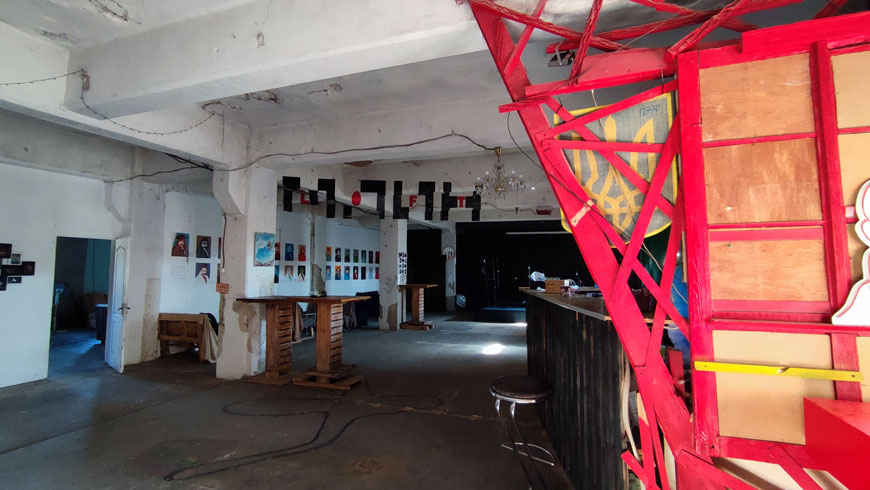
We focus our work on the implementation of underground initiatives and combination of various areas of culture and creativity — in particular, we create favourable conditions for the space residents. In general, the mission of the creative MlynPlatform is to develop and support both artists and cultural communities to increase the number and quality of projects in the cultural and creative industry and thereby improve the city. The larger number of young people will stay in the city and earn with their own mind, the better Zaporizhzhia will be.
So far, we have already managed to create a small ecosystem of residents, which helps to ensure the project’s existence — as well as develop stable partnerships. Thanks to this, we can actively organise events even during the wartime. Of course, a vast majority of them takes place under the condition of sending profits to volunteers or directly to the military.
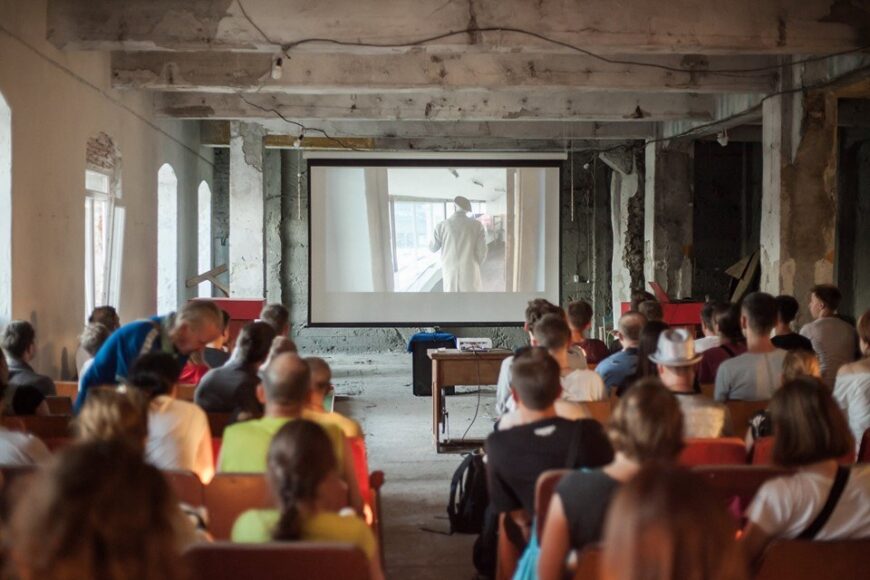
Recently, Mlyn has hosted a wide array of events — from charitable music and artistic events, the funds from which were given, in particular, to the brigades of the Armed Forces fighting in the Zaporizhzhia oblast, to scientific ones, for example, a workshop on the topic of genetic engineering and molecular biology, as well as an introduction to an open DIY bio laboratory, during which one could learn where and how biomaterials are used in the modern world and even create living art using bacteria. The House of Europe helped us by covering the urgent needs for space arrangement. We were able to purchase the things we lacked most during the events: chairs and a projector.
So, regarding our plans for the future, we’d like to create such a great creativity centre that Ukrainians and foreigners would want to live and grow exactly in Zaporizhzhia.
House of Europe is an EU-funded programme fostering professional and creative exchange between Ukrainians and their colleagues in EU countries and the UK. The programme focuses on different professional fields: culture and creative industries, education and youth work, social entrepreneurship, and media. House of Europe is implemented by Goethe-Institut Ukraine.