Even the full-scale war cannot terminate the development of Ukrainian creative industries pursuing to create amazing projects. Creative Business Survival Kit is the first-aid programme for creative initiatives. As a part of the programme, private consultations with Ukrainian and EU business experts were held for two months, and over 30 participants received EUR 1,000 of aid this year to transform their plans into actions. Read on how three of them evolve despite all the challenges.
Fotozavod
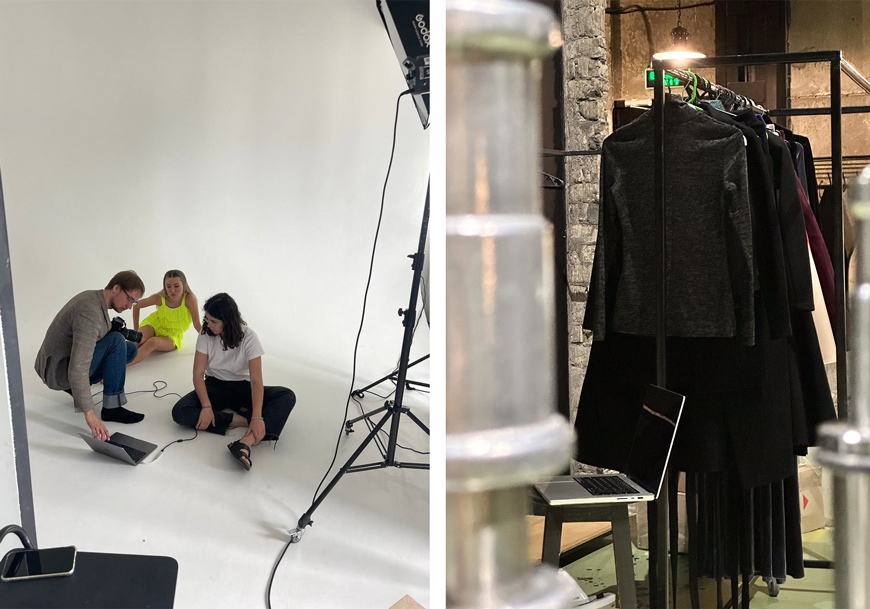
I have photographed from my last school years — starting with a simple camera with a black-white display. Since then, I have tried my hand in various areas: from reportage photography, taking pictures of my class, for a magazine, in night clubs, to food photography for restaurants and cafes. I have tried individual photo sessions, love story photography, and, of course, wedding photography. Yet, all of that didn’t touch me much, so I came up with an idea: To take better shots, I should open my own studio. And that’s what I did. It is there where I started to shoot the first clothing catalogues.
Many photographers shoot different genres simultaneously, but I specialise exclusively in clothing, shoes, and bags. I create pictures considering both clients’ wishes and sharing my own vision and experience. What is essential in this job: It is not just about image aesthetics but also about boosting the sales of the items shoot. Over ten years of experience and communication with brand founders and marketing specialists helped me shape my knowledge and understanding of the nuances affecting sales: location, light, model choice, looks, and ideas — all of this depends on distribution channels. In some contexts, one concept works, while something else is critical in others.
I enjoy creating something that has never been done before, something new. I like to contribute to this world, to help people earn more, and to give work to those who need it and pay for that fairly. However, attracting new clients is rather tricky. As they say, there are only two problems in business: sales and all other problems.
The House of Europe’s support was very helpful: We managed to survive tough times, developed our business strategy, and laid the foundation for all the processes. The business consultation allowed us to understand the horizons and see the right path to reaching them. It gave us hope, support, and raised our morale. Our UAH income has increased compared to the pre-war period, but there is still space for improvement when counting in dollars. It is a pleasure to acknowledge that the number of brands trusting the “Photozavod” is increasing. In 2023, I worked with 52 brands and made over 300 shootings altogether.
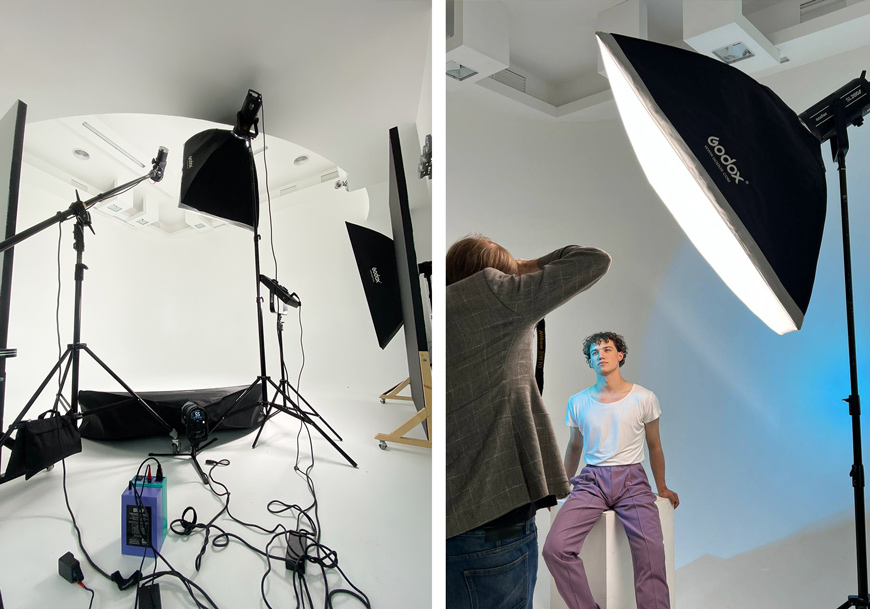
Photo processing takes around 70% of the time when creating an image. I basically have no a retouchers team — instead, I delegate this work remoutely to professionals from those regions of Ukraine where finding a job is a tough task now and pay decently for it. I see my mission in teaching photo editing the people eager to work but having no opportunity to do this in their home cities due to the full-fledged war. The learning takes about one week; after that, they can start earning money.
All my clients are striving for new solutions, one way or another. For example, in terms of quantity — to quickly shoot some 200 good items a day. Or they want to get a new vision of the content with an opportunity to develop these ideas further; therefore, all photoshoots should look holistic. In 2023, I worked with Vovk, KseniaSchnaider, Bevza, 24Etno, Garne, Maritel, Romashka, and others. All these brands have exciting goals, and I am happy to be able to implement them. There is an incredible story: Once, a client came to me whose clothes didn’t sell. He was sad but willing to try something new. During our next shooting, he told me that everything we photographed skyrocketed in sales and sold out completely. For me, this is the most illustrative result of my work.
M1R
I have been working as a graphic designer for a long time. Yet, one day, I felt like going beyond digital images and doing something with my hands. Back then, I lived near IZone [creative co-working space] and often visited exhibitions or workshops held there. Inspired by silk screen printing, I decided to produce a small number of T-shirts printed by myself. I thought it would be easier, but nearly one-third were defective. Nevertheless, I created an Instagram page with these black-and-white T-shirts. I like the combination of black and white and therefore use it in my brand, only occasionally adding some colours to the collections.
The T-shirts were sold out, so I printed an extra small batch and added some long sleeves. Step by step, I came to the Don’t Take Fake festival in 2018, which I consider to be the starting point of the brand. All those people, acquaintances, friends who supported me, the visitors’ feedback, and the general atmosphere, inspired me a lot then.
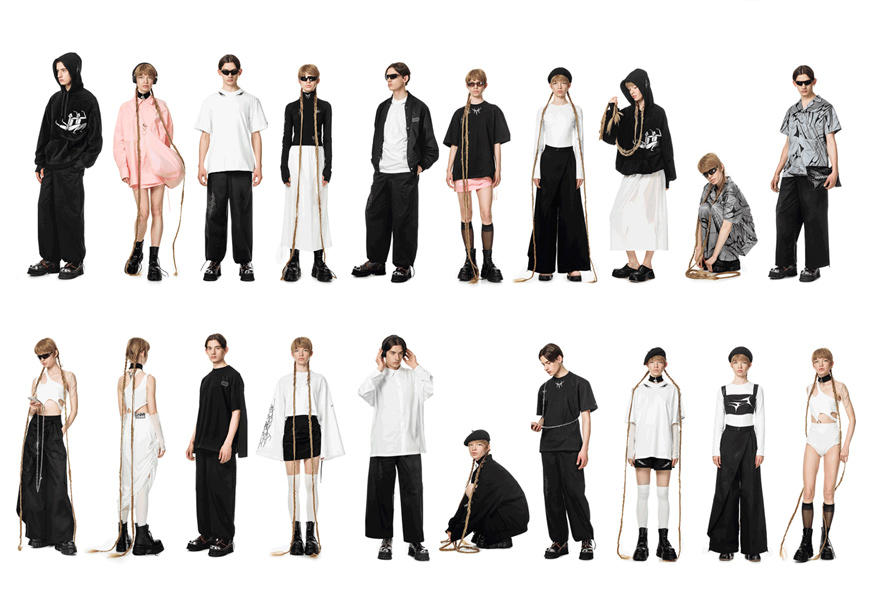
Now, the M1R brand is a gender-neutral fashion brand with limited collections — we produce just up to 30 pieces of each item and never repeat them, as a rule. I think what makes us special is our clients: dancers, actors, designers, and many creative people who inspire us to work more things and more often. Each collection presents a unique story we share through clothing, accessories, and jewellery. We neither follow nor try to fit some fashion flow; we just implement our ideas and engage other creators in the process.
Currently, we have seven complete collections and five collaborative drops. My favourite one is with my cat. The feature of this collection was its black-white print, identical to its colour. We donated a certain percentage of sales to support cat shelters.
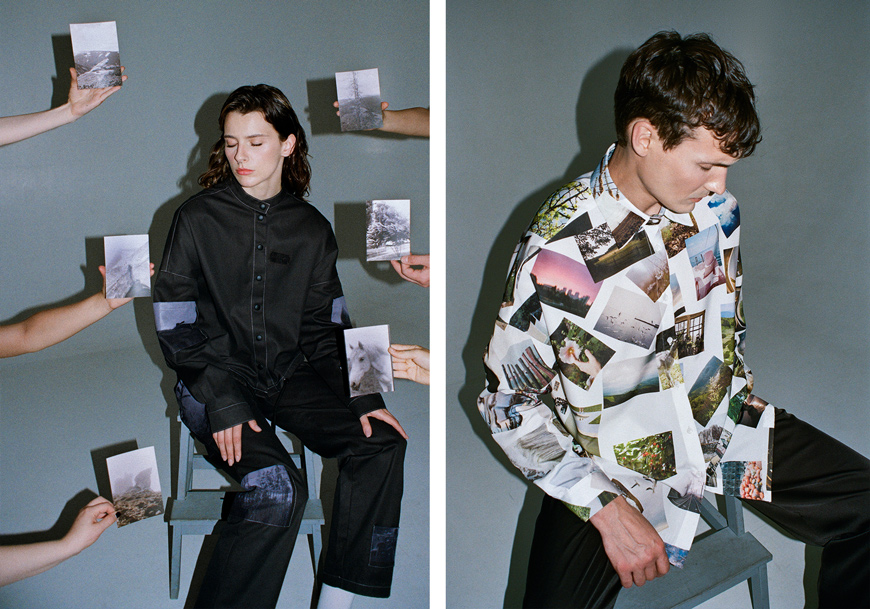
Another essential collection for me was “Postcards from Ukraine”. It was supposed to be about the favourite places of our country — we prepared it since October 2021. We gathered the film photos from 100 of our photographer friends and made a big collection to be released in February. But we all know that everyone’s plans changed in February 2022. I didn’t know whether it was suitable to launch this collection, but the photographers who provided their shots went on writing that some places on them had been already bombed — for instance, we have two photos from Mariupol. This collection was launched carrying another message: now it is about recollections, about places we dream of returning to and that have their own stories. We’ve held six exhibitions with this collection (in Kyiv, Copenhagen, Amsterdam, Berlin, Los Angeles, and Paris), told stories from the photos, and, of course, collected donations for helping Ukraine.
Once, I entered a fabric shop. Somehow, they had a 50-meter leftover of a material produced for Ukrzaliznytsya. I bought it without hesitating and decided to make a dress for myself, which eventually caused a real buzz. We got messages from celebrities eager to buy it, so we sewed another 25 dresses from that leftover, and pre-orders instantly sold them out. There were TV reports on that, with the first filmings in our factory — our dearest sewers got very excited.
Currently, our collections can be found in Ukraine (in the showroom in Zolotovoritska Street, in TSUM, LID), in Paris (WAB), and in Berlin (Studio183). Each of them is greater than the previous one, as we experiment with materials, add jewellery, and some new creators are always willing to join us bringing their visions. When we planned exhibitions in the summer of 2023, the House of Europe helped us prepare for the journeys to Copenhagen and Paris to present the new collection — RUH [Ukr. for movement].
With each collection, we raise new issues and ideas for reflection, create a platform for other artists to add something from their own, and we are always open for collaborations. These days, many young artists approach us, and we create looks for their performances, e.g. for Renie Cares’s concert. Recently, we provided costumes for the Apach Crew team for their performances at the Barcelona festival. It is crucial for us that one piece of art supports another one to keep the wheel spinning. It is vital for us to be a genderless brand and to support the queer community.
We are eager to support even more Ukrainian art, produce more drops, find new ways to develop fashion exhibitions, and maybe find a curator for that. We hardly keep pace with our ideas, so we dream about our own workshop and expanding our team to tell more fresh stories.
Playback Theater “Susidy”
By occupation, I am a psychotherapist and an anthropologist, and I have also organised numerous festivals, events, and social spaces. Around 2008, I came to a festival in Kharkiv to conduct a workshop on psychotherapy — and saw a playback theatre. Highly inspired, I started creating such a theatre in Dnipro. I saw how valuable it was, being about both healing and a space for that healing, with an opportunity to involve many people. You can work for a year with one patient without a guarantee of coming to a result, and here, 50 people get a substantial positive intervention in one and a half hours.
Our key focus is the community, i.e. people gathered in one room. Here is how it works: A narrator from the community tells the actors their story, and the latter play that story. This is an improvisation for four people without any prearrangements. And then magic happens since we usually perceive stories rationally, while we experience feelings unconsciously. When the actors bring those feelings to the stage, the audience’s emotions meet with thoughts, resulting in a holistic “wow effect”. There is also a bit of trance, with music contributing to the atmosphere — and people slow down. Playback is often employed as a rehabilitation or team-building measure.
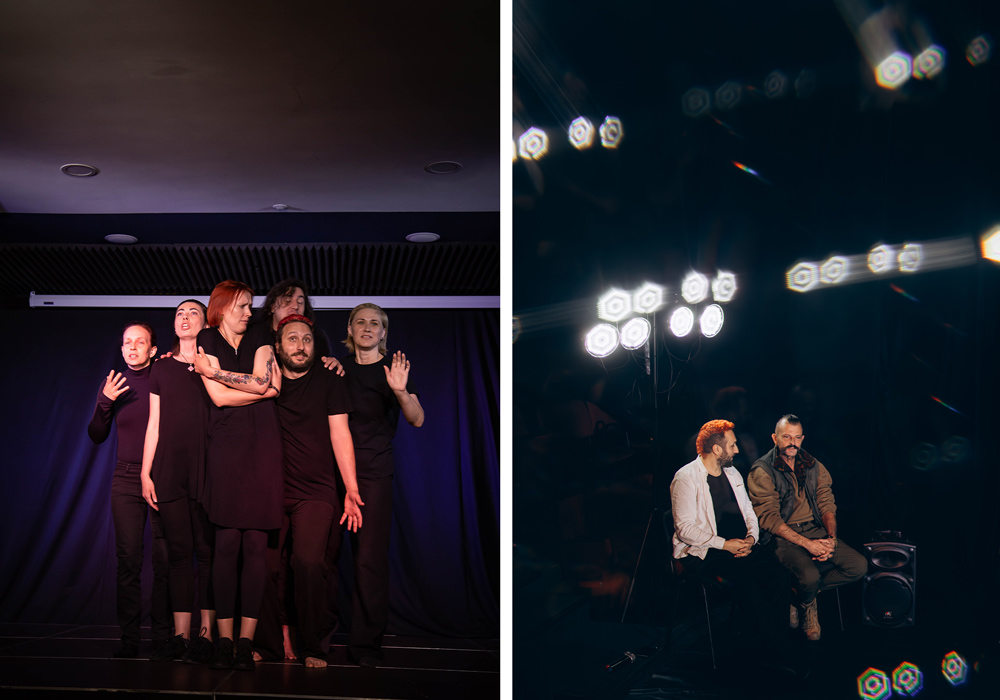
Gradually, a community of people fascinated by this idea gathered in Dnipro. All of them different — IT specialists, mothers, doctors, accountants — and all united by playback. During the first years, we learned intuitively, as there was little information even on the Internet. Later, we learned from the Central European school, with Joseph Paradi being our first teacher, and got experience. After all, it is a method you need to learn, rather than a style. Thus, we progressed step by step, and the sphere also developed in Ukraine.
Jonathan Fox, the method’s founder, said he regretted calling it theatre. In fact, art is secondary for us. We have three functions: healing, uniting, and aesthetic action. We do not call it therapy as it is a different paradigm. We don’t ask people about their pains — we ask them to tell a story.
It resonates with me that I exist for a reason: to bring value to the community. However, sometimes it is hard to tell a story with contemporary means in a way to “sell” it. And in Dnipro, some people can spend UAH 500 for beer rather than for theatre — I find it a bit embarrassing. In that context, we are grateful to the House of Europe. They provided us with an expert who facilitated us in a strategic session. Afterwards, we got a goal and inspiration; we had an intense summer full of festivals, courses, and events and made significant steps for development. Moreover, with their financial support we could renovate our space.
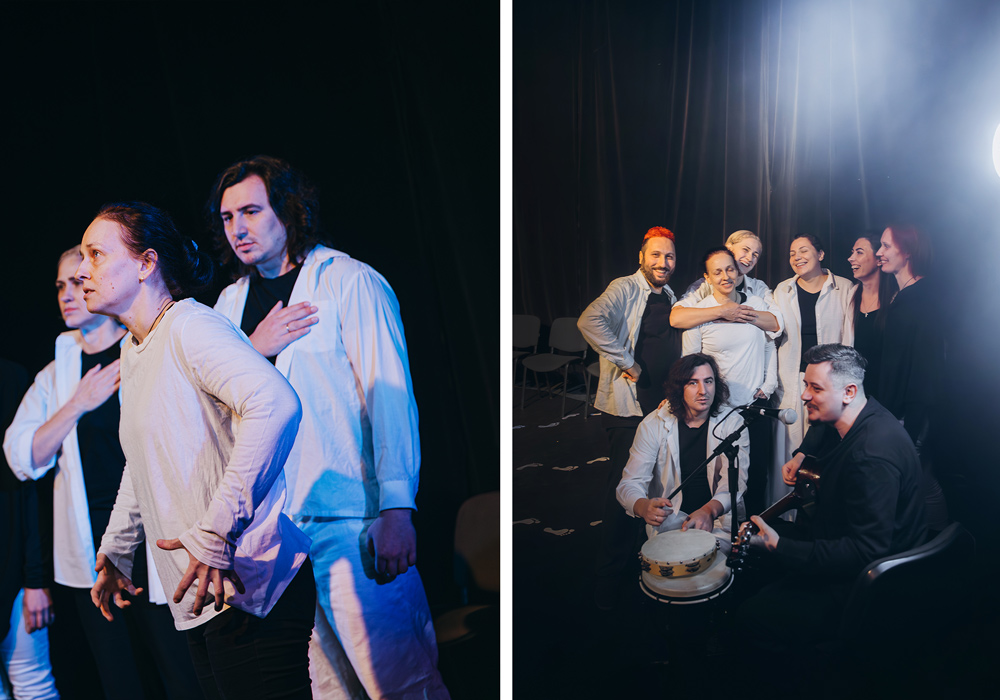
I see playback as a tool that can teach Ukrainians to be part of a community. It teaches to hear one another, even those with different stories than yours. It is a powerful tool to work with broad audiences. For instance, we had a story from an IDP from Bakhmut at a recent performance. She didn’t communicate with a friend, but after the full-scale invasion, the latter called her and said: “Come here to my place”. And our heroine mentioned that this is what Ukraine is all about for her. It was a very warm-hearted story about the power of connections and what makes us different from the occupiers. I remember everyone crying then.
Being the board chairman of the Ukrainian playback theatre school, I know that before the full-fledged invasion, we had 50 active theatres all over Ukraine. After the invasion, only 2 or 3 remained because many people left and some went to the front. Now, we are slowly recovering, as we see how beneficial and important it is for the Ukrainians. We want playback to become a new industry, like psychotherapy and mediation. Sure, a war is an area of uncertainty, but we move in that direction.
House of Europe is an EU-funded programme fostering professional and creative exchange between Ukrainians and their colleagues in EU countries and the UK. The programme focuses on different professional fields: culture and creative industries, education and youth work, social entrepreneurship, and media. House of Europe is implemented by Goethe-Institut Ukraine.