


One of Russia’s most heavily used weapons is propaganda. The Russian Empire has been twisting and distorting reality for centuries to prove its right to dominate. Russia aggressively pushes the message that Ukraine, in general, and its East, in particular, are supposedly Russian land. Tetiana Kapustynska, an immigrant from Donetsk, refutes for Platfor.ma most common Russia’s myths about her native land’s history and offers facts that thwart Russian propagandists’ attempts to steal other people’s history.
You can also read this text in Ukrainian.
① The Region Buzzed with Life Long before Russia’s Arrival
The Russians claim that the region was unpopulated before the empire’s advance. Proof of the opposite appeared as early as the second half of the 19th century, with the en masse unearthing of antique stone and bronze tools, followed by the discovery of many ancient burials dating to the period between the late 3rd and 1st millennium B.C. Ironically, Vasyl Horodtsov, a Russian archaeologist and professor, established this fact.
Moreover, in 1976, schoolchildren from Alchevsk accidentally came across the Luhansk Stonehenge. Presumably, the set of man-made stone and earth structures occupying an area of 10 hectares was erected about 5,000 years ago, which makes them peers of the Egyptian pyramids. Archaeologists believe that this is an ancient sanctuary with traces of burials and altars that humans of various cultures have been using for thousands of years.
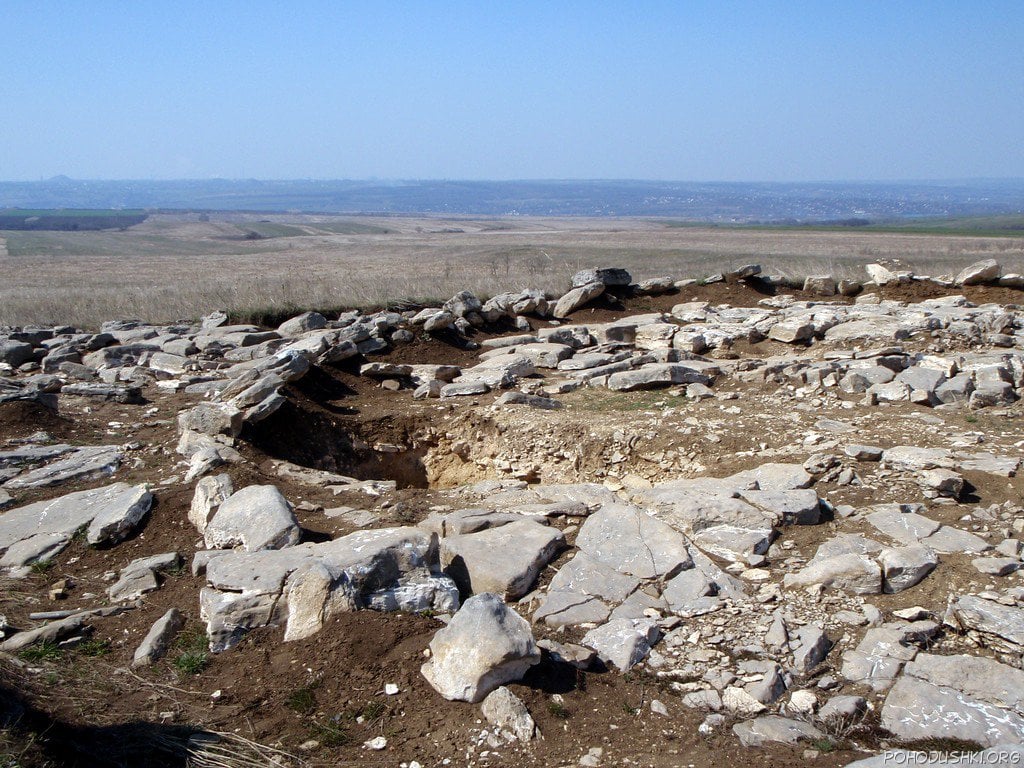
Therefore, scientists argue that the territory was well-lived long before the emergence of modern states and featured such famous tribes as Cimmerians, Scythians, Sarmatians, Greeks, Goths, Huns, and others.
② Cossack Lands
The Cossacks developed and managed the territory of the Donetsk coal basin in the 17th and 18th centuries, eventually turning the area into the important part of the Free lands of the Zaporozhian Host the Lower, composed of Kalmiuska, Yelanetska, and Barvinkivska palankas—the administrative-territorial units of Sich. The lands controlled by the Ukrainian warriors stretched to the Don River.
Cossacks built settlements, mined salt, and founded new villages and cities. Usually, cossacks had wintering houses in hamlets where their families lived while the fathers were on the raid. Cossacks returned home for the winter, hence the name. The modern city of Lysychansk is the former Cossack winter base Lysychy Bairak. Sloviansk was once a settlement named Tor, and Mariupol was a Cossack fortress of Domakha. Donetsk is the territory of the former Oleksandrivka and Krutohorivka, and Luhansk stands in the place of Kamyany Brid, Krasny Yar, and Verhunka wintering hamlets.
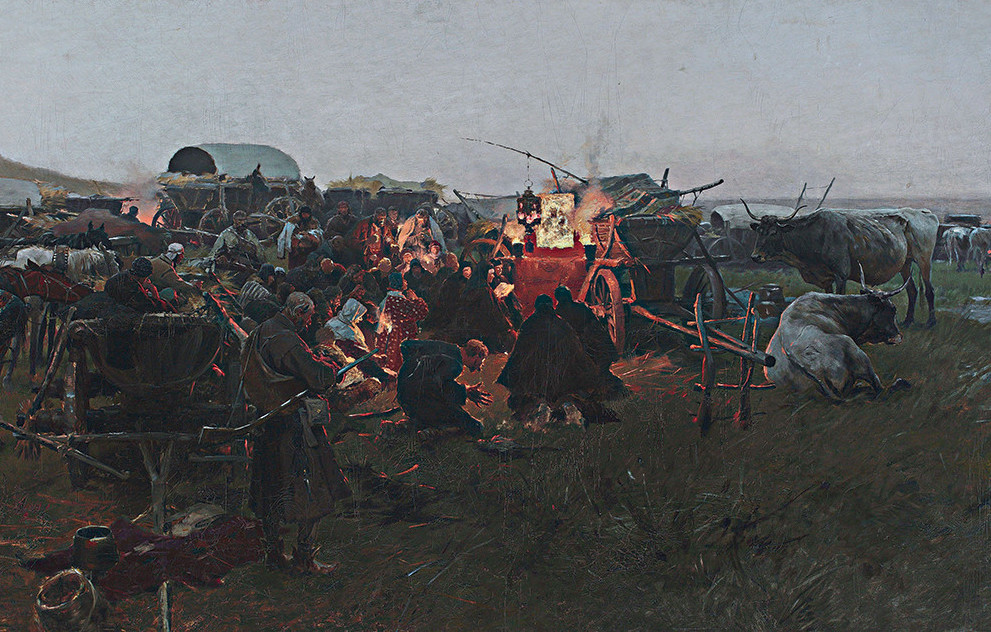
The Russian Empire perceived the Cossacks as a threat because they spread rebellious sentiments and trampled the imperial dream of suppressing freedom of thought. Catherine II was most preoccupied with that and ordered to destroy the Cossacks, although they had helped her to beat the Ottoman Empire in a war. In the late 18th century, a 100,000-strong army of Muscovites demolished Sich, the throbbing heart of the Cossackdom. The Cossack assets, archives, and regalia were taken to St. Petersburg, where they remain until the present day.
A few months later, Catherine issued the following manifesto: “We now consider it our duty before God, before our empire, and before humanity in general to terminate the Zaporizhzhia Sich and the eponymous name of the Cossacks.” The manifesto portrayed valiant warriors as a “bunch of drunkards and rogues” that stood in the empire’s way to expand trade and cultural ties with neighbors. Not only did the empire destroy the Cossacks physically, but it also made efforts to erase the historical evidence about their existence, burgeoning democracy, and the struggle for independence in this region.
③ Who Transformed the Region into an Industrial Powerhouse
In the late 19th century, Donbas’s lucrative coal and iron ore deposits encouraged European entrepreneurs to invest. The most famous of them was the British John Hughes, who built a steel mill on the site of the former Cossack settlement Oleksandrivska Sloboda, mined coal, and produced record-high industrial outputs unrivaled in the empire. Meanwhile, a settlement evolved around the enterprise, which became Donetsk many years later.
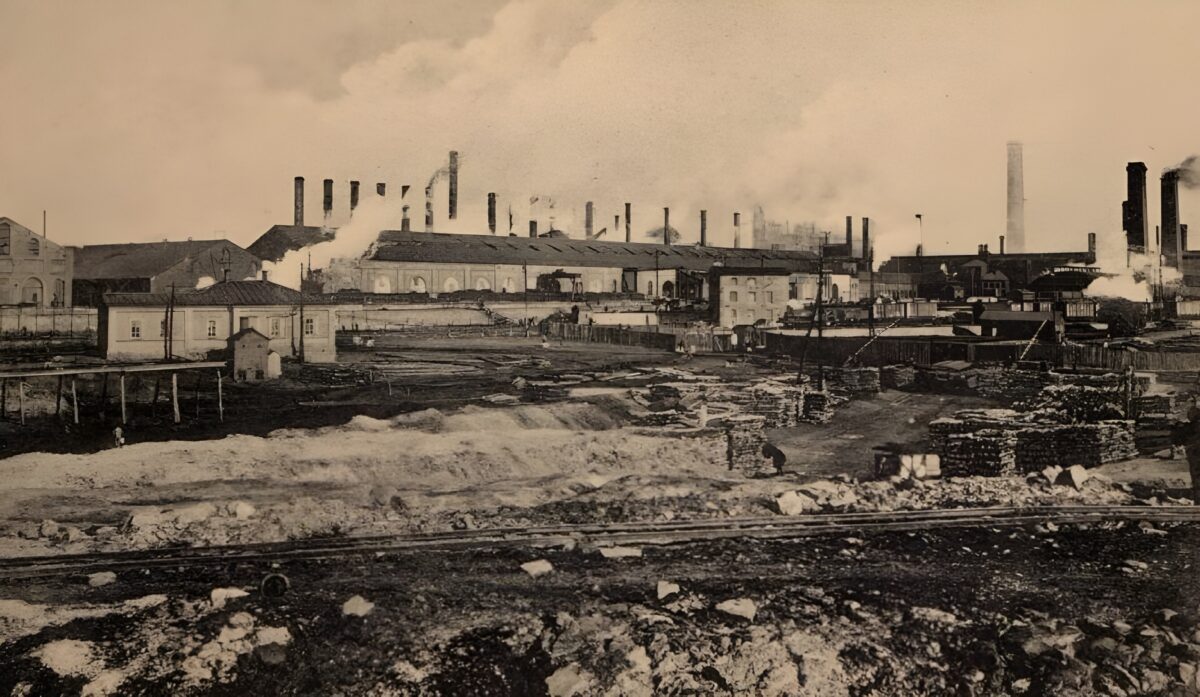
Belgians, Scots, Germans, French, and English recognized the region’s immense potential and flocked to start businesses. Most of these were steelmakers, with the rest engaged in salt, coal, and soda production. As European investments surged and foreign specialists moved in to build careers, more facilities sprang up, and each industry player attempted to outperform the other. Unsurprisingly, the region became the most critical industrial hub in the entire Russian Empire. Many new cities came into being as plant workers and professionals from other countries required places to live.
In the end, the Soviet Union did two things with the Donetsk region:
→ it forced all European entrepreneurs to flee and seized their assets;
→ it appropriated the glory of the region’s industrial advancement.
Laying hands on something and claiming ownership was the Soviet Union’s signature style of explaining the “successful industrialization of the region”.
④ What was Elite of the East Like
The Alchevskyi family, who came from a merchant clan, also recognized the industrial potential of this region. The head of the family, Oleksiy Alchevskyi, by then a well-known banker and industrialist and a “fanatic Ukrainian”, as his wife referred to him, founded the Oleksiivske Mining and Industrial Society, the Donetsk-Yuriiv Metallurgical Society, and the Donetsk-Yuriiv Metallurgical Plant. These were Ukraine’s only large steel-making enterprises that had local investments. In addition to business, Oleksiy heavily invested in the Ukrainian national movement, led a circle of Ukrainian intelligentsia, and even financed the building of the first monument to famous Ukrainian poet Taras Shevchenko. Due to the official ban to commemorate the Shevchenko, the statue was placed in Alchevskyi`s Kharkiv estate.
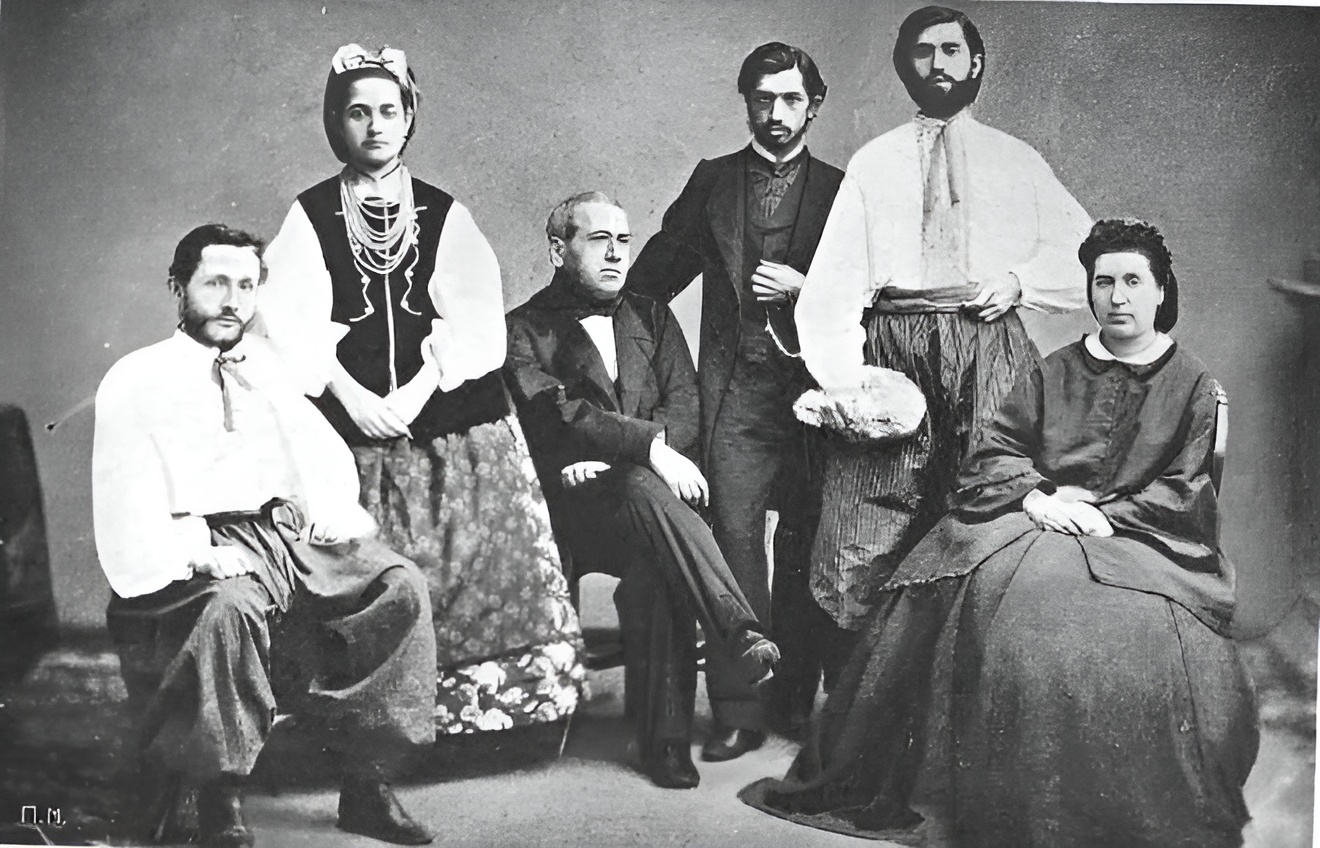
Despite the Russian Empire’s anti-Ukrainian policy, Oleksiy Alchevskyi’s wife Khrystyna opened an elementary school in the village of Oleksiivka in 1879, where she taught adults writing, literature, and the history of Ukraine in her native language. She aimed to give ordinary women primary education, knowledge, and skills. The issue of the Emsk decree banning the Ukrainian language in schools did not discourage Khrystyna, who continued to educate the villagers in Russian. Mrs. Alchevskyi educated more than 17,000 Ukrainian girls from the East and invented a teaching methodology that spilled over to teachers throughout the empire.
Borys Grinchenko, a writer and cultural figure, taught at this school, among others. While working in the Luhansk region, he created an ABC book and school primer for schoolchildren in the eastern region. In parallel, he finalized his principal work, the four-volume Dictionary of the Ukrainian Language (1907–1909).
The Alchevsky children picked up their parents’ course in preserving Ukrainian culture, language, and history. Hryhoriy, a well-known composer, created arrangements of Ukrainian folk songs and wrote music to Taras Shevchenko’s, Ivan Franko’s, and Lesya Ukrainka’s poems. His brother Ivan, an opera singer, performed the part of Andrii in the opera “Cossacks in Exile” (“Zaporozhets za Dunayem”) by Semen Hulak-Artemovskyi, the roles of Peter in “Natalka Poltava” by Mykola Lysenko, José in “Carmen” by Georges Bizet, and Faust in Charles Gounod’s opera of the same name. He also organized the “Kobzar” society in Moscow to promote Ukrainian art.
Khrystia Alchevska found her vocation in writing, where she reflected on Ukraine’s fate and advocated for freedom. She corresponded with Lesya Ukrainka, Ivan Franko, Mykhailo Kotsyubynskyi, and Vasyl Stefanyk. Despite the ban, she taught Ukrainian books to students, organized rallies, and co-founded the first Ukrainian political party, RUP. Mykola Alchevskyi authored the first Ukrainian primer for adults in 1919, Dmytro attained the degree of a candidate of natural sciences, and Anna was an artist.
Ukrainians continued to support their culture in the East, flouting the empire’s vehement resistance. The name of the family that left such a bright footprint will forever remain on the map of their beloved land in the name of the city of Alchevsk.
⑤ The Language Spoken in the East
Russian propagandists use concocted facts to cover up their crimes and centuries-old desire to appropriate someone else’s land, stating that most of the people in the Donbas region speak Russian.
The 1897 population census in the Russian Empire revealed that about 70% of the region’s inhabitants spoke Ukrainian. This is natural because the vast majority of the population living in the two counties that existed on the territory of the modern East were Ukrainians. This was the case until the 1930s, when the Soviet Union organized the Holodomor (the Great Famine), indeed a genocide of the Ukrainian population. Donetsk oblast ranks among the most affected by the Great Terror.

Later, the place of the dead Ukrainians was taken by Russian immigrants, a policy customarily pursued by Russia, even under modern conditions. Russia used the same approach in Crimea after the deportation of the Crimean Tatars in 1944. In this way, both territories’ demographic composition and languages changed. That is why senior residents of the villages of Donetsk oblast may not know anything about the Holodomor; they were not the ones who had experienced it. In their time, all they did was settle in vacant houses.
⑥ Embroidered Shirts Worn in the Ukrainian East
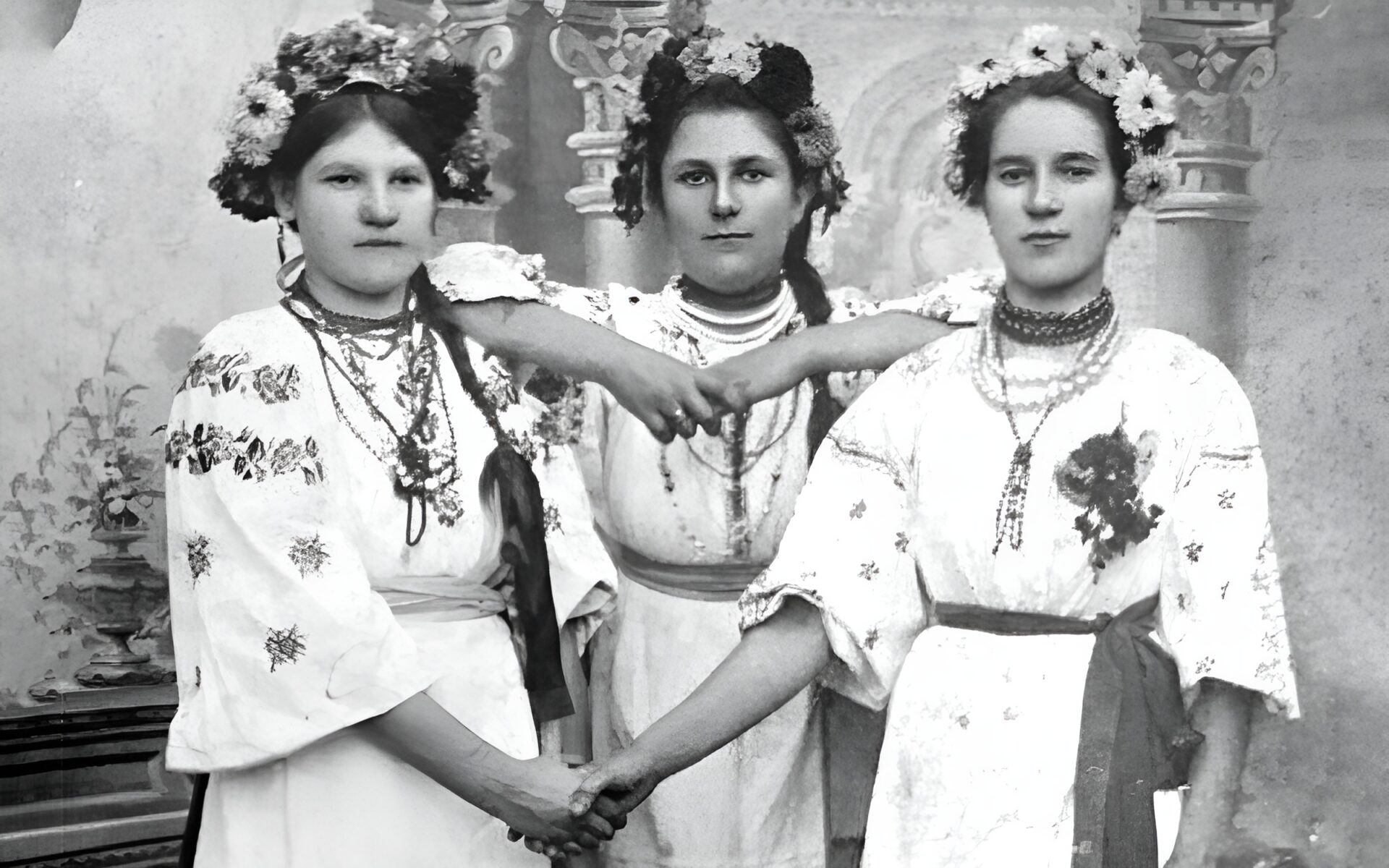
Kerchiefs, wreaths, and embroidered dresses were among commonly worn pieces of traditional clothing and never Russian kokoshniks or sarafans. The archival photos from the early 20th century stored in the global network show what kind of clothes the lovely girls of the East put on to look prettier. The national dresses in the Donetsk and Luhansk oblasts did have distinctive features: girls wore aprons over lush skirts decorated with colorful ribbons and embroidery. Ornaments were believed to have protective charm and were necessarily placed on the collar, cuffs, and hem. Each element had a meaning; for example, the fruit of rowan and viburnum symbolized children, and oak leaves implied health.
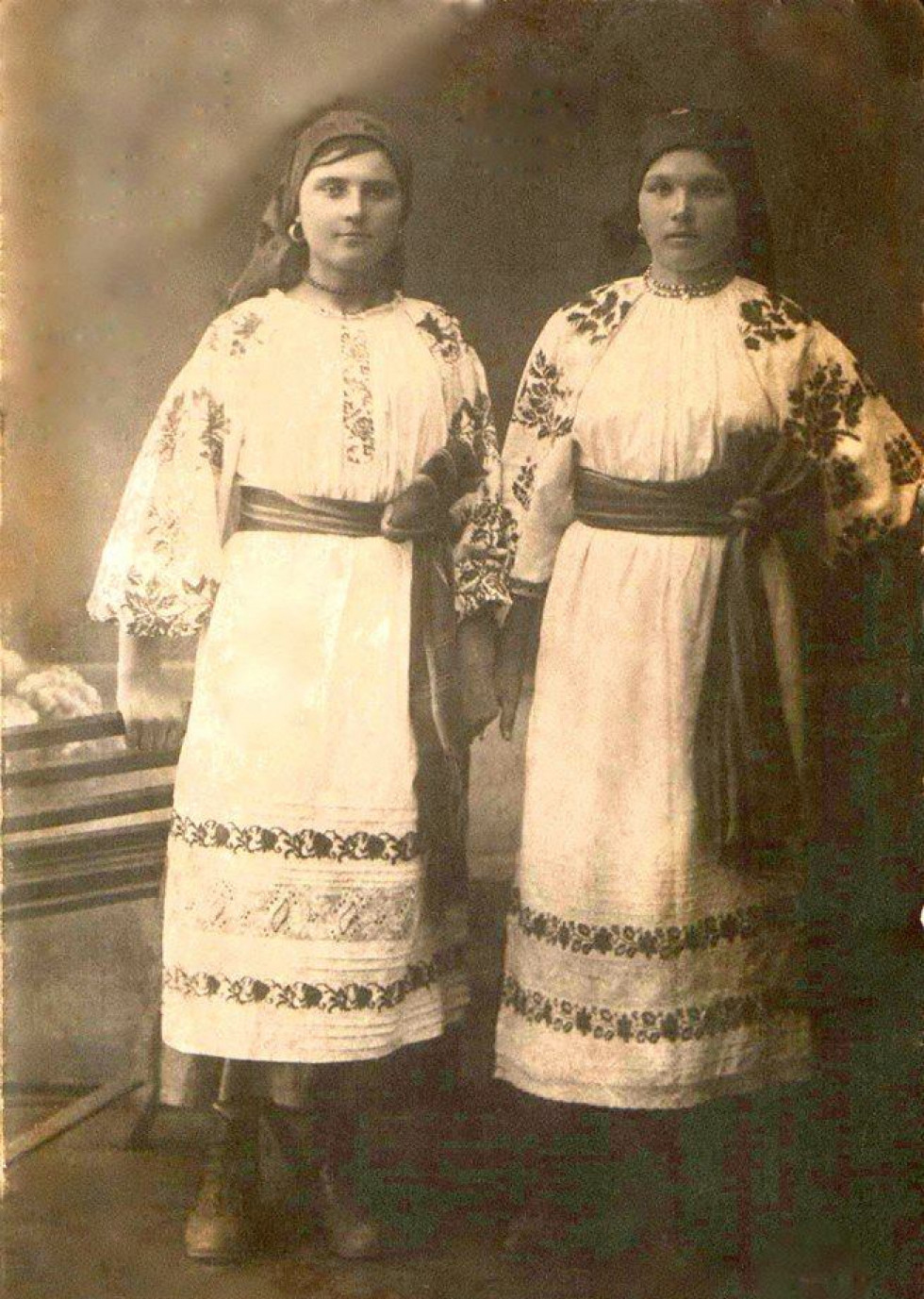
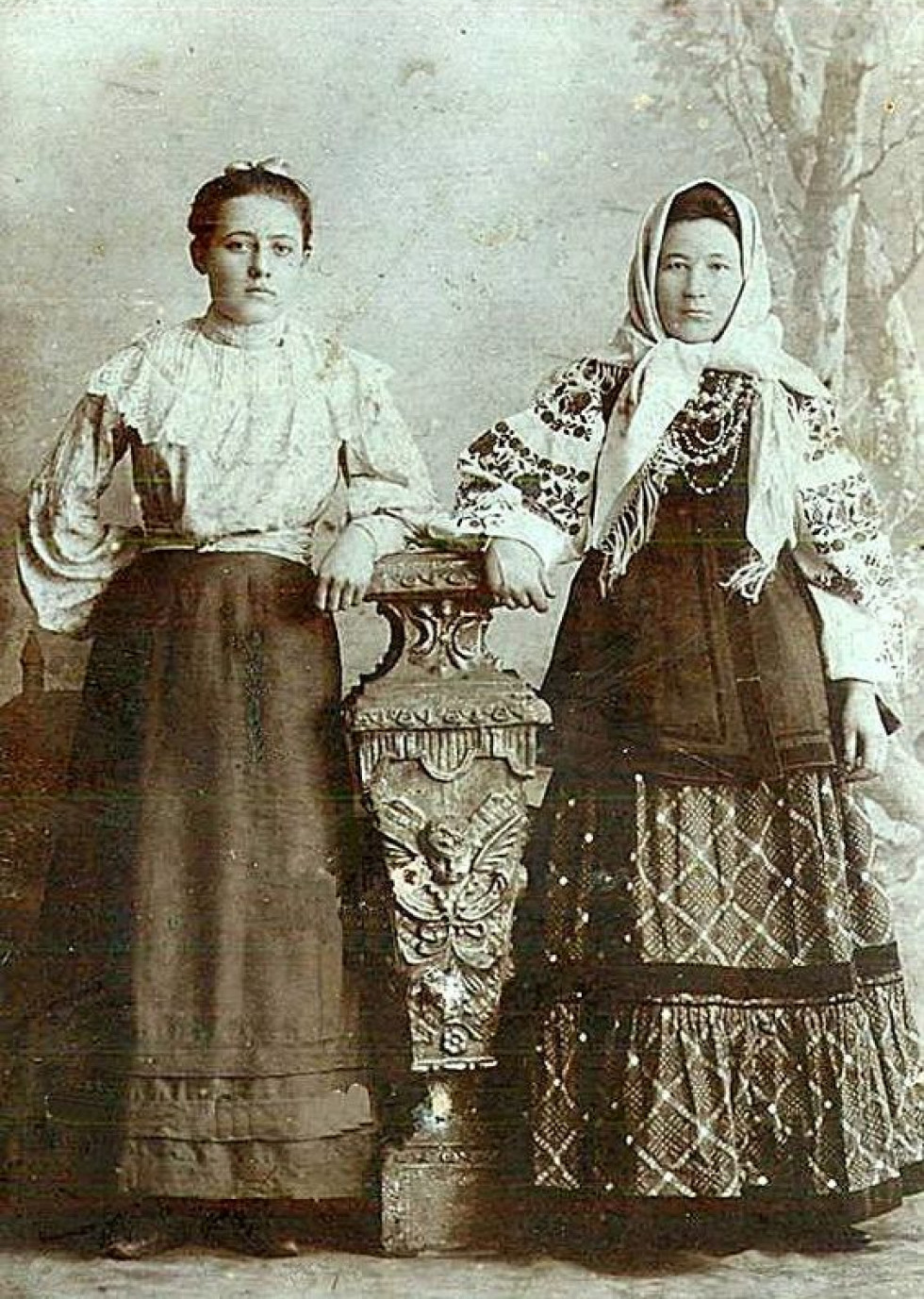
In Donetsk oblast, they used mainly black and red colors, representing love and sorrow, or hot sun and fertile land. Plant ornaments were also typical, particularly images of roses and other full buds. In the Luhansk Oblast, embroidered garments had a similar style; their decoration featured roses, wildflowers, and lilies, but the dominant colors were red, blue, and gray instead of black. The prevailing embroidery techniques in this area were satin stitch and cross stitch.
⑦ Struggle of the East for Ukraine’s Independence
Vasyl Stus, by far the most recognizable dissident poet, whose fame goes beyond his native region, reaching the farthest corners of Ukraine, lived most of his life in Donetsk. He was vocal against illegal political arrests and repression against dissidents, criticized the Soviet government, and organized protests. Hating to be a slave of the regime, Vasyl Stus renounced his USSR citizenship. He wrote poems deprecating the Soviet Union and proclaiming freedom. His work was banned, but he managed to have his poetry published either by clandestine press or abroad. Consequently, he was repeatedly arrested, sent to penal camps, and put in solitary confinement. Even there, Vasyl Stus could not reconcile himself with injustice and announced hunger strikes as a sign of protest, and eventually died behind bars.
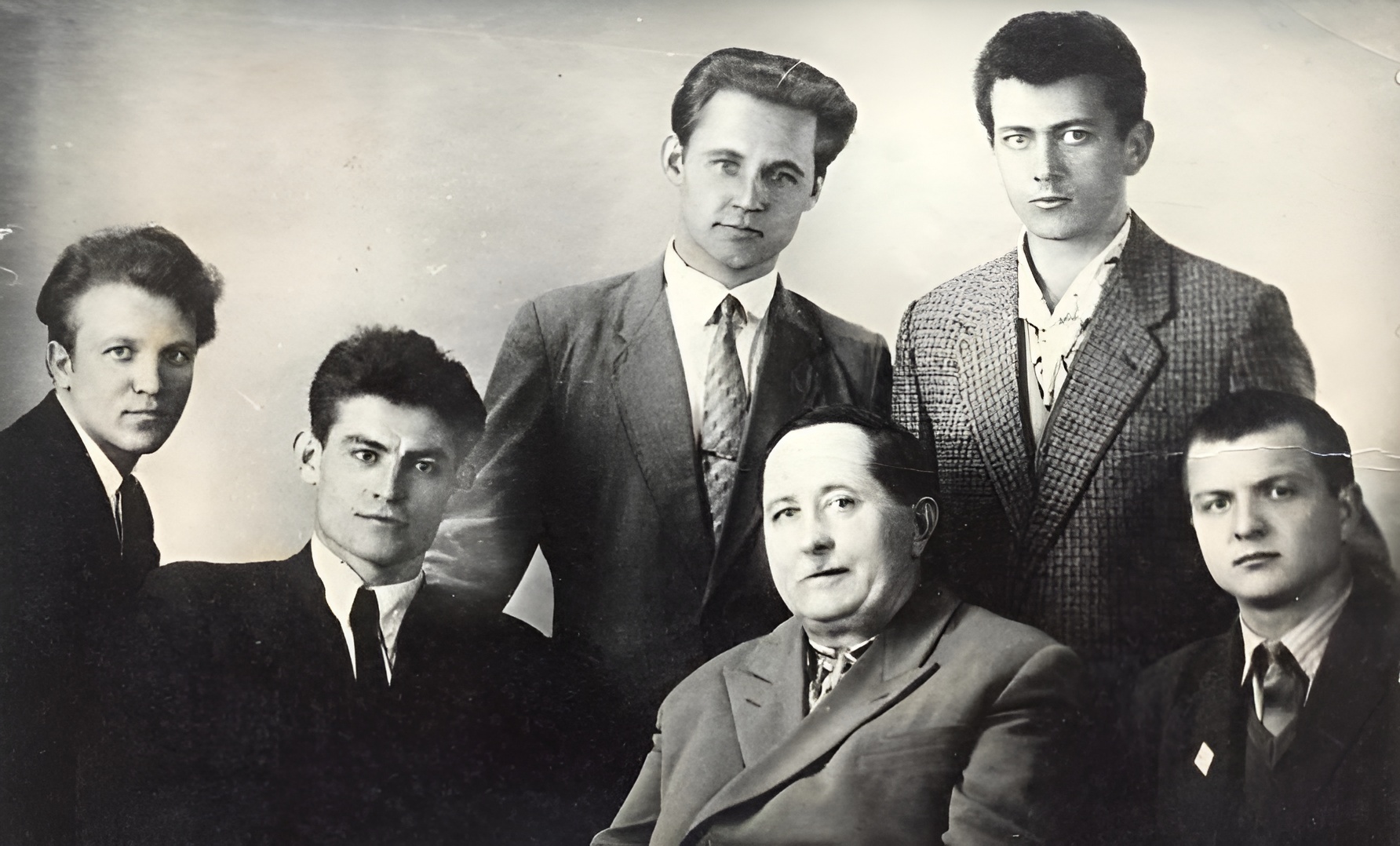
The poet Volodymyr Sosiura was born in the city of Debaltseve in Donetsk oblast. Sosiura’s works, despite the ban, are full of Ukrainian patriotic motifs, as in his collection of poems “Heart,” the poems “Two Volodkas”, “Makhno” and “To Mazepa,” which survived only in fragments. For the poem, “Love your Ukraine, love as you would the sun…” Sosiura was decried as a “venal Bandera follower” and a “nationalist.”
The writer and author of the poem “Immortality of the Nation is in its Language,” Mykola Rudenko, was born in Yuryivka, a village in the Luhansk oblast. He resisted the campaign concocted to destroy the Jewish intelligentsia, and as a result he drew the Soviet enforcement bodies’ unhealthy attention to himself. Mykola wrote a letter to Khrushchev, the Leader of the USSR’s Communist Party, where he openly criticized the party system. Mykola spoke at public meetings condemning the USSR’s policy and was a human rights advocate. Later, he co-founded the Ukrainian Helsinki Group, a well-known human rights organization still active today. Predictably, he was presented with fictitious charges, indicted, and imprisoned. After the release, Rudenko chaired the representative office of the Ukrainian Helsinki Union in the United States.
⑧ Donetsk Coal Miners and Independence
Miners’ large-scale protests began in 1989 due to the general economic hardships faced by the USSR. Their dire economic state was exacerbated by poor workplace safety caused by outdated equipment and poor procurement of production processes in the mines, which often resulted in disasters and lethality.
On July 10, 40 mines shut down, and by July 20, their number had increased to 88. The workers made simple demands, including lengthened annual leave, payment of premium rates for night shifts, and ampler pensions.
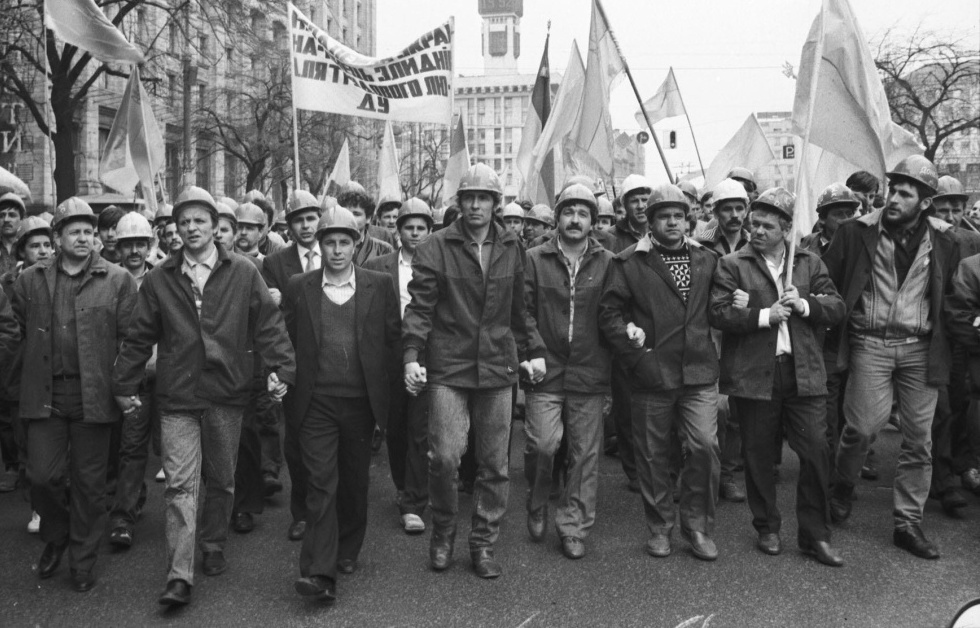
In 1991, the miners went on strike again; however, this time, their demands changed significantly: they marked the beginning of fighting for Ukrainian independence. The Ukrainian miners called for the resignation of Mikhail Gorbachev, the then President of the USSR, disbanding the Congress of People’s Deputies of the USSR, and constitutionalizing the Declaration on the State Sovereignty of Ukraine. About 50 mines joined the strike under the slogan “Independent Ukraine means the end of poverty for the working people.”
The leaders of the political movement “Narodnyi Rukh” arrived in the region and helped organize rallies on the miners’ side. Very soon, the protests reached Khreshchatyk Street in Kyiv and served as another push to the long-awaited collapse of the USSR. In the December 1, 1991, referendum, 83% of Donetsk and Luhansk oblast residents voted for Ukraine’s independence.
⑨ Struggle of 2014
Donetsk residents took to the streets to prove that Donetsk is Ukraine throughout the first half of 2014. On March 5, 2014, about 10,000 people with Ukrainian flags and slogans gathered in the city’s main square. The first serious clashes began on this same day, and the first martyr died on March 13. Dmytro Chernyavskyi, the spokesman of the Donetsk regional organization “Svoboda,” was stabbed to death in the crowd.
Notwithstanding intimidation, persecution, threats, and physical violence, the locals determinedly continued to muster for their identity until the last meeting on April 28, 2014. Thousands of Ukrainians also regularly gathered in Luhansk: they held public events in support of Ukrainian culture, sang Ukrainian songs, invited celebrities, and, importantly, displayed a movie about the fugitive president Yanukovych’s fortunes in his Mezhyhirya estate. It went on until thugs, called among people ‘titushki’, hired by Russia and brought in significant quantities by buses to Donetsk and Luhansk, began running the city in their way. The practices and approaches they instilled eventually led to the cultural, economic, and demographic decay of the entire region where peaceful Ukrainians had led their quiet and happy lives.
⑩ Donetsk, Luhansk, Alchevsk, Mariupol, Makiyivka, Khrustalnyi, Antratsit, Avdiyivka… All these cities are Ukrainian.
Historically, the territory of the Ukrainian East did not yield to Russia’s dictatorship. Instead, local people have always defended their right to live freely in their homeland. No matter how hard the aggressive neighbors tried to break the people of Donetsk and Luhansk, they continued wearing the yellow-blue flags, at least in their souls, if not temporarily, on their bodies. And we must remember this.