Even in the face of missile attacks and blackouts, creative industries do not stop. The film industry also continues demonstrating important stories — with a large number of them now dealing with the subject of war. Read on the three film projects supported by the House of Europe and showing on the screen the full-scale invasion and its consequences.
Listening to the World
Listening to the World is a documentary about a woman and her son who left Kharkiv at the beginning of the full-scale invasion and now live in Berlin. The main character, named Iva, was hearing impaired, but in Germany she underwent an operation and had a special cochlear implant installed. So now, she is undergoing rehabilitation and learning to hear.
With Iva, we shot our previous film Break the Circle on domestic violence. After its release, we wanted to continue filming her, for she really is a great character, full of energy, and a very unusual person involved in performances — that is what we wanted to make the next film about, if it were not for the full-scale war.
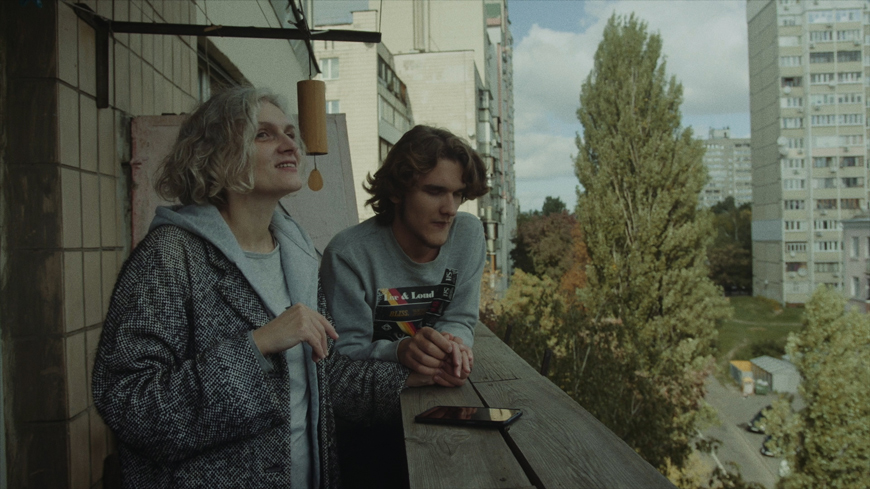
Since we kept in touch after the filming was over, when the invasion began, the film director, Liza Smith, helped Iva get out of the Kharkiv train station where she and her son were stuck. Thus, we met already in Lviv, where we started filming their further trip — first to Poland, and then to Germany.
Listening to the World differs from other films primarily by its theme. Here, the hearing-impaired heroine, who has lived all her life in Kharkiv, finds herself in a new country and a new city. She undergoes an operation and hears the first sounds in a new space and, one might say, with new body properties. She learns to hear gradually, as this cochlear implant assumes a long-term rehabilitation process. The person slowly and little by little begins to hear sounds that her brain somehow remembers and interprets. And this is not the kind of sound we imagine — it is quite artificial, similar to electronic one with some distortions.
Besides, Iva is currently learning German, and we observe the process of internal and external changes in her life and try to use the camera and sound to interpret for the viewer what is happening to the main heroine.
Now the project is at the filming stage. We have covered about half of the way. We have a team that travels from Ukraine to Berlin, which is our achievement. The team involves the director Liza Smith, the cinematographer (that is me), the producers Yevhenii Rachkovskyi and Olga Bezhmelnytsyna, and we have also found German co-producers who will help us work in Berlin. There is a lot of work ahead — the film needs to be finished and edited, the sound should be made, the film has to be painted, and only then, somewhere on the horizon, will the premiere take place.
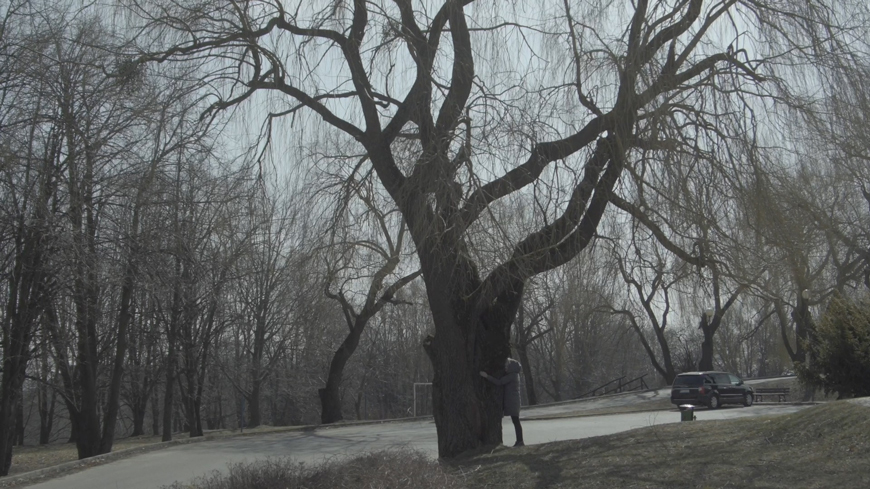
Since I work with a camera, I need perfect equipment not to waste time — this is extremely important for a documentary film. It is necessary to be mobile and able to shoot in any situation. Therefore, the funds from the House of Europe and Netflix Stipend for Filmmakers were spent on upgrading my equipment, which enabled me to work in a higher quality format.
The project is indeed important, for we show that, despite the war, we manage to make films, they exist and are pitched at foreign festivals, where we show our presence and talk about Ukrainian films. This is good, because if we didn’t speak, someone else would speak for us. And the film itself, I am sure, will resonate with the audience since it is about Ukrainians and their connection with their country at a distance.
I used to shoot both documentaries and feature films, but I have no feature films now. So I focused on the documentaries completely related to the war, the military, and the civilians who have suffered from the Russians. After all, so many tragic stories are happening right before our eyes, and they just need to be filmed. Hence, we can say that the war gave an impetus to documentary films.
Lifelong Songs
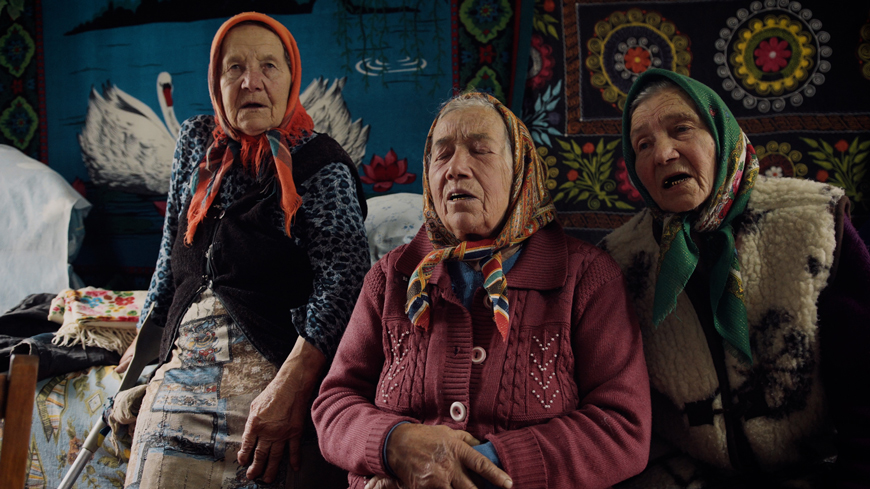
In 2017, at a private school of folk singing, my wife Ulyana Osovska and I immersed ourselves in Ukrainian polyphony — we began to study folk songs, their origin, features, and influence on performers and listeners. As soon as we arrived, we were invited to a festival-expedition to the village of Kryachkivka in Poltava oblast — it is one of those villages where in the 1960s and 1970s ethnomusicologists recorded and preserved unique songs.
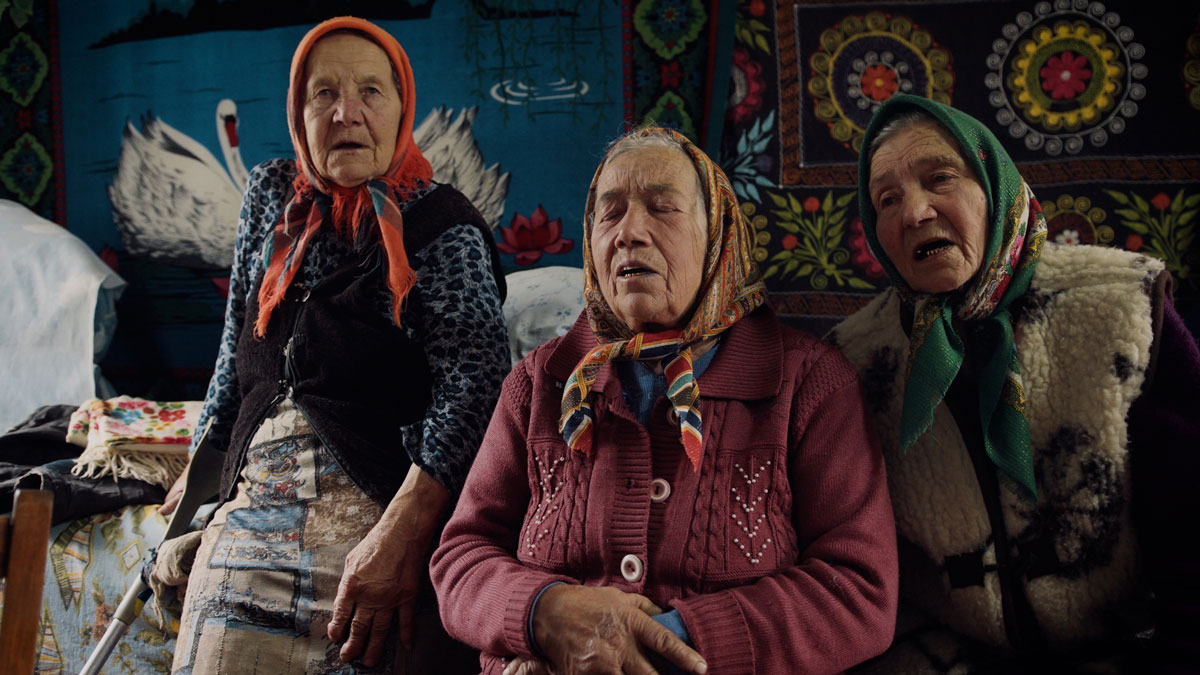
From meeting people for whom singing is one of the meanings of life, our first short film on this topic, Lifelong Songs, was born. It tells a story of two women who have different lives but are united, apart from their names. by their love of traditional songs. 82-year-old Nadia Mykytivna from the village of Kryachkivka has been singing — for 58 years already — in the folk ensemble “Drevo”, one of the most famous collectives in Eastern Europe among folklorists. Meanwhile, there is also another Nadia, living in the USA — a short visit to Kryachkivka and Kryachkivka songs have once changed her life. The woman has made an autobiographical one-man play “Broken” based on this story and stages it in Ukraine.
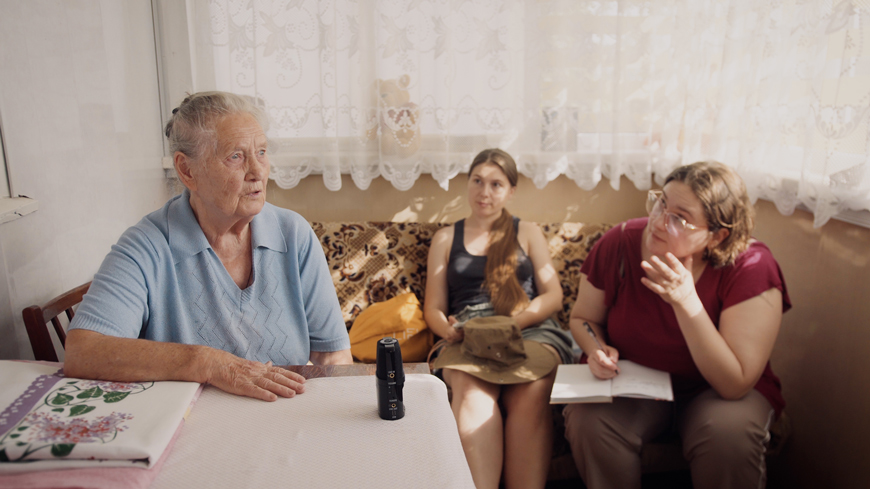
We hope that our current film will be a logical full-length sequel to the latter one. We are now at the development stage, but since we have been working on this topic for more than 5 years, we already have more than a third of the footage shot. Thanks to the House of Europe, we managed to organise several filming days — in particular, an ethnographic expedition to Vinnytsia together with young ethnomusicologists. During the trip, we managed to record hundreds of ritual songs from the bearers of the tradition inherent in this region.
For an in-depth study and understanding of Ukraine, and therefore of oneself as a Ukrainian, the public space seems to lack a whole dimension, with only simple answers being on the surface. But if you analyse the topic of folk polyphony, you can see that these are deeply therapeutic songs, the learning and performance of which have a positive effect on human psyche at many levels.
Therefore, using the example of people who definitely know and love Ukrainian folk songs, we want to show the cultural layer that used to be extremely popular in all territories of modern Ukraine just 100 years ago. However, over time, in particular due to the destructive Soviet policy, it began to be forgotten to such an extent that it remained available only to a small number of ethno-enthusiasts.
Today, I can’t plan a film for several years, gradually receiving funding at different stages, as it was before, because realistically my planning horizon is a few weeks at most. Besides, shooting itself has become less of a priority for me compared to other years. However, my wife and I shoot when we simply can’t help doing this — when the subject captivates us totally and it is simply impossible to keep silent. It seems that it is the same this time, so we are gradually gathering material and preparing to “play the long game”.
Diaries of the War — Ukrainian Sappers
From the very first days of the full-scale invasion, my colleagues and I took cameras and began filming everything that was happening while recording interviews and creating social stories for national and international television. The idea of this very project arose in the fall of 2022, when the production of another documentary film Ukraine’22: Diaries of the War was being completed.
These were the stories of volunteers, cultural figures, journalists, and the military working for our victory since the first days of the invasion. While recording an interview with one of the heroes, a sapper who participated in the execution of combat tasks in the Eastern direction, we thought that this topic was virtually undisclosed on television and in documentaries about the war in Ukraine.
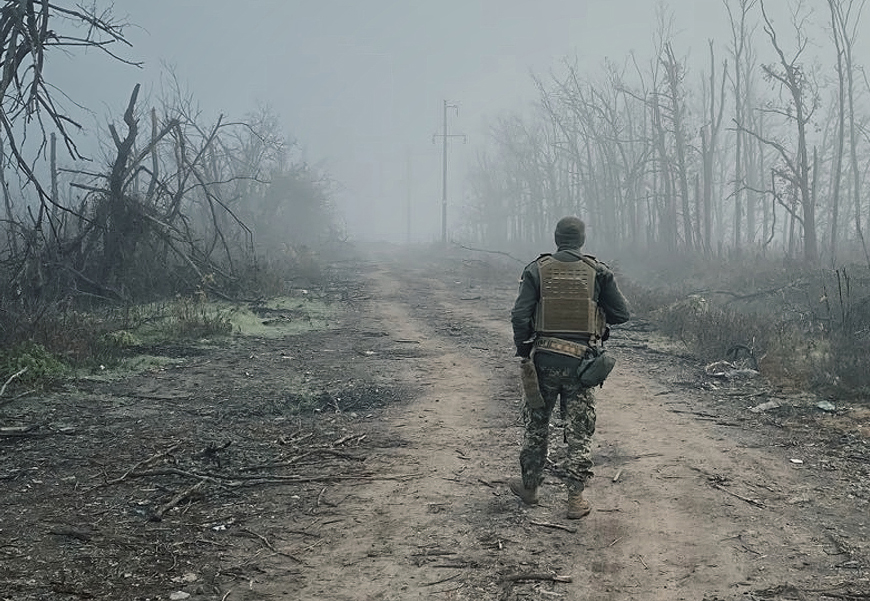
Hence, in early 2023, together with military servicewoman Olga Povoroznyuk, who heads the public relations service of one of the divisions, we decided to start working on the future project Ukrainian Sappers. Later, we applied for the Netflix and the House of Europe Stipend. We began the work on the film on our own without any budget: I shot and edited everything myself, while Olga helped with stories, archival materials of the military unit, and sappers’ personal materials.
The documentary Ukrainian Sappers tells a story of the 143rd Joint Training Center “Podillia” of the Support Forces of the Armed Forces of Ukraine. These are military personnel who, more than 20 years ago, were the first in Ukraine to engage in humanitarian demining, training of specialists from all structures of Ukraine — from the Security Service of Ukraine to the Defence Intelligence of the Ministry of Defence of Ukraine — and participation in international UN peacekeeping missions.
Over all these years, they have gained a lot of experience and expertise. This helped to successfully carry out mining and demining operations during the ATO, JFO, and literally from the first hours of the full-scale invasion. This is a very special job: A sapper always goes first during an offensive or counteroffensive and moves last during retreats. It is on them that the success of this or that operation and the safety of military personnel and civilians’ life in liberated territories depends.
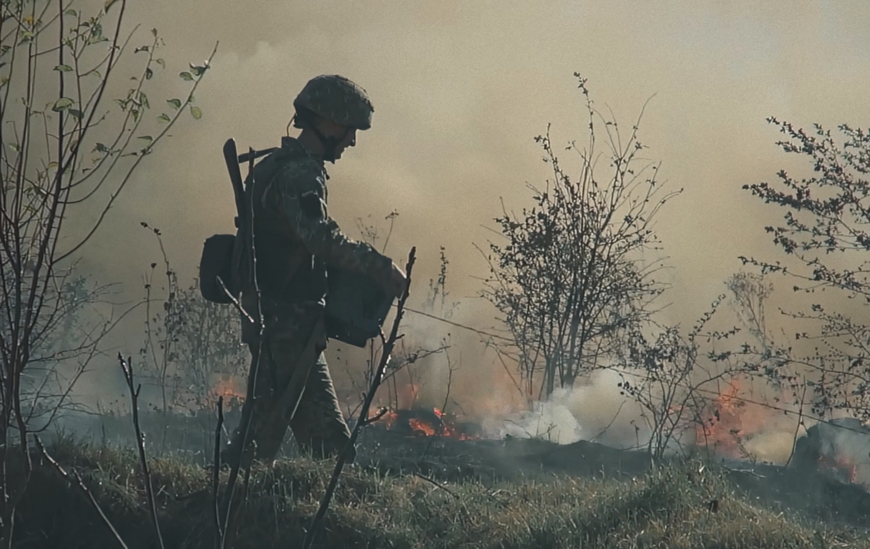
For the film, we gathered more than 40 hours of archival material, and from August to November, we filmed more than 20 interviews with the military personnel, teachers, and veterans of the sapper service in Ukraine.
I don’t claim any great cultural value with my author’s projects. Primarily, this is about filming important stories of our defenders and the key military specialty, which plays a major role in the defence of the country and return of Ukrainian territories.
House of Europe is an EU-funded programme fostering professional and creative exchange between Ukrainians and their colleagues in EU countries and the UK. The programme focuses on different professional fields: culture and creative industries, education and youth work, social entrepreneurship, and media. House of Europe is implemented by Goethe-Institut Ukraine.