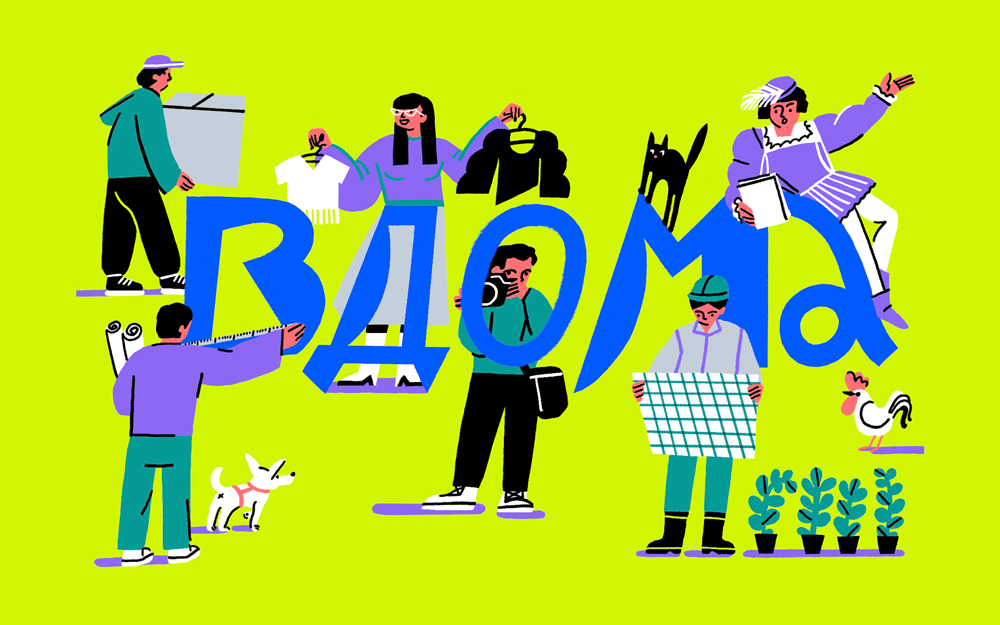
The best ideas are result from the collaboration of people of various talents. Hatathon 4.0: Ukraine Heritage Edition is the House of Europe’s programme aiming to respond to the war challenges and support innovations to protect Ukrainian culture. The special programme has helped different people to unite their technological solutions, creativity, and professional expertise to digitalise Ukraine’s cultural heritage. Here are the three initiatives that were supported at this year’s Hatathon.
Memories of Ukraine
In 2019–2022, the “Bank of Memories” team started implementing the concept of preserving Ukraine’s cultural and historical heritage. As part of this activity, we managed to create the first digital monument to Count Pototsky, make a large installation at the Maidan Nezalezhnosti, and get support from the President of Ukraine. Our team won a tender and taught 20 people to work on the new equipment in Mariupol. Our laboratory had 3D scanners, printers, VR glasses, 360 cameras, quadrocopters, etc. — everything needed to digitalise Ukraine’s cultural and historical heritage.
Unfortunately, as a result of the full-scale invasion, the laboratory was destroyed, the equipment was stolen, and many qualified professionals who worked there died. The only thing that remained, in fact, is the video.
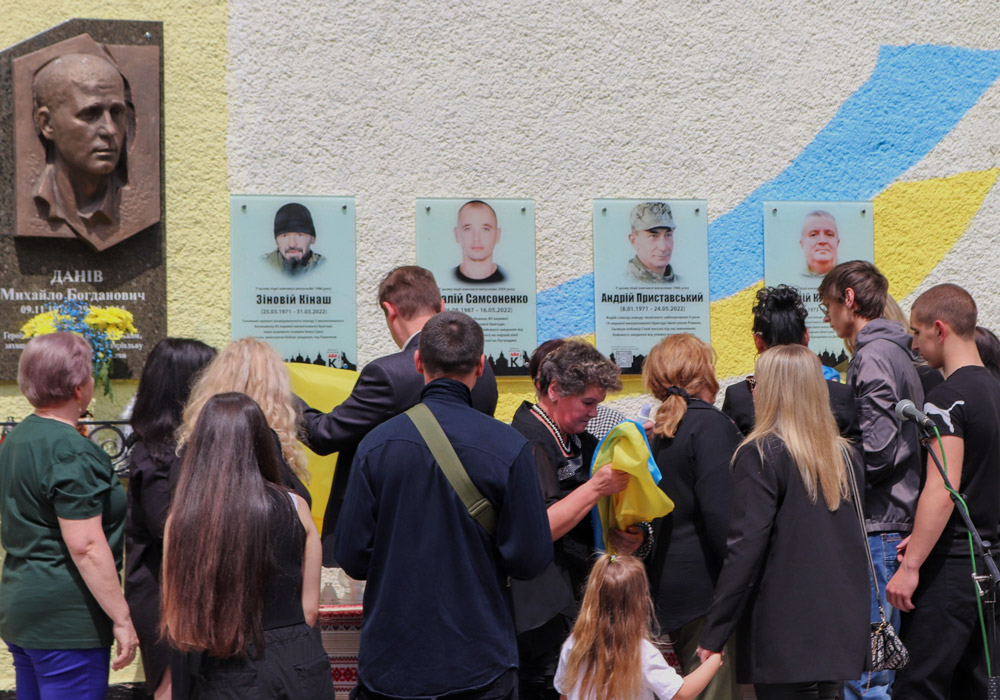
In early 2023, we established the “Memories of Ukraine” to help the military and their families. We formed a team of activists to preserve the memory of heroes who sacrificed their lives for Ukraine — through creating digital stories and monuments. As soon as we published the application form for the memorial, we received 100 orders. That made us realise that Ukraine needs this project. Currently, 20 volunteers work on the “Memories of Ukraine” — mostly war-affected or temporarily displaced persons.
Here is how the collection of information happens: you enter the website and choose “Apply”; you fill in the Google form, add a scenario (data on the person to be mentioned in the film), and provide all the photos, videos, and voice samples, if you have; then, a manager contacts you and checks the information, holds several conversations to become sure that all data are correct; next, we produce a film and “bind” it to the augmented reality via a QR-code; we store it for the families in the “Bank of Memories” system for 100 years; we produce the actual memorial; finally, we organise an opening ceremony in communities with the support of local authorities and families, if desired.
Previously, information was collected and processed by ordinary people without professional expertise in psychology. They would let all the emotions through themselves, which was rather unhealthy. So now, the information is collected by specially trained people. Military psychologists teach new organisation members so that they could work easier without taking everything close to heart.
Our team consists of the technical and creative parts. No similar project uses the toolkit we possess — artificial intelligence, augmented reality, and blockchain. As a result, we get quality audiovisual content at a manufacturing price.
We have opened 200 memorials, with 500 being still in operation, and got 1,000+ applications from families. We have received support from the President of Ukraine and recognition from the House of Europe, Goethe-Institut, and the German Embassy. As the only representative from Ukraine, we have been invited to the international Europeana conference to demonstrate this social service and broadly present our project in the EU. We entered the top 100 Ukrainian civic organisations in 2023.
The House of Europe granted us EUR 2,500 for winning the Hatathon 4.0. We have used this money to test neuro networks to create quality memorials faster. We have also won a trip to the Hague to present our project there as well. Now, we are an official partner of the EU and Europeana. Besides, more Ukrainian organisations trust us and are willing to cooperate now.
We remember the story of addressing Volodymyr Zelensky to support our initiative of digitalising Ukraine’s cultural and historical heritage. The President’s Office then sent a proposal to all the regions, and in one day, numerous communities called us requesting cooperation. Back then, we visited half of Ukraine’s regions, discovering their needs for digitalisation. That was a unique opportunity and a push forward. We didn’t expect that and didn’t even know where we would land in times of war.
Actually, we wish the memorials we create were not needed anymore and there was no war. This is our main desire. We dream that all people in Ukraine who care about honouring the memory will hear us and join us in working on this project. We aim to create digital memorials for all the families who wish this. For that purpose, we would like to partner with two or three organisations in each region to produce digital memorials, as by now, we have realised that our strength is in unity.
Mariupol.me
The success of our project “Mariupol.Me” is inextricably connected with team building.. This is truly a remarkable story, for the meeting of co-creators at the House of Europe’s “Hatathon 4.0: Ukraine Heritage Edition” was absolutely random and unpredictable. We joined the event having different goals and visions, but managed to unite our efforts and expertise for a quality result. The three of us are, in one way or another, linked to Mariupol. Together, we sincerely support the preservation and digitalisation of Mariupol heritage, and it was this aspect that we succeeded to reveal within our collaborative project “Mariupol.Me”.
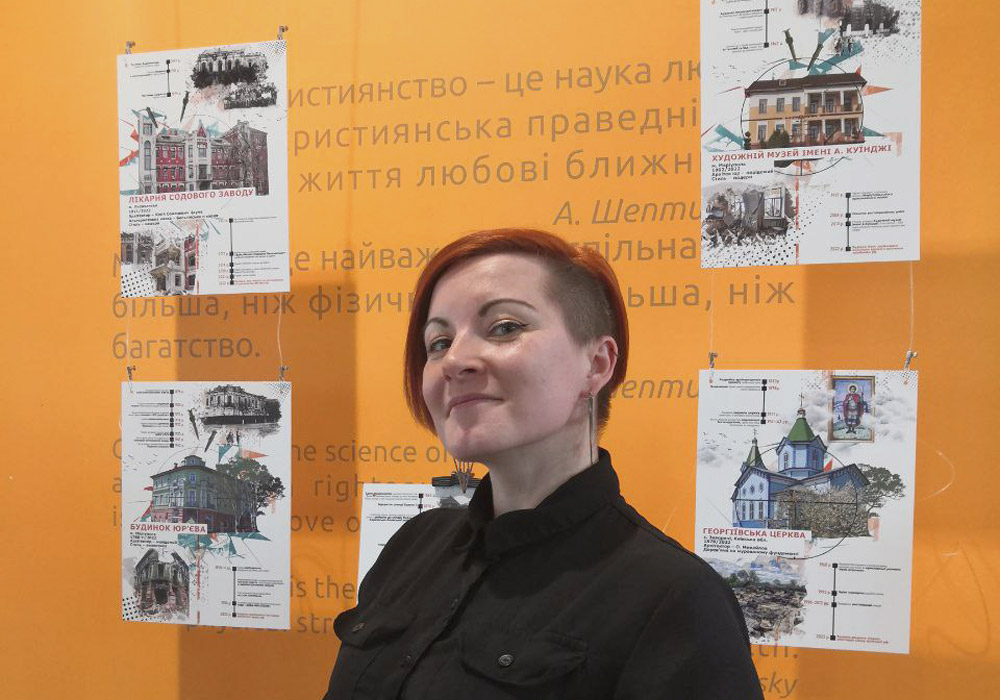
We have analysed and found out that there are plenty of digital products in public access presenting Mariupol’s cultural heritage: for example, a digital copy of the Mariupol Drama Theater from “Skeiron”, a 3D tour through the Kuindzhi Art Museum, a lecture on the architecture of pre-war Mariupol, etc. However, these materials are hosted on different platforms and information sites and hence sometimes remain out of users’ sight. That is why we decided to unite such initiatives of the virtual world about Mariupol on a single platform and create a phygital product — a project found in both physical and virtual dimensions.
Our project’s primary aim is collecting as many digital initiatives about Mariupol as possible on one platform; at the same time, we all contribute to this idea with our own reflections — through stories, design, and texts. This inspires and helps manifest own identity. Since everyone of us has their main job, it is not always easy to come together for ongoing meetings and discuss some relevant issues. But each joint zoom is always about ideas, news, and emotions.
Our project completely breaks the stereotype of Mariupol as an industrial city. We show its unique multicultural heritage, now destroyed and robbed by the Russians: The Platform “Mariupol.Me” hosts 3D tours through museum spaces, the singing of the Greeks of Pryazovia, digital photo archives, and studies on monumental heritage. Most of the mentioned has been destroyed physically, but in the virtual world, you can see the treasures Mariupol possessed before the Russia’s full-scale invasion.
This city is my life. And today, in forced exile, I see it as my goal to tell about Mariupol and its people, carefree pre-war joys, and the terrible tragedy due to the city’s destruction. And if the visitors of the physical exhibition and the virtual portal can discover the wonders of my city through our project, I believe the job was done not in vain.
The House of Europe allowed our team to come together during the “Hatathon 4.0: Ukraine Heritage Edition”. Another crucial factor in continuing our project was the monetary reward for the second place: It is these funds that we decided to spend to cover the costs of art map printing, creating an installation, and organising educational lectures related to Mariupol.
“Mariupol.Me” will become a successful case for rethinking the traumatic war experience and establishing professional cooperation with the representatives of civic, cultural, and research organisations. Moreover, it will help systemise historical knowledge, conceptual developments, and cultural products useful while implementing new cultural practices and creating a complex vision of rebuilding the city of Mariupol. On one platform, we strive to unite excellent experts and cultural project consumers who are interested in preserving Mariupol’s heritage. These include the representatives of technical, cultural, educational, media, and creative spheres, displaced people, journalists, architects, and urbanists.
We are already considering scaling up the art map of “Mariupol.Me”. Dreaming and looking forward to the future a bit, we would like to record audio-guided tours dedicated to Mariupol, create thematic table and computer games based on the project’s elaborations, and hold educational events to create a city recovery strategy after the de-occupation.
Meta Spadok
At the end of 2021, I finished a Clo3D basic course from Pushka School. I was full of optimism and inspired by new opportunities. First of all, I wanted to try myself as a digital fashion designer — to create virtual clothing that will never turn into a trash mountain somewhere in the ocean. But then, it was the end of February 2022… My plans changed — and so did the rest of the world.
I was eager to help but didn’t know how — until I saw the students of Pushka School donate their digital items — clothing and accessories — to a charity project. Thus, I started realising how I can be helpful.
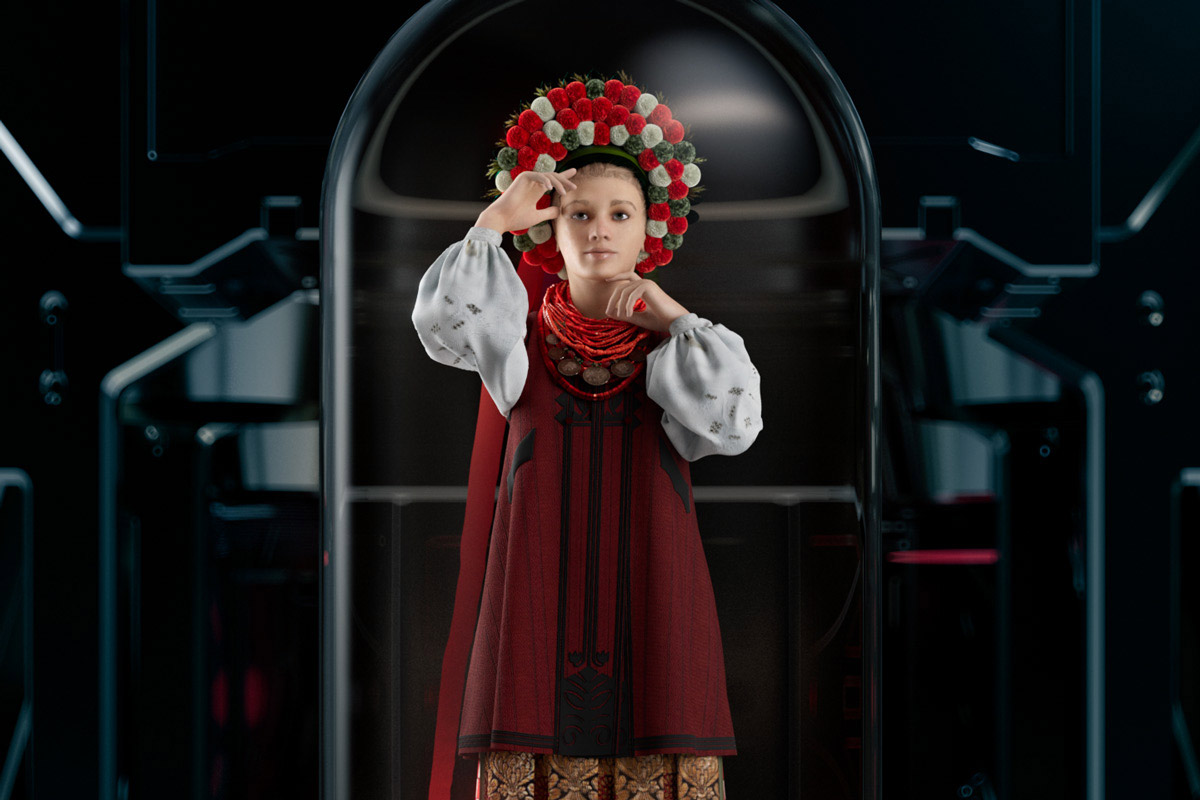
Creating clothing for another charity project, I browsed the web pages of Ukrainian museums showcasing traditional clothing pieces. That is when I came up with an idea to develop their digital versions, as with the loss of Ukraine’s cultural heritage, we lose Ukraine’s identity. One aspect of this idea was to open the rich Ukrainian culture and traditions to the world. Another aspect was to save traditional Ukrainian clothing that “disappears” and gets destroyed [with time], leaving no traces in a format impervious to the flow of time — digital one.
My journey to this project started in late 2021 with the digital reproduction of a wedding shirt and skirt from the Kirovohrad region from the “Baba Yelka” ethno laboratory collection. I wanted to preserve it in digital 3D format and make an AR lens so that people could try it on without putting on the fragile authentic piece.
Once, I saw the House of Europe’s Hatathon and posted the link on my Telegram channel. I got a response from a friend, Helen Do, telling me about another girl, Liubov Matiichuk, whose idea was to also digitalise ancient clothing. I didn’t dare to do it alone, but now it was as if fate suggested companions. Together, we applied for the Hatathon, and soon, Oko — also a 3D specialist — joined our girls’ crew.
At the Hatathon, our “quartet” got the third place. We received financial support from the House of Europe, which allowed us to start implementing the Meta Spadok project. We aim to preserve traditional Ukrainian national clothing. This will enable future generations to stay connected with the country’s history and culture through its visual representation in the digital format.
We “sew” each item’s element as it would happen in the real physical world. So far, we have reproduced two complete outfits from Naddniprianshchyna [Ukr. for “over Dnipro land”, which refers to territory on either side of the middle course of the Dnipro River] — a male and a female one. They include underwear and outerwear, as well as shoes and accessories.
Working in this area, we became even more convinced that traditional Ukrainian clothing is a rich historical and cultural layer with unique features. Seemingly ordinary things actually reflect territorial, social, and other aspects of Ukrainian life. They all have regional peculiarities concerning embroidery, bright colours, traditional materials, and specific cuts.
We strongly believe that Meta Spadok can become a powerful educational tool promoting history and culture via interactive technologies, help traditional craftspeople and artists engage new clients and support their art, and present Ukrainian culture and traditions globally.
In the future, we plan to add new looks and models, collaborate with museums, educational institutions, and other projects to develop together and exchange experiences, and, of course, cooperate with artists, ethnographers, and private collectors. Moreover, we plan to use augmented and virtual reality, add new functions, and integrate even more Ukrainian projects into the meta world.