


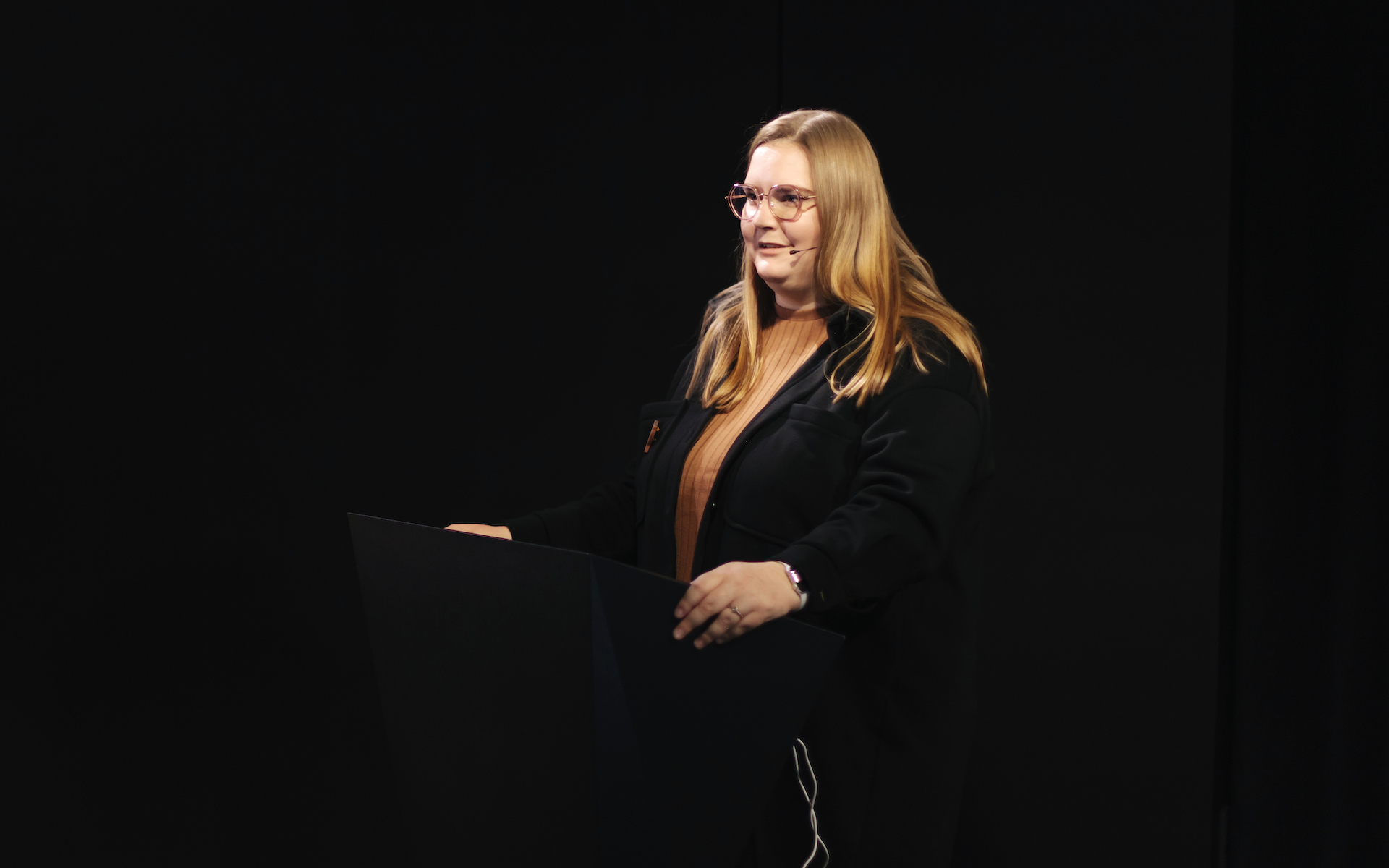
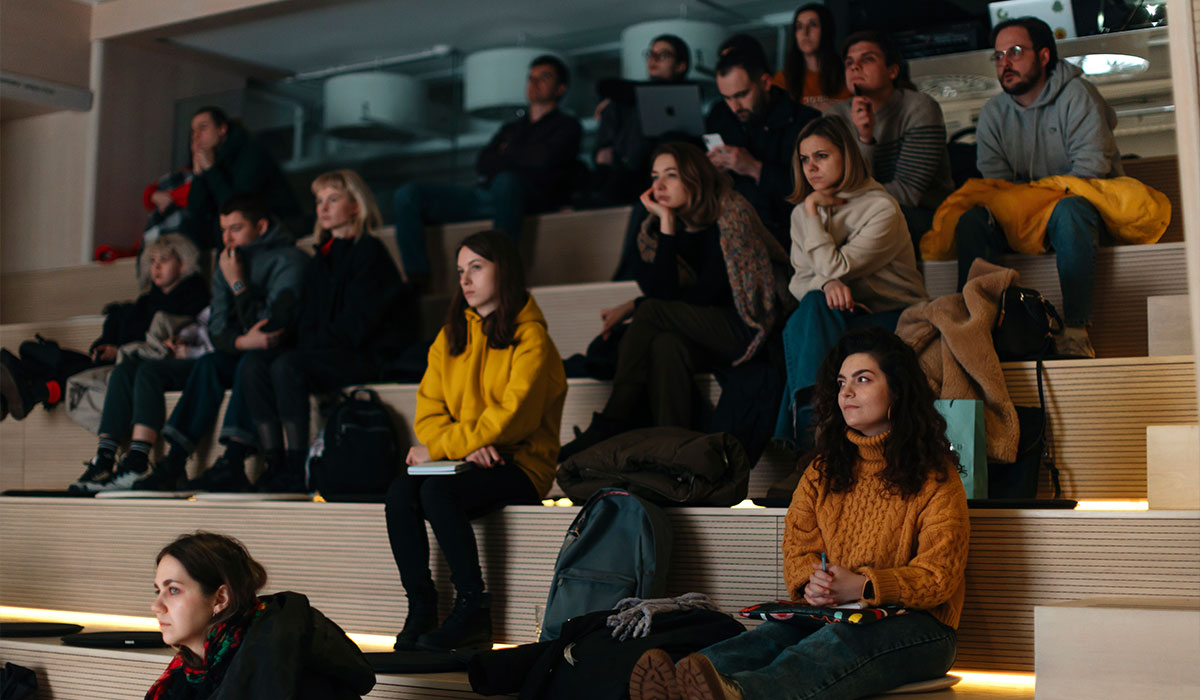
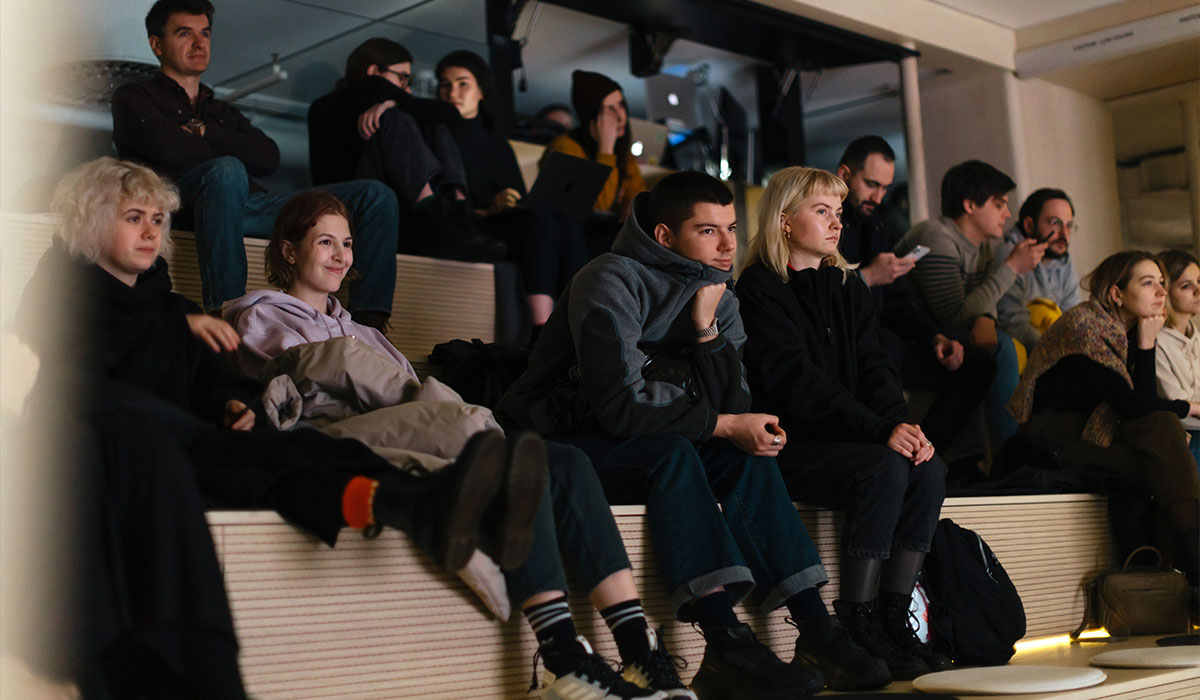
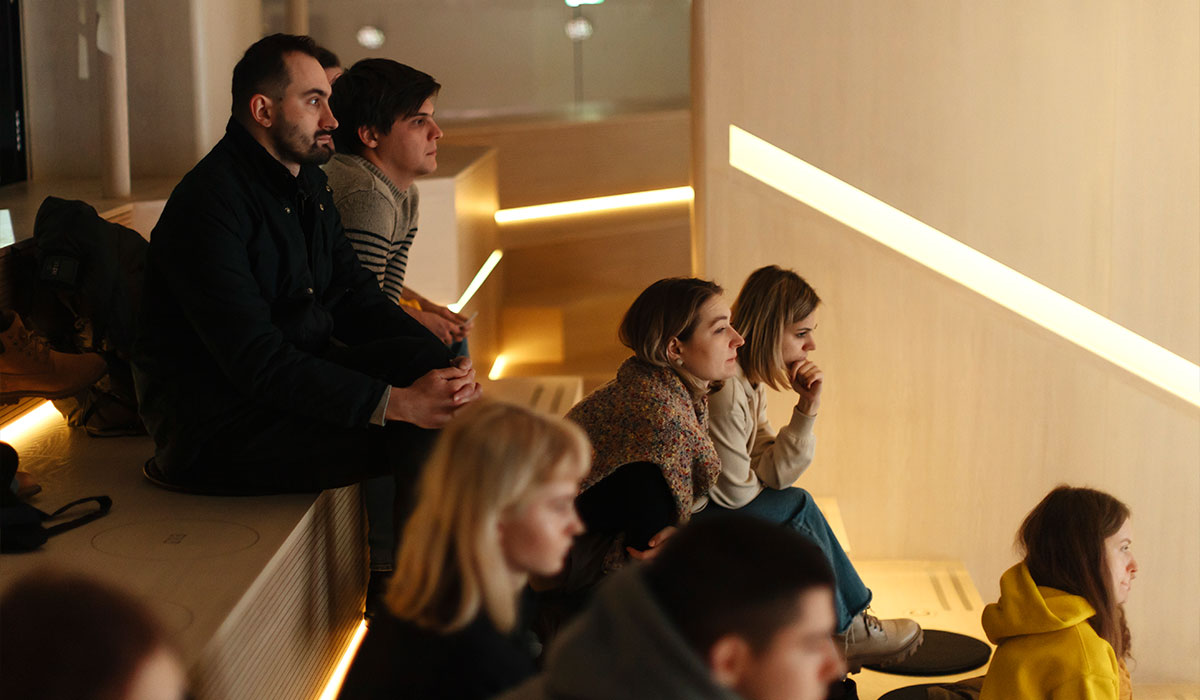
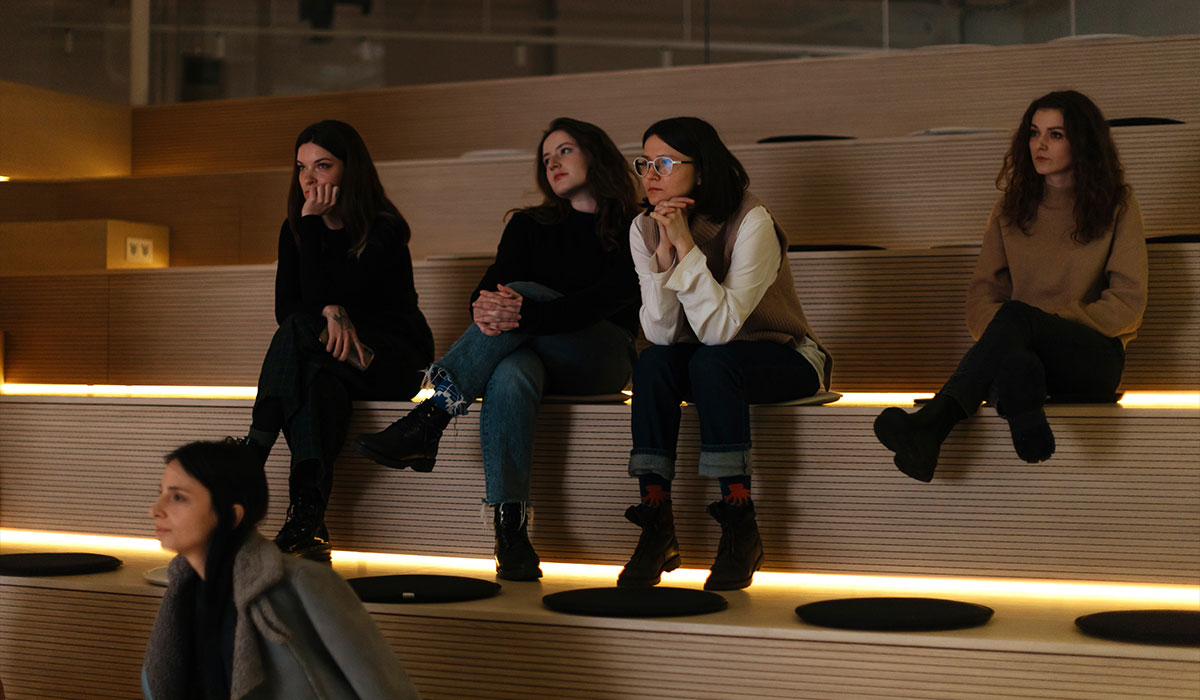
Humanitarian Aid is the series of offline charitable events in Kyiv by Ukrainian magazine Platfor.ma aimed at those whose school lessons on History, Ukrainian Studies, and Art were insufficient. Each week, we invite the top experts in the humanitarian field, offering them to share their expertise on certain matters. This time we tried to figure out if there is such thing as Ukrainian design and who embodies it. Graphic and digital designer, art director, lecturer at Projector.Humanitarium, and Ukrainian Catholic University, Olexandra Korchevska-Tsekhosh, talked about why we know so little about Ukrainian design in mass culture.
🇺🇦 Text in Ukrainian is available here 🇺🇦
Design has evolved alongside historical events and new technologies. Photography appeared in Ukraine in the 1850s, and by the 1890s there were commercial photo studios in almost every city. At the beginning of the 20th century, Ukraine was part of the empires, whose influence was strong but unable to break our identity. After World War I and the failure of the Directory and the National Liberation struggle, Ukraine became part of the Soviet Union. The New Economic Policy (NEP) was emerging, industrialization was taking place, and, simultaneously, the first wave of emigration was occurring.
The process of Ukrainization and positive attitude towards Ukrainian culture were replaced by its complete denial and intensification of colonial policies. Between the 1920s and 1940s, Ukrainian designers died during the Holodomor. World War II also affected all the institutions and organizations involved in design. For example, the department of the Ukrainian division of the Moscow State Art Institute, headed by Vasyl Kasiian, was evacuated to Uzbekistan. Ukrainian artists were in prisoner of war camps and displaced persons camps, and many emigrated overseas. The second wave of emigration began.
The 1940s–1960s were characterised as a period of “thaw.” With Khrushchev’s arrival to power, Ukrainian culture was able to gain back for a short while. A new idea of space exploration emerged, with the desire for the stars settling in the mind of every person in the 1960s. Many industrial design items of that time played with this theme — radio receivers, pitchers, and streamlined lamps similar to rockets appeared.
At the same time, there was a revival of Ukrainian culture. With the relaxation of tyranny, a whole movement of the The Sixtiers emerged, when artists from different fields communicated and exchanged ideas. The Sixtiers designers tried to reinterpret and reproduce the ideas of Mykhailo Boychuk.
In the 1980s, a commercial style emerged. Borders were gradually opening up, allowing for the opportunity for people to travel and learn from foreign experiences. In the same years, peasants in Ukraine were issued passports — before this, there was a ban on moving to the city, which made it difficult for people from rural areas to pursue a career in design. In Lviv, designers were not allowed to create political posters because Lviv was not considered a sufficiently politicized city. This is why it is not represented in the Ukrainian poster school.
In 1991, Ukraine declared its independence. The emergence of a free market allowed designers to assert themselves and seek out orders, rather than waiting for official assignments from the state. Rapid digitalization was taking place. Publishing also adopted new printing technologies, with some publishing houses reorienting themselves, and some closing down.
In the 2000s, we were westernizing heavily and did not want to work with our own culture. A huge number of companies appeared that used foreign words in their names or wrote Ukrainian names in Latin script. Under the influence of foreign TV shows and series, everything Ukrainian began to seem strange and uncomfortable.
In the 20 years of the new millennium, a new alternative education appeared, like Projector or School of Visual Communication. We are becoming indispensable specialists at the global market: we participated in the development of WhatsApp, not to mention we are making rockets for Elon Musk at the Pivdenmash (Machine-Building Plant). Ukrainians have created over 15 globally recognized startups: Grammarly, MacPaw, the Stalker game, Balbek Bureau chairs, Petcube, and others.
The full-scale invasion of 2022 accelerated the development of Ukrainian design and self-identification, as design begins with understanding who we are. We became stronger when we started talking about war in our design. Numerous graphic imageries are produced daily, with our memes and posters highlighting the informational motives and reasons for this war. All of these works make up the canvas of resistance.
Until February 24, many people were loyal to the Russian creative industry, Russian projects and products, and we could even see cases of cooperation. After the start of the full-scale invasion, there was an open breakup. So we all rushed towards everything Ukrainian.
Why Do We Know So Little about Our Design
Tyranny, emigration, de-clustering, unification, westernization, and globalization — this is an incomplete list of obstacles to the development of Ukrainian design.
The monopolization of information about Ukrainian design makes the subject less popular: for example, art historians who have scans of old prints often keep them for their dissertation theses or publish them in specialized publications.
In the USSR, logos, for instance, were developed by separate institutions. Orders for designing trademarks for artists were centralized, while logo authorship belonged to a group of people. This complicates the study of Ukrainian design, making it difficult to find correlations and study the Ukrainian school of logo design separately.
We need to cluster up. During the industrialization era of the 1920s, people survived by uniting and drawing experience from different industries. The interaction of people at the intersection of different disciplines gave many positive results. In particular, we should not give up institutionalized education, because despite all its drawbacks, it ensures the continuation of traditions and the opportunity to join the cultural context.
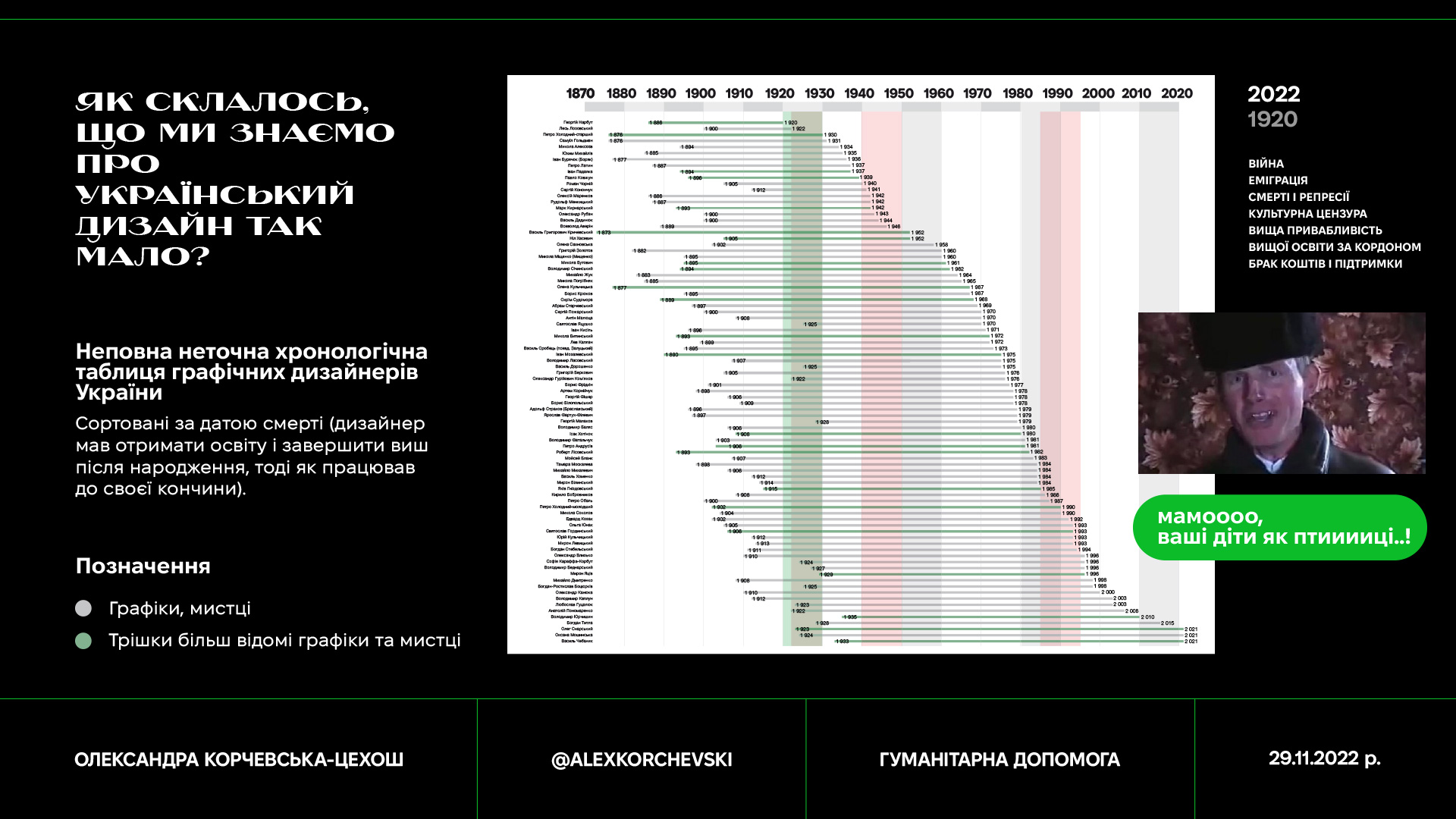
Repressions of Designers
Soviet tyranny towards Ukrainian design had a covert character as the authorities did not want it to attract attention.
Mykhailo Boychuk was executed by the NKVD [Soviet ministry responsible for security and law enforcement] after a year of interrogation. His wife, Sofiya Nalepinska-Boychuk, was executed half a year later. Fedir Krychevsky died of starvation during the Holodomor of 1946–1947. Ivan Padalka, a designer from Kharkiv, was imprisoned and executed. Vasyl Sedliar, a muralist and graphic artist, was executed by the NKVD. Karl-Richard Hagenmeister, an artist and illustrator, was sentenced for excessive promotion of Ukrainian art at the Kamianets-Podilskyi Art and Industry School, which he headed. Alla Horska, an artist, was killed in a basement and her body was hidden.
This list is far from complete. Sometimes the things that designers do are so important that they could be killed for that.
Ukrainian Design on the Map
Due to more opportunities and educational institutions, designers found themselves mostly in big cities, where there was strong government control.
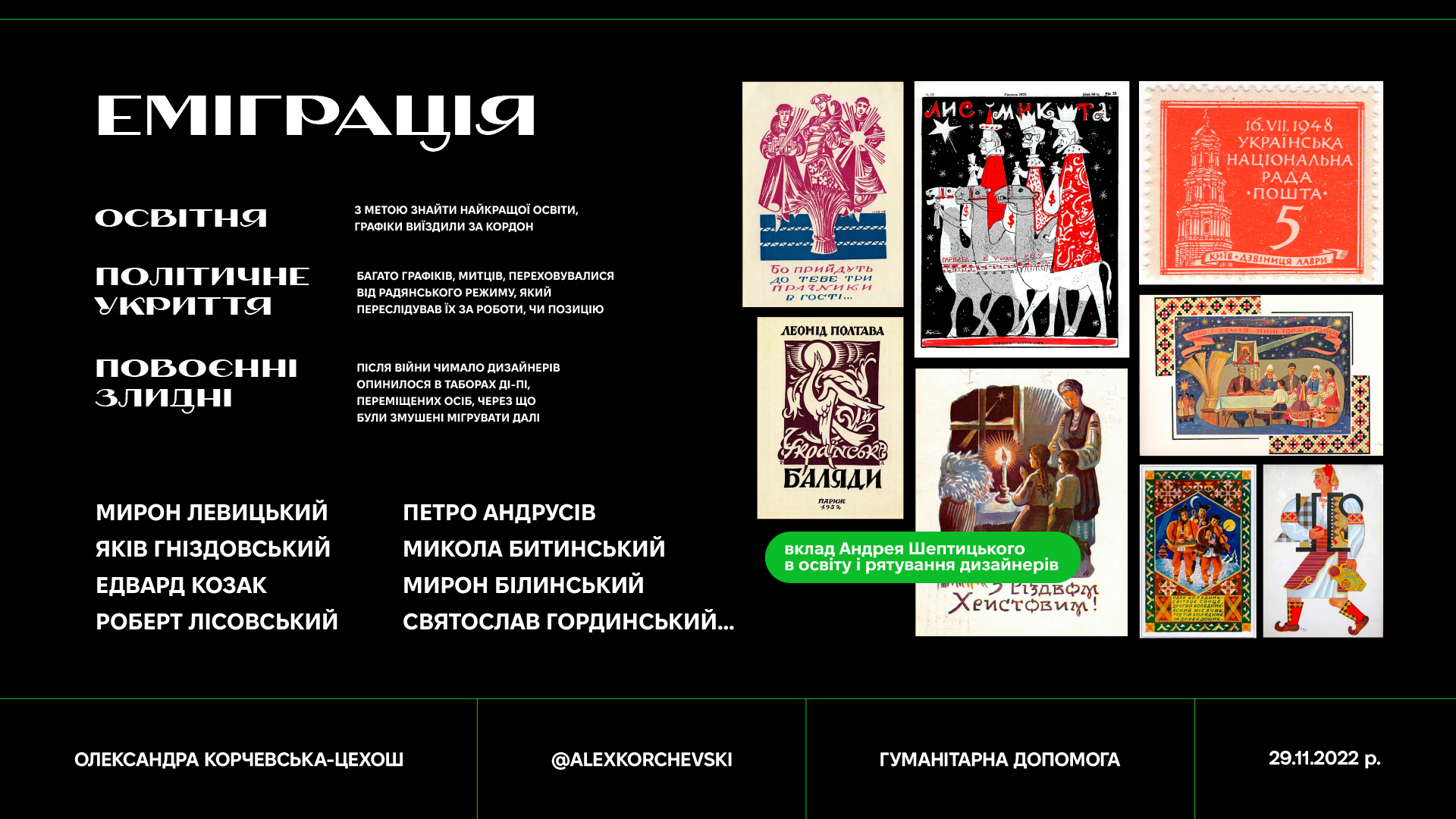
Designers beyond Ukraine mostly worked where they had emigrated in the first and second waves of emigration: Winnipeg, Toronto, New York, Sydney, Innsbruck, Prague, Berlin, London, and Rome. In each of these cities, there are Ukrainian traces, associations, and unions. The Art magazine began its work in Munich and later moved to the United States. Abroad, one could work with Ukrainian themes without fear of repression.
Many people left specifically to escape the persecution of Soviet power. Ohrim Sudomora, who painted Stalin with hands immersed in blood, was persecuted for the picture. The same fate befell Edward Kozak, who began publishing a humorous caricature magazine Lys Mykyta.
However, there were other reasons for emigration as well, for example, education. In the 1920s, before the start of the first Liberation struggles, Olha Kulchytska and Olena Kulchytska, Tetiana Yablonska, Mykhailo Boychuk, and Heorhiy Narbut traveled abroad for training and internships. Metropolitan Andrey Sheptytsky was a patron for many Ukrainian designers and sent them to study in Europe and America. During the German occupation of Lviv, Sheptytsky provided work for the Union of Ukrainian Art, giving them orders. The Metropolitan invested heavily in Ukrainian design.
Schools of Ukrainian Design
The Kyiv school distinguished itself with intercultural cooperation among those involved in the reconstruction and restoration of historical memory. Danylo Shcherbakivskyi, an art historian and ethnographer, worked with museums to preserve Ukrainian heritage. There is a theory that the idea of returning the trident of the Rurikids to the Ukrainian coat of arms originated with Mykhailo Hrushevskyi.
There also was the school of Boychukists working in Ukraine. In the 19th century, ethnography became popular, and in the 20th century, a particular trend for ethnographic research and authentic attire as a peculiar reconstruction developed. Mykhailo Boychuk tried to instill love for the St. Sophia of Kyiv and its mosaics by translating them into the language of Art Nouveau, which he learned during his studies in France.
Prominent representatives of the Lviv School were Sviatoslav Hordynskyi, Pavlo Kovzhun, and Oleksa Novakivskyi. Petro Kholodnyi (both father and son) were the first Ukrainian stained-glass artists. The Association of Independent Ukrainian Artists worked during this time. Ivan Franko was so interested in exlibris (a bookplate, which is to some extent the ancestor of modern logo) that he wrote an entire work about the theft of bookplates.
The Kharkiv school is characterised by constructivism, futurism, and avant-garde. Its representatives include Vasyl Yermilov, Ivan Padalka, and Vadym Meller. The Kharkiv Bauhaus used the ideas of German one, but in a Ukrainian manner. Therefore, to be more precise, that was Kharkiv modernism, which simply resembled the features of Bauhaus.
The Odessa school is closely associated with packaging, advertising, and product presentation. It was there that mass production of sweets began. Also, many beautiful cigarette packages have been preserved from that time.
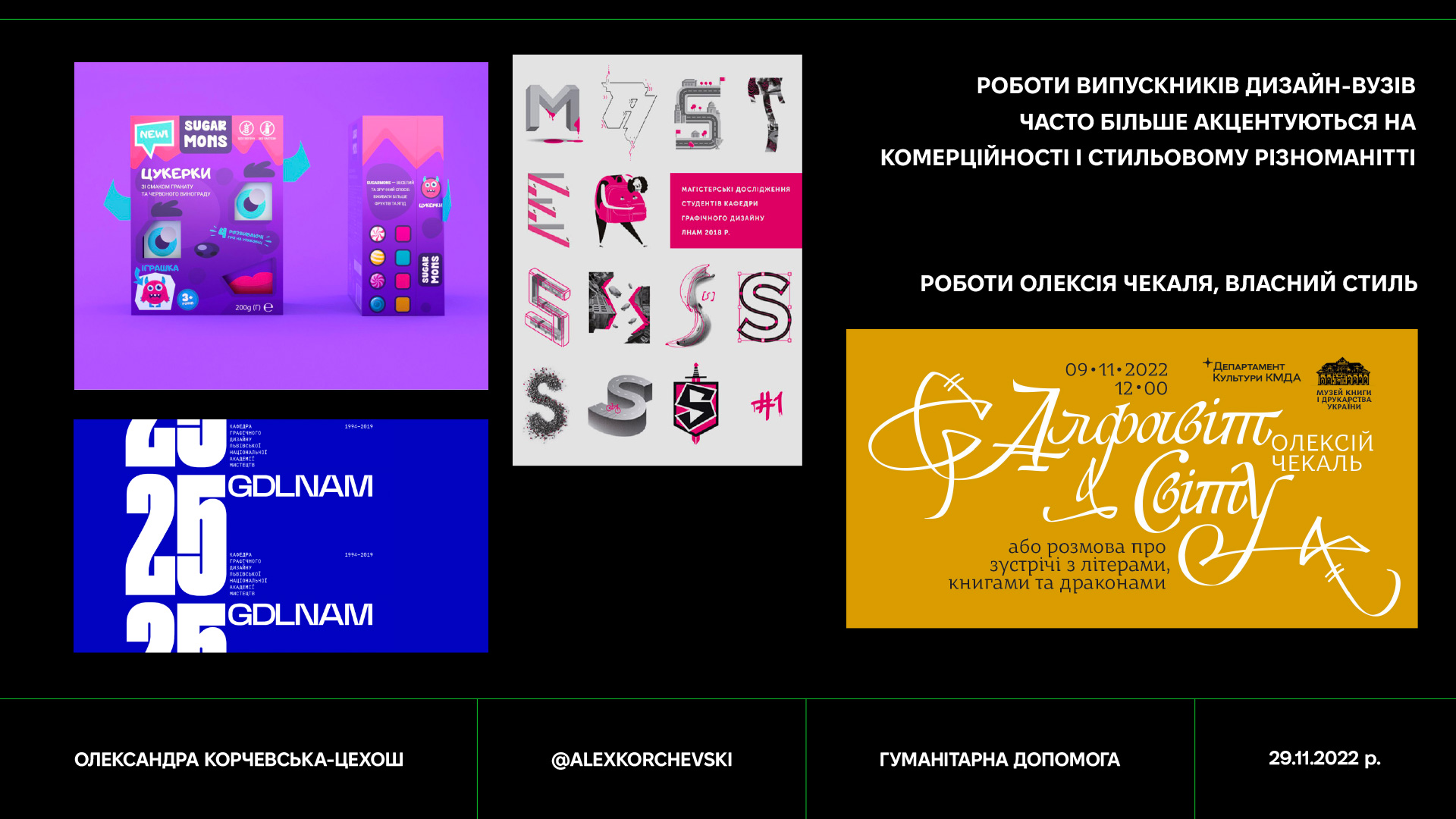
Today, it is much harder to distinguish schools of design in Ukraine. Firstly, people work for agencies and collaborate on specific projects, but overall everyone has become more individualistic. We lack phenomena that would bring designers together, for example, something like Behance Portfolio Review.
Secondly, uniformity and the desire to level differences within artistic schools, as well as the inability to cultivate differences, hinder the identification of schools in Ukrainian design today. The problem with design universities in recent years is that they no longer cultivate student’s own style of thinking, but rather teach techniques that are essentially crafts.
What Makes the Design Ukrainian?
It would seem that globalization should be something positive. However, on the other hand, there is a general trend towards commonality of design — even to the point of full cultural and technological integration. For example, Bohdan Tytla created the Dumbo elephant for Disney. Cassandre, also known as Adolphe Jean-Marie Mouron, designed the Yves Saint Laurent logo. He was born in Kharkiv and considered himself Ukrainian. Nevertheless, we know very little about these figures.
Westernization has given us beautiful streets in Kyiv and Lviv, elements of architecture, and charming cafes. In interior design, we depend on European and American trends. Experiments by Makhno Studio, Yakusha Studio, and Gunia Project could become elements of Ukrainian modern interior design. It can all look attractive — we just lack confidence in our own abilities. It would be cool if we not only imitated Western trends, but also worked on our own recognizable images.
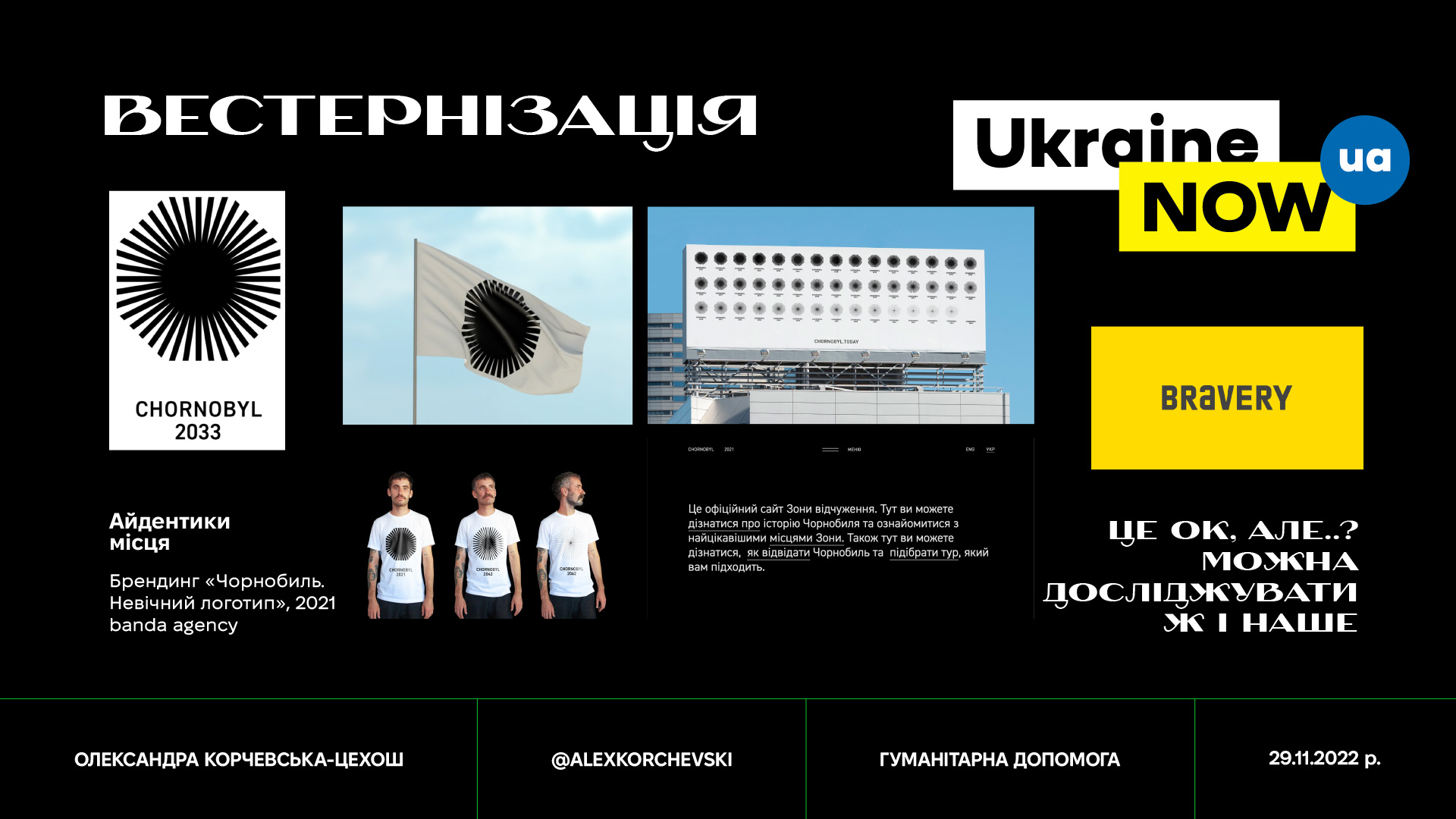
The lack of knowledge about Ukrainian design also leads to sharovarshschyna [simplification and distortion of national culture elements]. In Soviet times, sketches were destroyed and access to libraries and research was blocked. During the Holodomor, people were forced to exchange valuable jewelry for food. That is why most of our knowledge is based on stereotypes. For example, sunflowers — they were mass-planted on our territory only at the end of the 19th century, so they cannot be considered an ancient historical symbol. However, knowledge can be deepened through the works of Danylo Shcherbakivskyi, Dmytro Antonovych, and Volodymyr Sichynskyi.
Why is Ukrainian Design Considered to Be Just Emerging?
It is easier to call Ukrainian design young than to acknowledge mistakes and conduct research. Starting from the 20th century, we have had a whole cohort of Ukrainian graphic designers, a huge number of developments in the field of industrial design, trademarks, packaging, gold smithing, etc. The history of Ukrainian design lies forgotten somewhere in old chests or even abroad, hidden in sketches and notes.
Relatives often do not want to talk about their famous ancestors, fearing the topic of copyright and legal liability. For example, the descendants of Yakiv Hnizdovsky avoid any contact, talks of him, or sharing any of his works. And the story is quite typical.
The future is possible only with the memory of the past. It is necessary to recognize that Ukrainian design exists and is not in its infancy.
So What Do We Do?
Much of the preservation of the history of Ukrainian design depends on us. You may start your own collection of design items. If you see beautiful doors, take a picture, because they may be replaced tomorrow. There are projects involving Kyiv and Ivano-Frankivsk doors, Lviv tiles and stoves, Lychakiv and Baikove cemetery tombstones, and even sewer hatches!
Ukrainian design is what surrounds us, what we live in. So invest in eternity and work consciously. Choose what ignites your heart and what you feel related to.
You can also read this text in Ukrainian. Support Ukraine here.