Fighting for women’s rights, tackling poverty, and confronting discrimination are central to ActionAid’s work — but there is more. Founded in the UK in 1972, ActionAid has grown into a global federation working across many countries to advance social justice and human rights. At the core of its mission is the belief that all people, regardless of identity or background, should be able to live with dignity and exercise their rights fully.
Russia’s full-scale invasion of Ukraine became a catalyst for ActionAid’s engagement into Eastern Europe, accelerating its support to the region and leading to a more permanent presence in Ukraine. Since then, the organisation has worked closely with local partners, activists, and youth-led movements, focusing on feminist leadership, youth participation, and people-powered response in a time of war.
Platfor.ma explores how ActionAid has positioned itself as a long-term ally to Ukrainian activists and social movements, supporting their organising, advocacy, and resilience amid ongoing crises.

How the team researched social movements
Today, ActionAid Eastern Europe has teams based in Kyiv, Ivano-Frankivsk, and Dnipro. Each office responds to the realities of its local context while remaining connected through a shared political and values-based mission. This balance between autonomy and solidarity is central to ActionAid’s federation model and shapes how the organisation works with communities during wartime.
Over the past several years, supporting social movements has become a core area of ActionAid Eastern Europe’s work. This focus reflects a deliberate shift towards people-powered change — recognising movements as drivers of justice, not as delivery mechanisms for externally designed programmes.
“The consequences of this war are felt far beyond Ukraine’s borders because our world is deeply interconnected. But for us, the starting point was always justice and solidarity with Ukrainians. That meant stepping into the humanitarian response from the outset, building partnerships with Ukrainian and other Eastern European organisations, and recognising the need for solidarity-based partnerships with countries in the Global South that have also been affected by Russia’s aggression and its wider impacts,” says Matey Nikolov, Regional Social Movements Programme Lead.
ActionAid’s work with young Ukrainian activists began through cooperation with NGO STAN, a youth-led organisation focused on youth activism, civic engagement and leadership development. As relationships with different partner organisations deepened, the team initiated a broader process of a mapping of social movements in Ukraine — searching to map activist communities or groups united by the desire to drive specific changes.
Rather than treating mapping as a data gathering exercise, ActionAid approached it as a process of collective sense-making. The aim was to understand how movements organise under conditions of war, what challenges they face, what kind of support is the most useful — as defined by the activists themselves.
Working alongside movements, the team explored internal strengths and tensions, external pressures, and desired pathways for change. Tools such as SWOT analyses were used not as rigid frameworks, but as conversation starters to support movements reflect on their strategies and capacities. The findings were compiled in the People Power Infrastructure report, which documents how grassroots movements organise, adapt, and sustain themselves during wartime. The report is publicly available here.
“Through mapping social movements, we gained insight into how people organise amid war. This work is grounded in mutual learning — recognising Ukrainian activists not solely as recipients of knowledge, but also as producers of it, whose experience should inform and strengthen ActionAid’s global approaches and support front-line human rights defenders in other contexts,” says Matey.
How ActionAid builds collaboration
ActionAid collaborates with Ukrainian social movements and activist communities in two main ways: either the team reaches out to movements directly, or activists contact ActionAid themselves.
“I imagine an ideal world where our phones ring nonstop with people saying: ‘We want to change something. How can you support us?’” says Matey.
Partnership decisions are guided first by values. ActionAid prioritises working with movements led by, or accountable to, communities that are traditionally excluded or marginalised, particularly those confronting violence and discrimination. Non-violence is a core principle.
“We have a strategy — we want to support traditionally excluded groups fighting violence. So when choosing a partner, we first assess whether our values align. Then we look at their working methods and internal organisation.” adds Senior Learning Designer and Ecosystem Officer Yuliia Liubych.
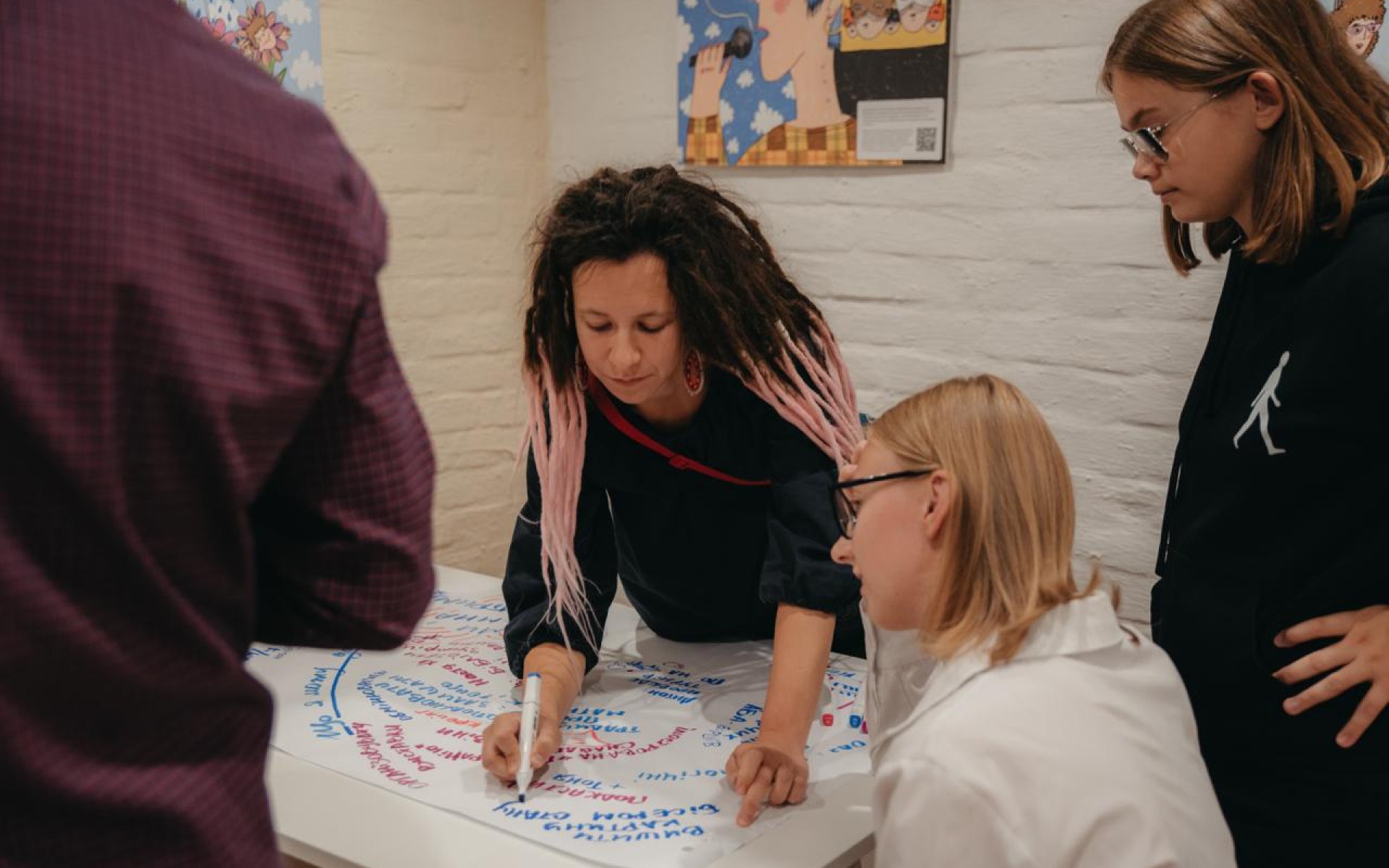
Once a partnership is established, the next step is identifying internal challenges, external goals, and the changes activists want to achieve. Then together they develop a workshop programme, lasting from two to five days. These workshops help movements work more strategically — identify their communities, understand allies and opponents, analyse the status of their issue, and select leverage points for change.
After the workshop, ActionAid might work together with the movements on representing them internationally — helping prepare a speech, strategise how to connect with others, or present their position effectively. Moreover, the ActionAidʼs team also organises events where all the movements can exchange experience or meet potential donors.
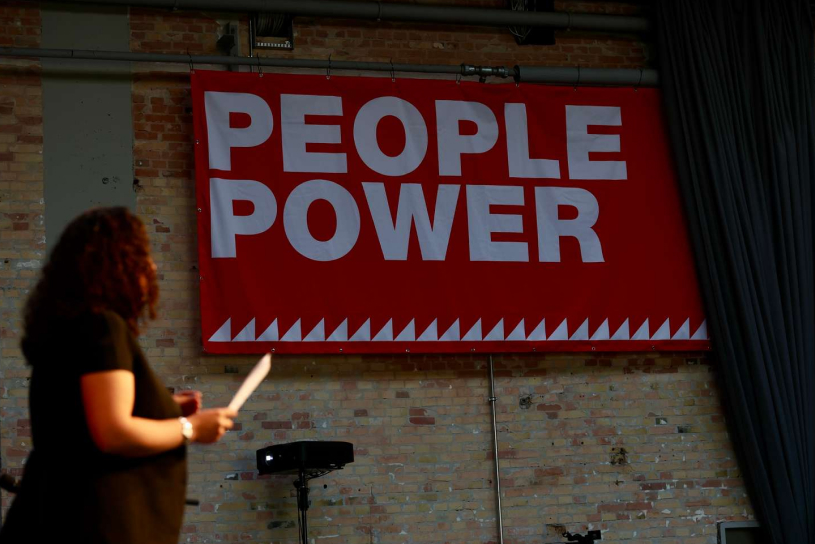
“Every year, ActionAid holds the People Power Conference in Copenhagen, where we invite movements and activists from around the world. This year, we brought one Ukrainian activist who was able to build connections with participants from Bangladesh, Mexico, and many other countries,” adds Matey.
Support as infrastructure
ActionAid’s support does not end when a workshop finishes. After the initial engagement, movements continue to meet monthly with the ActionAid team. Support adapts over time — sometimes focused on strategy, sometimes on care, and sometimes on urgent needs.
The overall cycle looks like this:
‣ a movement contacts ActionAid (or ActionAid contacts them);
‣ together they develop and conduct a workshop;
‣ ActionAid provides tailored support for six months;
‣ the final month is dedicated to reflection and planning further steps.
This approach reflects a conscious move away from short-term, project-based engagement. When the programme was launched, the team was concerned that activists might question its usefulness. Instead, the feedback from one of the supported activists was clear: “With you [ActionAid], we [activist community] achieved more in two days than we had in the previous two years.”
Infrastructure also means creating spaces for connection. ActionAid has organised peer exchanges and retreats, including a networking retreat for women activists in the Carpathians. Plans are underway to establish a more permanent space where movements can meet, collaborate, and support one another.
Since activists are spread across Ukraine, ActionAid works in a hybrid format — combining online engagement with regular in-person visits. Maintaining face-to-face relationships is considered essential for building trust and genuine partnership.
Funding as a bonus, not a central part of the partnerships
Another key area of support is helping movements access resources. ActionAid provides subgrants, with no fixed amounts. Funding decisions are based on the needs and capacities of each movement, rather than standardised grant criteria. Last year, the total subgrant budget was €10,000, distributed among several grassroots groups.
“One movement told us: ‘We don’t want money — we want knowledge,’” Matey recalls. “That says a lot. Often, organisations refuse to work with groups that lack financial or administrative capacity. We chose to do the opposite.”
In such cases, ActionAid takes on much of the administrative burden, allowing activists to focus on organising rather than paperwork. This approach treats funding as one element of support — not the defining feature of the relationship.
Movements growing with ActionAid
Across all of this work runs a common thread: a commitment to justice, care, and long-term solidarity. For ActionAid Eastern Europe, supporting social movements is not about scaling programmes or exporting models. It is about standing alongside people who are already organising, and helping build the infrastructure they need to sustain change — during war, and beyond it.
In 2025 the ActionAid social movements support program, the organisation has supported (and continues to support) two initiatives — the student collective “Direct Action” and the “StreetAidDaily” or “SAD” initiative.
“Direct Action” is a decentralised movement with chapters in several universities across different cities in Ukraine:
‣ in Kyiv — the Kyiv-Mohyla Academy, Taras Shevchenko National University of Kyiv, The National Academy of Visual Arts and Architecture;
‣ in Lviv — Ivan Franko National University, the Academy of Printing;
‣ Odesa — Odesa National University.
The total number of participants is around 800 people. The activists currently involved represent the fourth wave of “Direct Action,” as the movement has existed since the late 1990s. Their main goal is accessibility of education and housing for students, as well as improving student infrastructure as such.
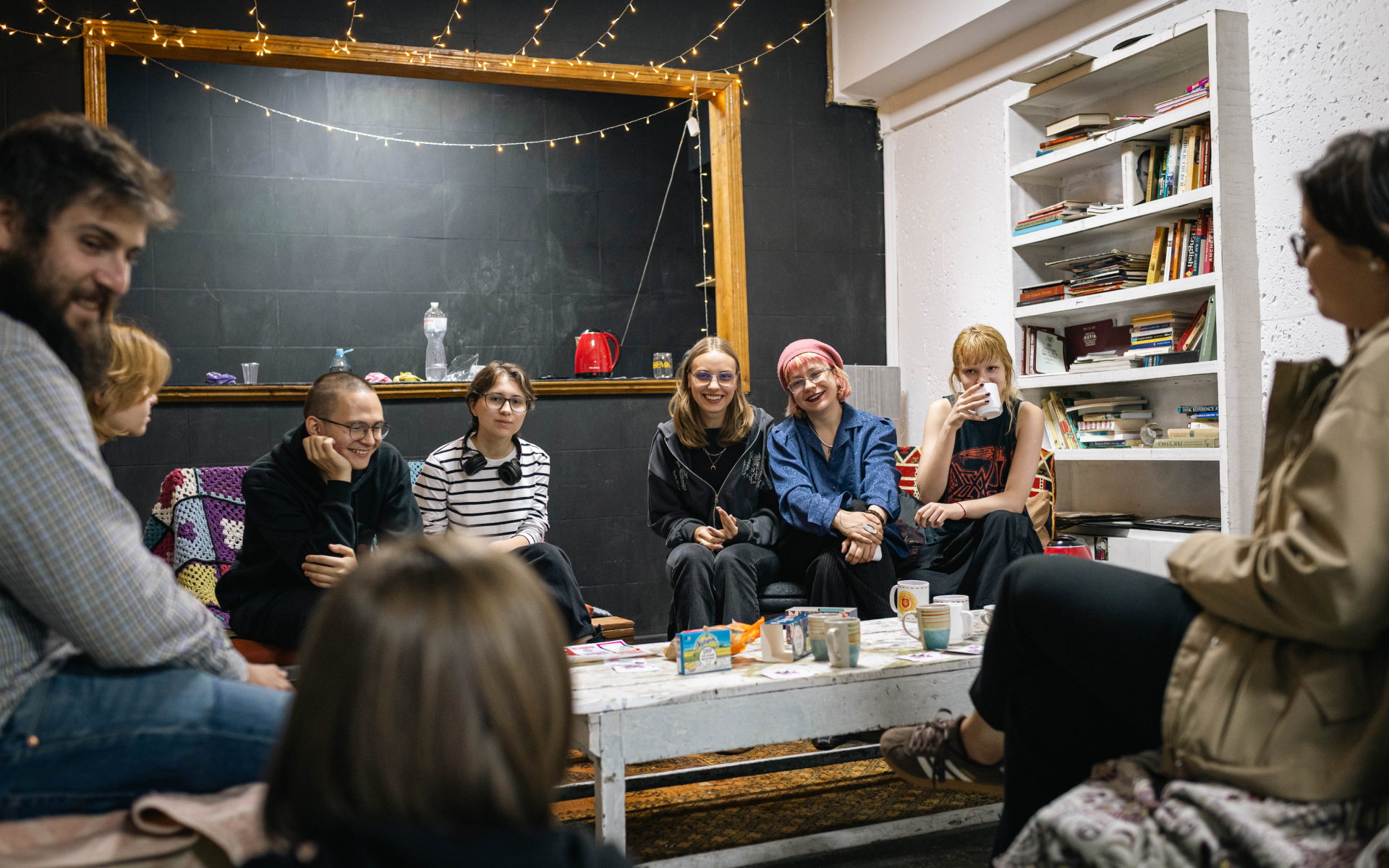
According to the team from the Lviv chapter, since the restoration of Ukraine’s independence, “Direct Action” has been revived several times, acted, and then, for various reasons, disappeared again. As a rule, this always happened spontaneously, and the name was free to use — meaning any students could take it and create their own chapter.
At the end of 2022, protests were taking place in Lviv, and many students were involved in organizing them. Out of this activism, a small collective emerged and began discussing the need for a more stable structure. While researching past student movements, the group came across the earlier existence of “Direct Action” and found themselves aligned with the values it once promoted. They decided to revive the initiative, significantly reworking it in the process — modernizing the structure, revising many of its original ideas, and adapting them to the current realities and needs of students, particularly in the context of the war.
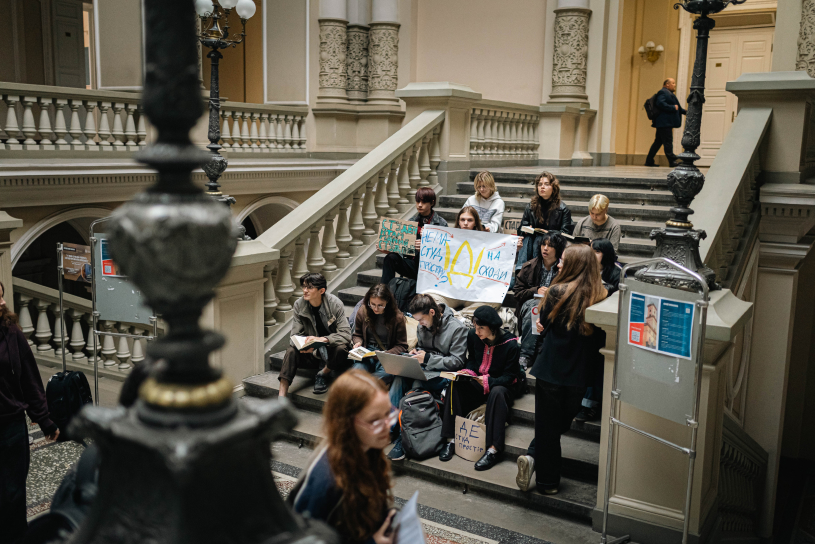
The team took as a foundation the idea of libertarian pedagogy — one that is built on equal footing between professors and students, without hierarchy that separates and worsens the learning process. In their opinion, this will contribute to greater student engagement and more effective learning.
“In general, we adopted the spirit that existed before, but at the same time rejected some aspects. For example, we abandoned excessive ideological rigidity of the union. Ours does not unite students by ideological views,” says Maksym, a co-founder of the student union.
Among its key achievements, the Lviv “Direct Action” highlighted: a campaign to install windows in university buildings after a missile strike, protests against the merger of many Ukrainian higher education institutions, the appearance of hygiene products in women’s restrooms made possible by a student appeal, renovations in dormitories, and the creation of a student space.
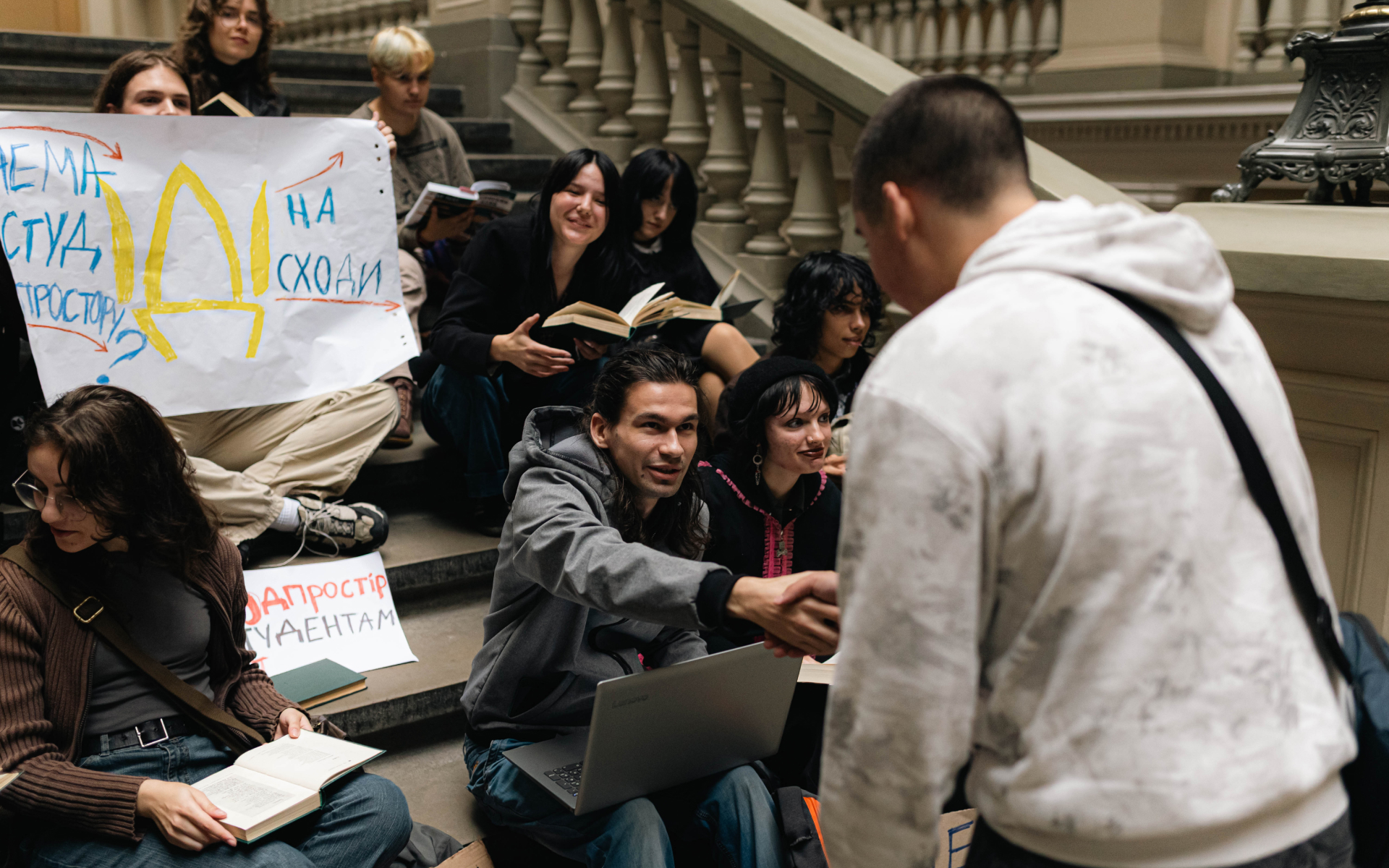
Students recall that cooperation between “Direct Action” and ActionAid began unexpectedly. At the beginning of the year, the team organized a protest in Lviv calling for faster dormitory renovations, which was attended by a representative of the organization — that is how they met and agreed on cooperation.
Maksym explains that ActionAid had been observing the group’s work for some time and was genuinely interested in their activities. Initially, he assumed the organization would act like a typical donor, offering funding while trying to dictate priorities. However, that assumption quickly proved wrong. The student union was not actively seeking financial support and relied primarily on membership fees. More importantly, ActionAid approached the partnership as an exchange of knowledge rather than a simple transfer of funds. This approach was especially valuable for the group, as its members were students with limited prior experience in civic and political organizing.
In particular, the organization conducted a training for “Direct Action,” during which activists were introduced to various approaches that helped them understand gaps in how their activities were structured. But the most significant thing the team highlighted was that it was during the training that they planned the campaign to create a student space.
“I also want to add that after the training, as it seemed to me — and I was a new member at the time — several other essential changes took place. First, many new participants of ‘Direct Action’ got to know each other, became friends, and that was very useful. Second, some chapters became noticeably more active — for example, the chapter of the Ukrainian Academy of Printing,” says Sofia, student at Lviv National University
Among the qualitative changes that became possible after the start of cooperation with ActionAid, Sofia also highlighted transformations in the approach to work — the team learned to engage people better.
For instance, she describes how the union used an engagement pyramid exercise to better understand different levels of participation within the group, identify members’ roles, and think strategically about how to strengthen involvement. Through this process, they were able to see who was more active, who was less engaged, and how individual relationships could help deepen participation. In one case, a member of the union consistently communicated with a participant and gradually drew him into activities, eventually leading him to become highly active in the organization.
The ActionAid team likewise believes that one of the key results of their partnership with “Direct Action” is improvement in building internal processes. Thanks to the training, activists were able to strengthen the initiative’s structure and introduce distributed leadership.
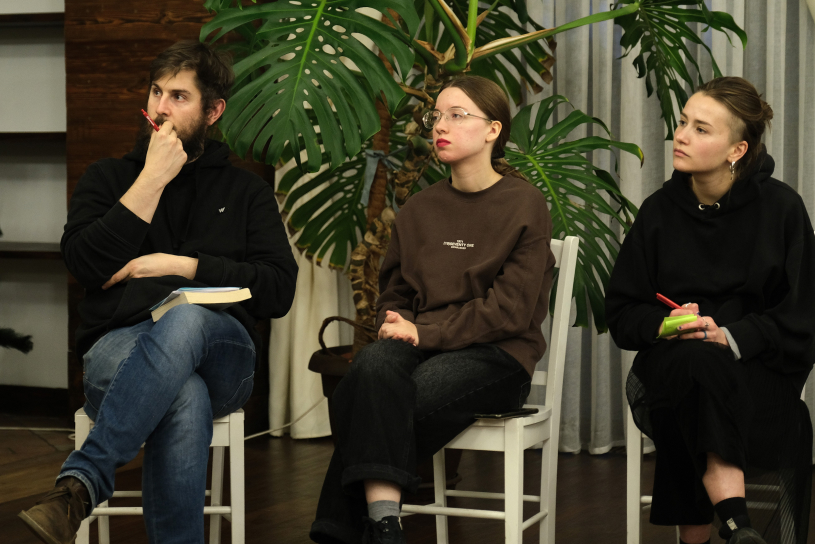
“They had one person in one of the chapters who was carrying a lot of responsibility. Other participants were also active, but in fact, everything rested on one leader, who simply couldn’t let go of part of the tasks. After our training, this person seemed to truly realise for the first time the importance of a distributed work model. And it really had an impact — other activists in the chapter said that they suddenly saw that they could take on more,” says Yuliia.
In addition to the trainings themselves, ActionAid also helps with specific activities. For example, when the team plans a campaign and needs resources — banners or something similar — ActionAid can provide financial or informational support.
Matey notes that many of the young people involved come from non-wealthy backgrounds and often relocate from small towns to larger cities to study. Upon arrival, they quickly encounter structural challenges, such as high rental costs and poor living conditions in student dormitories. These shared everyday struggles become a unifying experience, motivating young people to organize and seek change. Matey emphasizes that this is a key strength of both groups being supported: their efforts address not only individual hardships, but systemic problems affecting hundreds of students across the country.
“SAD” (Street Aid Daily) is a grassroots cin Odesa that has brought together people who for nearly two years now have been organizing food distributions for unhoused people every Sunday. In addition, activists hold reading clubs, film screenings, informational actions, and more.
“Despite their regular humanitarian work, they try to highlight a broader issue — housing accessibility and the issue of homelessness in Ukraine, especially during the full-scale war. This inspired us greatly, so we decided to support the initiative,” recalls Daria Khrystych, Senior Project Management Officer.
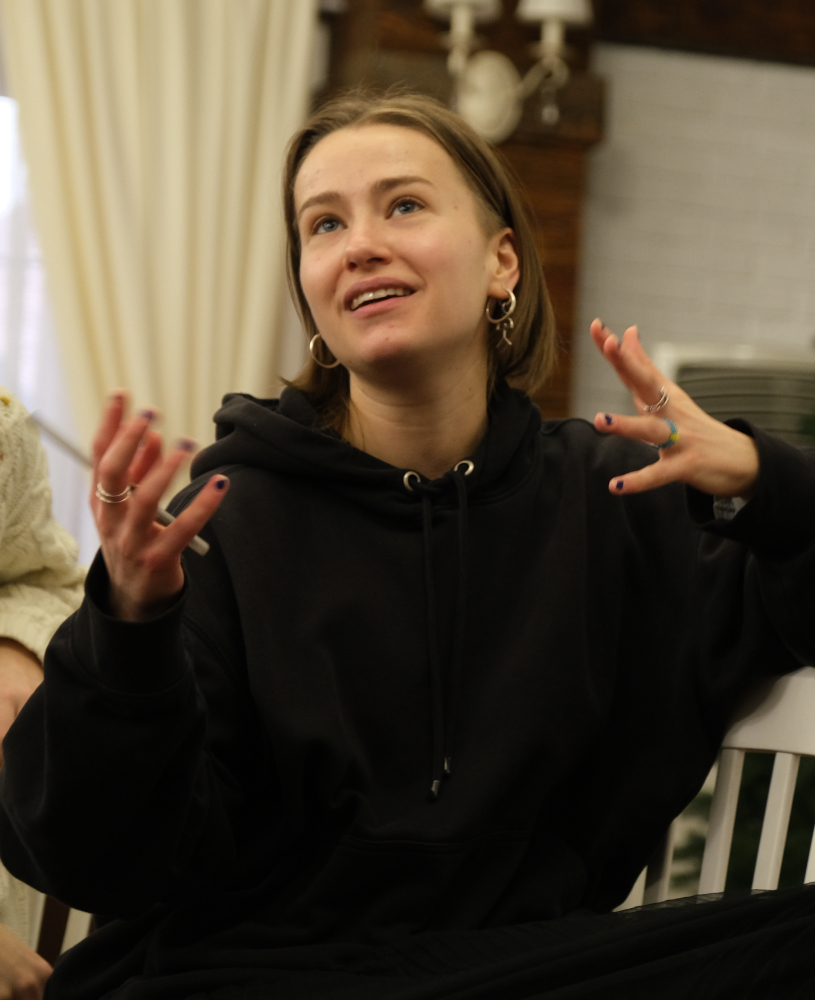
In fact, the idea of “SAD” first emerged back in 2021. At that time, its founder, Kostiantyn worked as a social worker and saw how limited the state system of support for unhoused people was. Together with friends, he realised that collectively they could fill the gaps that neither the state nor large charitable foundations were able to cover. Today, the initiative already brings together around 20 activists.
Alevtyna, a postgraduate student who joined the team more than two years ago, says she initially became involved out of a need for social connection. As an autistic person, she was drawn primarily by the opportunity to be around people and build relationships within the group.

“SAD” began to implement the activities at the end of 2022. At first, they focused on distributions — providing unhoused people with socks, warm clothing, chemical hand warmers, and items that help prevent freezing and illness on the street. In summer, the team distributes cooling drinks. They also provide unhoused people with clothing, footwear, medicines, and hygiene products. In addition, activists draw together with unhoused people — these artworks are later used to print T-shirts, and all proceeds go toward supporting their activities.
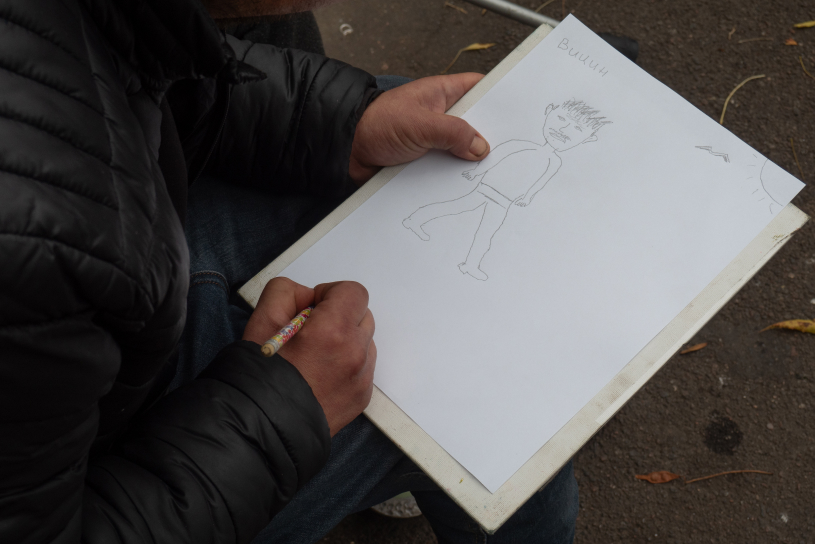
Cooperation between the initiative and ActionAid began after a representative of the organization — Daria — reached out to one of the activists. She had been following the initiative’s work on social media for some time and suggested a call to discuss needs and possible formats of support.
During the communication process, the team outlined two main groups of needs. The first was resource-related: the organization constantly needs to purchase clothing, socks, and hygiene products for unhoused people. In this area, ActionAid provided financial support.
The second group of needs concerned the internal organization of work. The team found it difficult to engage new people, distribute tasks, and transfer knowledge, which meant that a significant portion of the work rested on a few activists. A jointly organized training became the response to these challenges.
Alevtyna recalls that the first day of the training was largely dedicated to building connections within the group. Through various exercises, participants asked one another questions, shared personal stories, and reflected on their strengths and weaknesses, which helped her better understand the people she works with. The second day shifted toward practical discussions on engaging new volunteers, exploring different forms of participation, and gaining a clearer understanding of the group’s target audience. Overall, the training was both engaging and useful, helping the team clarify their direction and next steps.
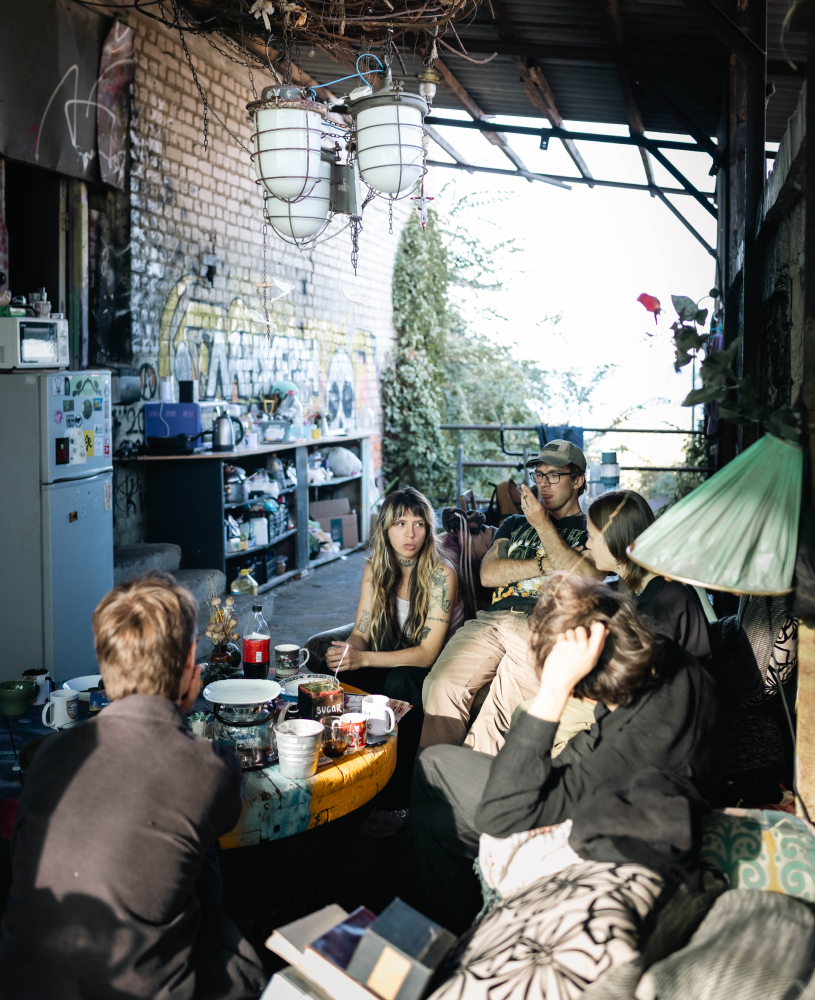
“There were really many useful exercises. The first of the larger tasks was planning what we see the organization as in five years. We split into two groups, and each group separately thought about where we would like to be after that time. Another exercise that seemed important to me was that Matey helped us better understand how our organisation is structured now and what we would like it to look like in the future. We discussed how, with the existing structure, to involve more people in our activities and how to use the resources we already have more effectively,” adds Kostiantyn.
At the same time, according to Kostiantyn, in an ideal future homelessness should not exist at all. And the team hopes that over the next five years, their initiative will be able to directly influence this problem. Because, as he says, homelessness is primarily a housing issue.
The movement plans to advocate for the right of unhoused people to access social housing and considers the Finland’s Housing First model as the most effective existing approach to reducing homelessness. It prioritizes providing people with stable housing before addressing other challenges, such as access to psychological support, employment assistance, and long-term recovery.
According to Kostiantyn, this approach has proven not only more effective, but also more cost-efficient for the state. Preventing homelessness reduces the high public costs associated with life on the streets, including frequent health issues and emergency interventions, which otherwise place a significant burden on public systems.
In the period between trainings, the team set tasks for themselves and divided into groups, where more experienced participants informally took less experienced ones under mentorship. This made it possible to involve more people who had the desire to join but did not understand where to start.
In addition to the training, “SAD” has another important component of cooperation with ActionAid. Thanks to their support, activists are currently preparing booklets with a map of assistance in Odesa — listing all the places where unhoused people can receive support: get food and clothing, or use a shower. The booklets will include addresses and opening hours, and they will be distributed directly on the streets.
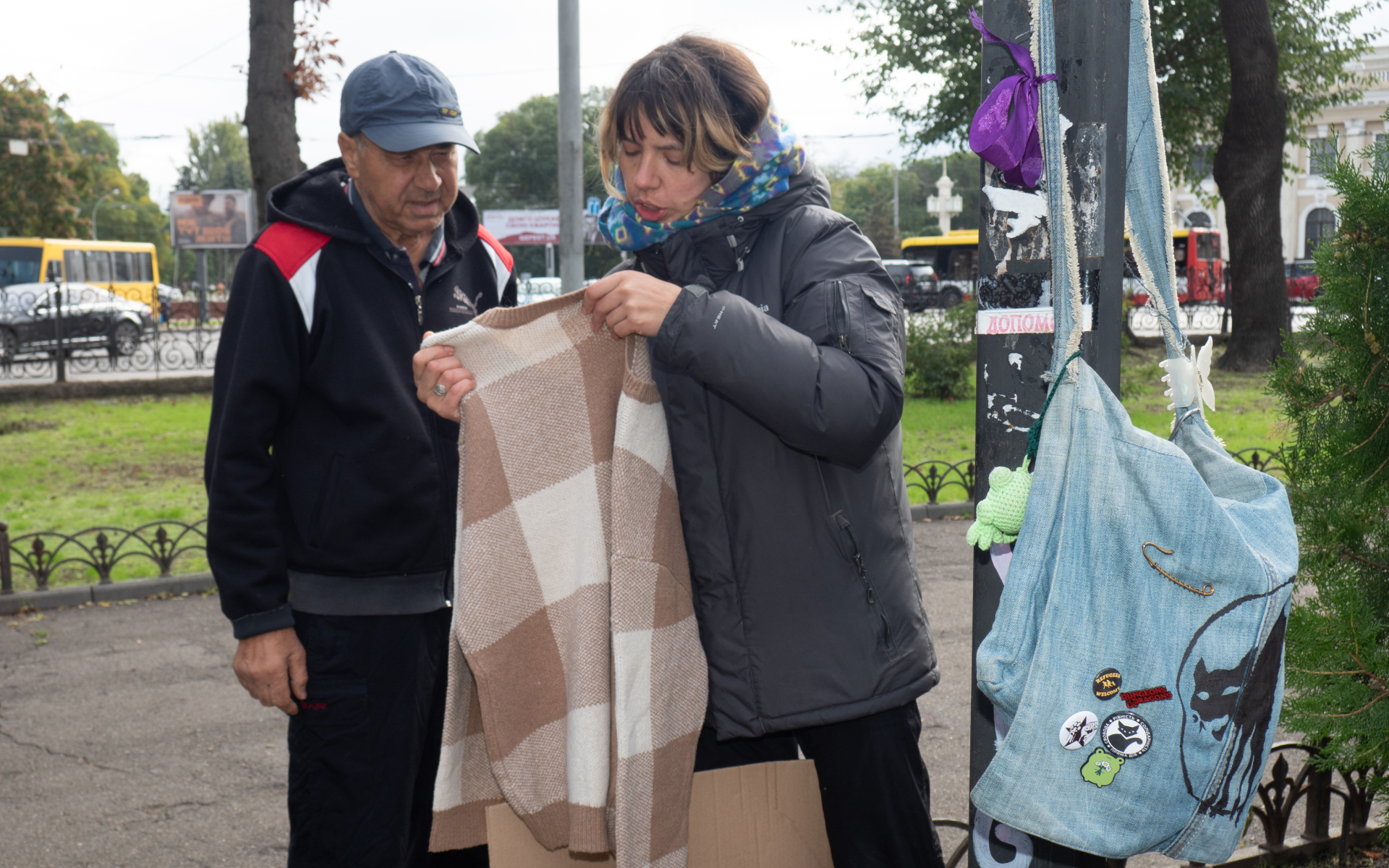 Help for homeless people from activists of the “SAD” initiative
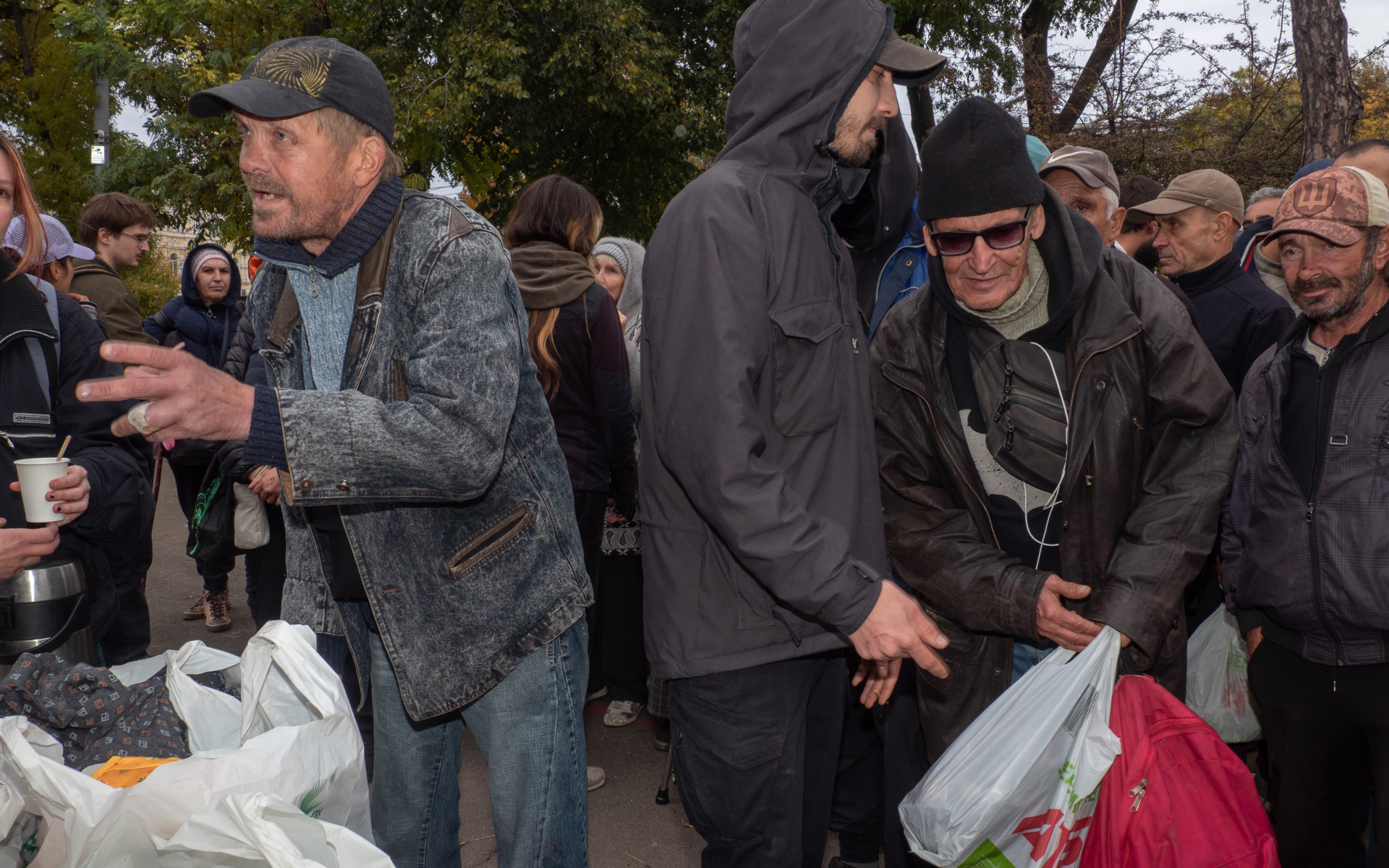 Help for homeless people from activists of the “SAD” initiative
The importance of “SAD’s” work is confirmed by numerous stories of help. There was a case when an unhoused man asked for a guitar because he is a musician. Activists began looking for a guitar, posted on Instagram, and eventually found one and gave it to him. There are also cases when people have prescriptions for medicines but no money — the team buys the medicines for them. Another story is connected to Roza, who ended up on the street because of domestic violence.
“She fled from a husband who beat her. At first, she lived in Kyiv, then moved to Odesa and lived in one of the parks for over a year. We were in constant contact with her, supported her, and more than once suggested going to a shelter, but she refused. But eventually, she asked us for this herself, on the condition that we would help her. She was afraid that people would shout at her, scold her, or simply kick her out. So we went through all the stages together with her: we got a car, went through all the necessary examinations, and helped with accommodation. For two winters in a row now, Roza has been living there,” Kostiantyn says.
How will the program develop further
The year 2025 served as a pilot phase for the programme — a time during which the team learned what works well and what needs adjustment. In 2026, the goal is to solidify the framework and begin gradual scaling. Currently, due to limited capacity, the programme can support only two or three movements at a time.
The team also plans to pilot a new programme component — mentorship. The idea is that each movement will receive a dedicated mentor with experience in activism and movement-building, who will be able to provide much more intensive support than is currently possible.
A different understanding of support
By treating support as infrastructure — something people can rely on, return to, and shape collectively — ActionAid moves away from extractive and transactional ways of working. In practice, this looks less like a grant cycle and more like the work movements rarely have time to do: strengthening internal processes, redistributing leadership, easing administrative pressure, and creating spaces where activists can reflect, learn, and support one another.
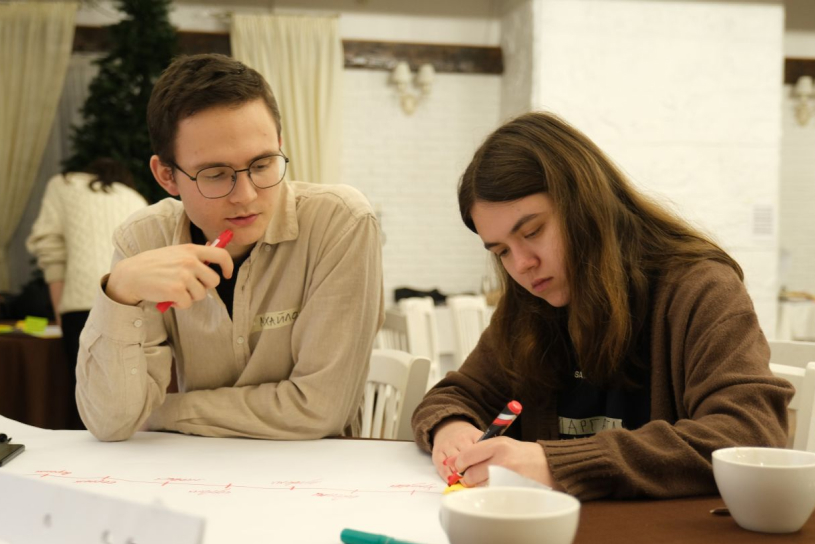
The results of this approach are often quiet, but tangible. In one case, it has helped a student movement move beyond spontaneous protest and build structures that allow campaigns to be sustained across universities and generations of activists. In another, it has enabled a volunteer initiative in Odesa to turn regular aid into longer-term organising: mapping access to showers, food, and clothing, mentoring new volunteers, and laying the groundwork for advocacy around the right to housing.
“We want to be a pillar of support that movements can turn to when they require it. And we hope that within the next five years we’ll be able to grow into an ‘infrastructure provider’ for social movements. The results of these efforts will likely become visible in about ten years,” says Matey.
In a war that has fractured institutions and deepened inequality, this long horizon is a deliberate choice. Rather than chasing quick results, ActionAid is investing in the slow foundations that allow people-powered movements to endure, adapt, and shape what comes next — in Ukraine and beyond.