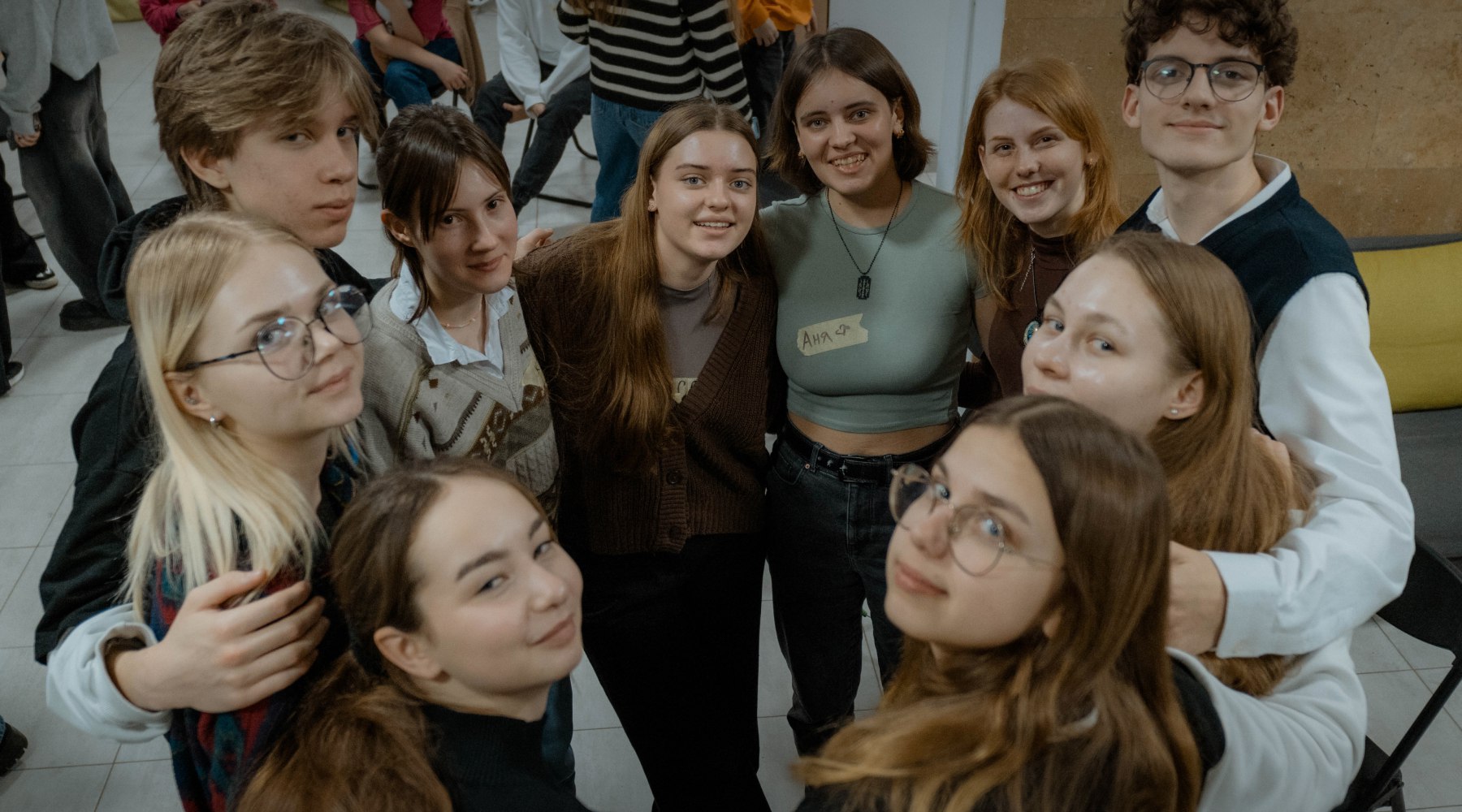
Since 2022, the program “Young Diversity Ambassadors” has been operating in Ukraine. This initiative by the civil society organization STAN helps people who see themselves in civic activism to learn, find like-minded peers, and take action. Thanks to the program, hundreds of people have developed their skills and competencies, and in some regions it has led to tangible change. However, there are also areas where the results have been less obvious. Platfor.ma spoke with several of STAN’s regional and project managers to learn details that may be useful for everyone.
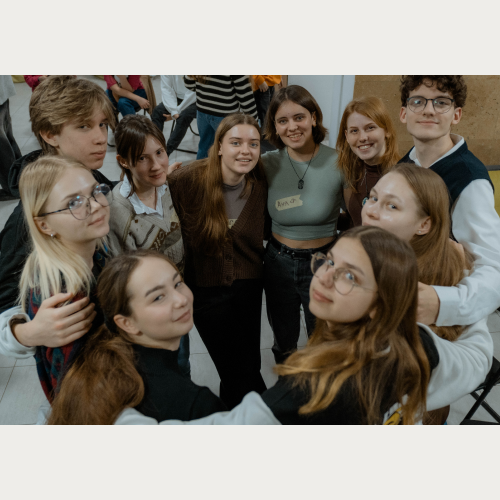
Over these six years, participants from across the country have joined the program, bringing diverse experiences and personal stories. Some were still in school, others studied at universities, some already worked in the civil society sector, and for some it was their first such experience. They all got to know one another, found inspiration — and eventually, despite their new knowledge, went back home.
“At the end of last year, we started dreaming that our alumni would unite and interact with each other. That they would drive change in their communities and work on specific local issues — because, for example, what needs to be done in Mykolaiv region may be completely irrelevant for Volyn. We wanted everyone to work systematically: implement initiatives, join advisory bodies under local governments, and other structures. Even if STAN, as an intermediary, were to ‘step aside’ at some point,” recalls STAN project manager Maria Kelii.
This is how the idea emerged to support the creation of regional communities made up of alumni of the “Young Diversity Ambassadors” program, who would continue acting independently of STAN while still generating meaningful change. However, a key question arose early on: how should these groups be formed — based on regions or on thematic interests? In other words, should people unite around the issues they want to work on, or around where they live?
The program surveyed participants and decided to test a regional approach. Four pilot regions were selected where the number of ambassadors willing to engage was highest: Ivano-Frankivsk, Volyn, Cherkasy, and Mykolaiv regions. According to Maria Kelii, the idea fully worked in only one of these regions.
As part of the project, a budget was allocated for local events. These events were meant to focus on networking — bringing together young people from across a region to meet, communicate, find common interests, and begin acting together. Coordinators were responsible for this work — people who could serve as event organizers, facilitators, and liaisons between the regions and STAN.
The idea was to give everyone the same basic set of tools and see what they needed, where they could move on their own, and how things would develop. To some extent, it was an experiment, Maria Kelii emphasizes.
The results of the experiment turned out to be mixed.
Challenge 1: Leaving
“The problem is that young people simply don’t have much to do. So everyone just leaves — they move to big cities and forget about their hometowns or villages. You work with 10th–11th graders, then they graduate, leave, and you take on a new group of 10th–11th graders. I’ve done this three times already,” states Ivan Yaremenko, STAN’s regional coordinator in Mykolaiv region.
His colleagues agree.
“Our key ambassadors simply left,” confirms Anastasiia Pasalska from Volyn. “We mainly work in the city of Volodymyr. There are no universities here, so many teenagers leave to pursue higher education.”
“This is a shared concern for many communities,” adds Anton Yurchenko, regional coordinator from Cherkasy region. “In addition, young people often become interested in activism in their final school years, when they already need to prepare for the national exams and university. Before that, teenagers mostly want to hang out and have fun. And afterward — they leave.”
As a result, in many regions local STAN chapters faced a situation where participants completed trainings and took part in various activities, but after a year or two moved to larger cities or even abroad — and lost connection with the community.
“Maybe if participation in civic projects earned additional points for university admission, that would motivate young people to get involved more actively at different ages,” reflects Anton Yurchenko from Cherkasy region.
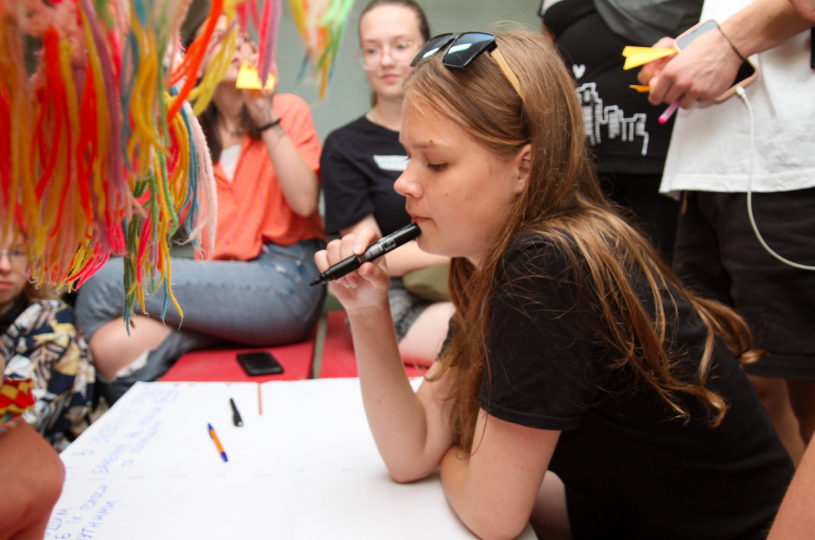
According to Ivan Yaremenko from Mykolaiv region, solving this global issue requires equally global solutions — including government support and business engagement. There need to be enterprises in the regions so that young people can see that towns and villages are not without prospects, that it is possible to live and work there, he says.
“We really did end up facing the fact that some of the most active ambassadors were in grades 10–11. They finished school — and simply left the region. This was one of the key factors that complicated the work. So we realized that uniting people based on regional affiliation did not work as we had expected, at least for now,” concludes STAN project manager Maria Kelii.
Challenge 2: Logistics
Another issue that emerged during the process was how to physically bring together the communities STAN was building in the pilot regions — especially considering that the regional coordinators themselves did not live in the regional centers. One of the solutions was to organize offline and online trainings that brought program participants together.
“They covered different topics, including issues relevant to our region,” says Ivan Yaremenko from Mykolaiv region. “For example, decolonization or youth leadership for school students, because with distance learning children are becoming more and more withdrawn. They are about to enter university and adult life, yet they don’t know how to communicate at all. I tried to bring them together, introduce them to one another, so they would communicate more among themselves.”
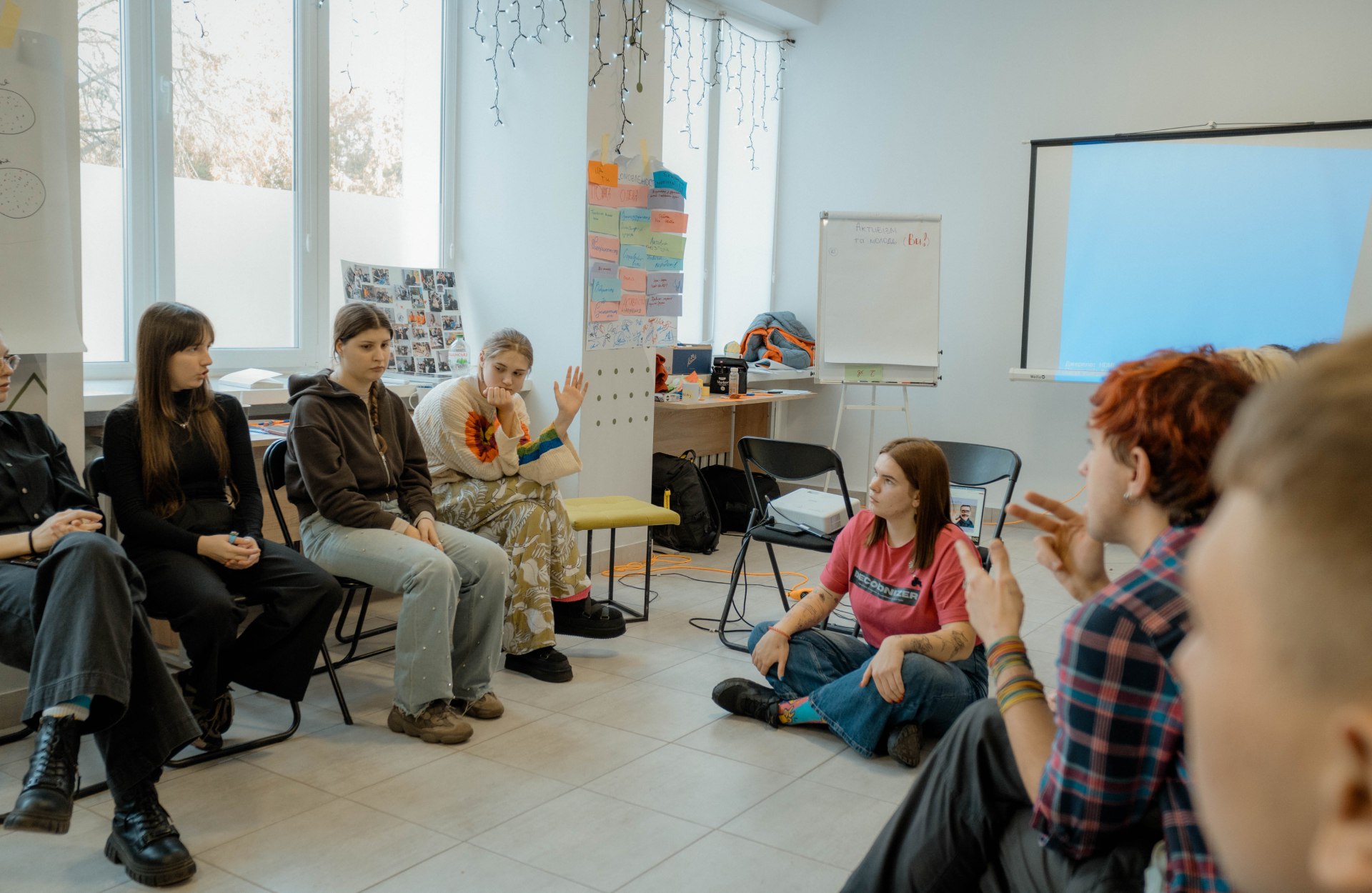
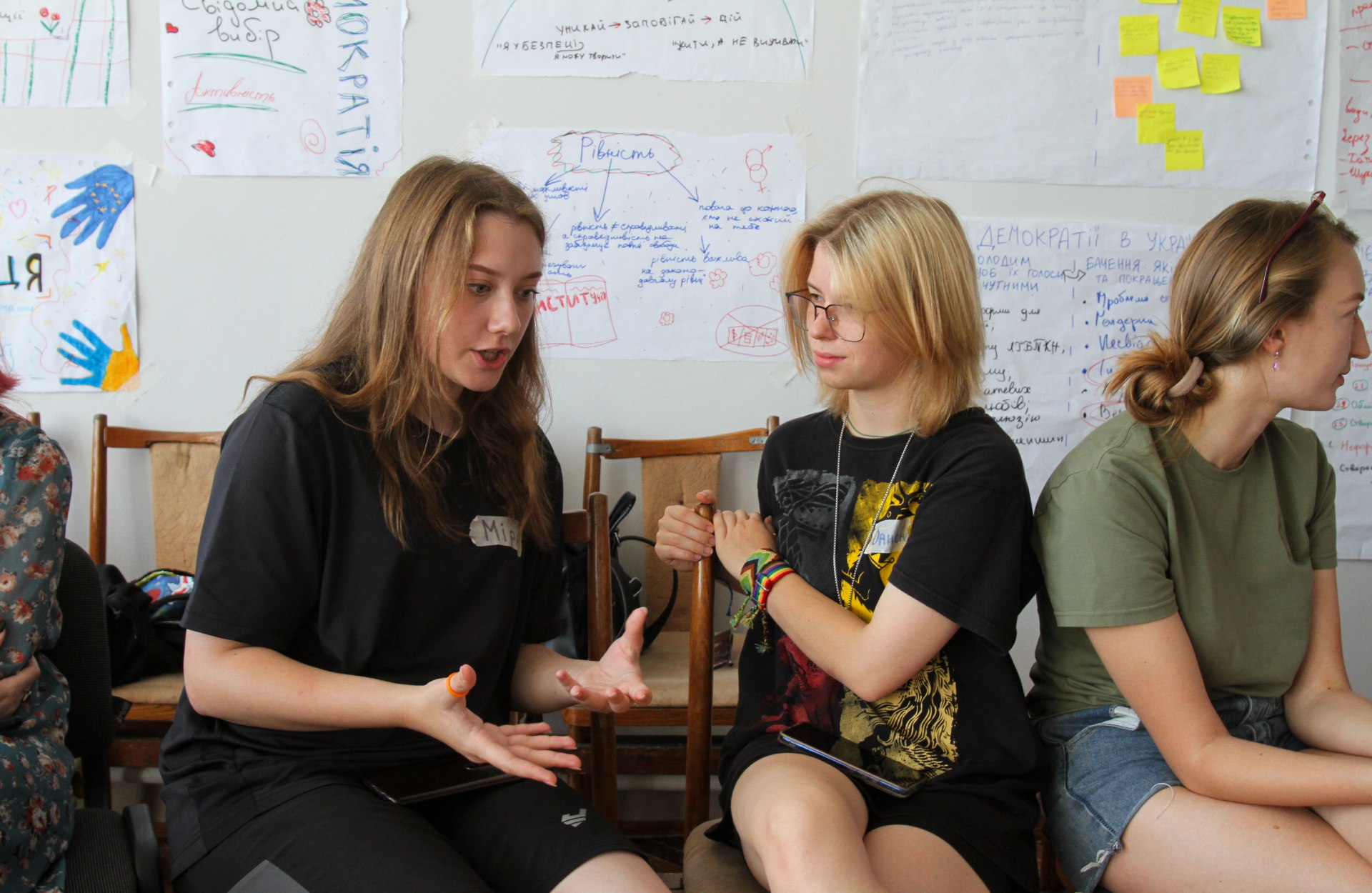
However, Ivan admits that geography itself became a major obstacle. According to him, minibuses to the regional center run only twice a day. Traveling independently between different communities would require a car, which he does not have. In addition, visiting remote towns or villages would often require staying overnight, which was not always possible.
A similar situation existed in Cherkasy region, confirms Anton Yurchenko.
“We now have a shared chat in the region where we invite each other to various events. But I can’t say that we managed to create a real alumni community. Mostly because people are so scattered across the region. Sometimes you need to spend an entire day traveling, and then you end up in a settlement where there isn’t even a hotel. Although occasionally, for festivals or forums, local authorities helped us by providing a minibus. So, in principle, alumni from different years and different projects did get to unite a little and get to know one another. Still, it would be great to have these meetings more frequently. They really help with exchanging experience and generating something new.”
STAN itself also helped participants reconnect. Within this project, several networking meetings were planned where participants from all four regions would gather together. After the first one, it became clear that this approach worked. According to Maria Kelii, the feedback was excellent:
“It was great — we finally got to know each other, because even though we’re all in a chat with 300 young ambassadors, we don’t always understand who is who, what people do, or which initiatives they’re involved in.”
Volyn region had a separate experience. There, the project evolved into creating a physical space — because from the very beginning, this was exactly what the local community asked for.
The “Young Diversity Ambassadors” program was relaunched in the region in 2023, and around ten people from the city of Volodymyr took part. When they discussed challenges and problems, they realized they lacked a youth space — there was no place where they could gather, spend time, and generate ideas. This is how the idea of creating a youth center in Volodymyr emerged.
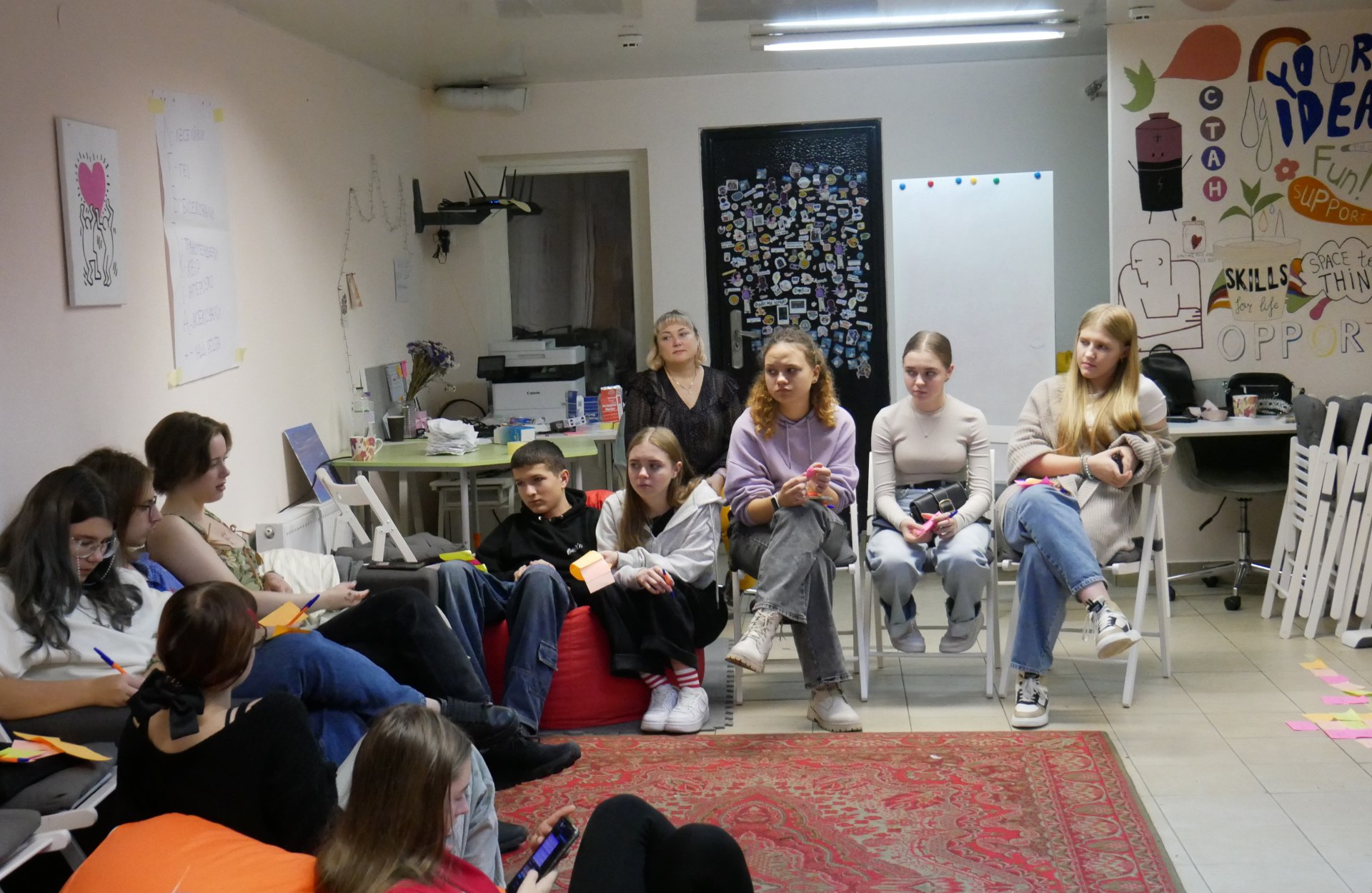
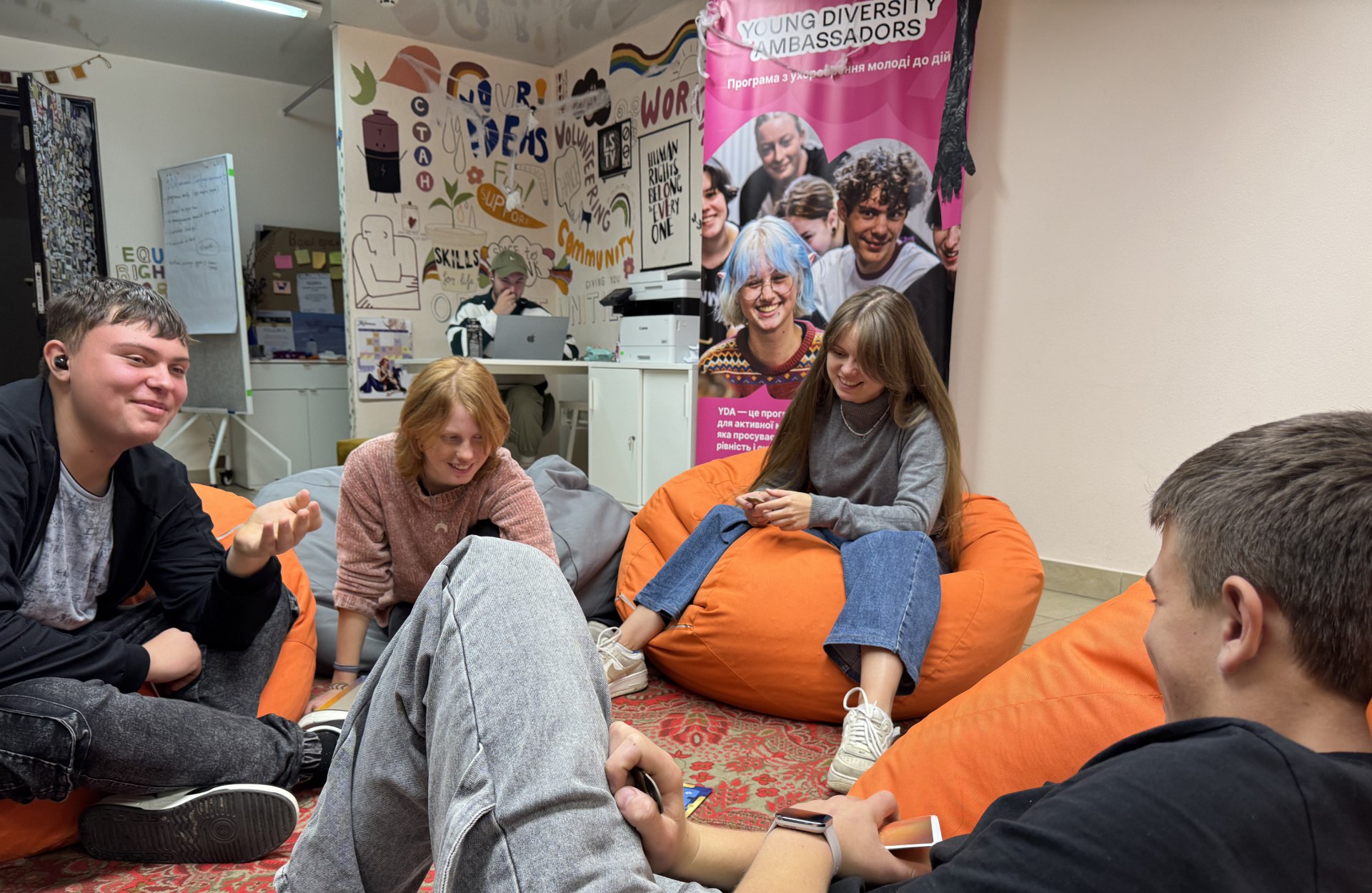
“We found a good space that belonged to a local educational institution. We started negotiations with the director and found out that they didn’t need it and that it had been standing empty for years. Everyone seemed open to cooperation, but we required one document, then another, then a third — and everything dragged on and on. We got stuck in bureaucracy. At some point, our partner organization Terre des Homes visited us, we talked, and decided that they would help us simply rent a space. That’s how a Youth Resource Center appeared in the center of Volodymyr. We are open to everyone, and now active teenagers have their own place beyond schools or cafés,” shares Anastasiia Pasalska from Volyn.
In this way, Volyn managed to create a physical space that became a kind of base for activism. A similar dynamic emerged in Cherkasy region, where the community gathered around the youth space “Same Chas” in Kamianka — the city where the regional coordinator lived.
However, this led to yet another challenge.
Challenge 3: Initiative
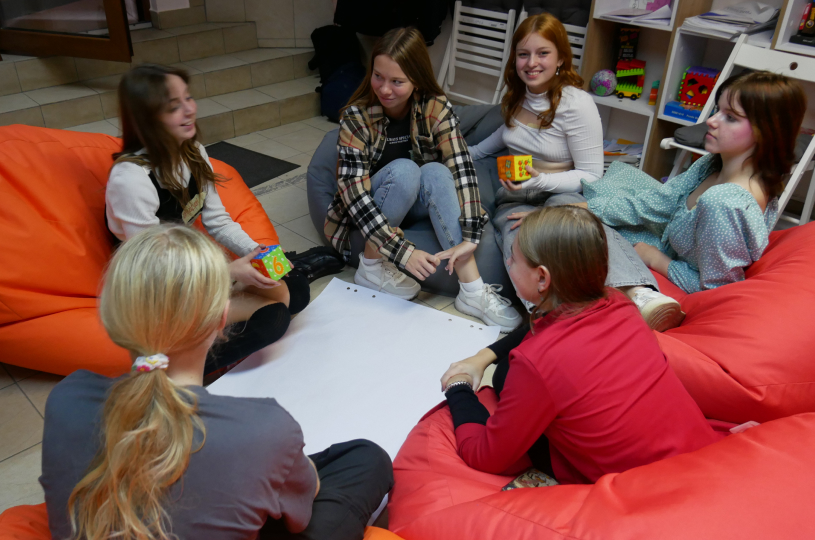
In Cherkasy region, the coordinator organized several events — thematic meetings, for example on decolonization. But these were initiatives of the coordinator, not of the ambassadors or alumni themselves. That is, events took place, but they did not emerge from within the community, explains STAN project manager Maria Kelii.
“Accordingly, if the project does not continue, these events simply won’t continue either. Because young people themselves neither initiated nor conducted them, and were not always involved in organizing them. A similar situation exists in Mykolaiv. Without the coordinator, the process does not hold, and the local group does not transition into independent activity.”
According to Anton Yurchenko, the regional coordinator from Cherkasy, he personally felt the low level of youth engagement in civic life:
“Youth activism is only just beginning to develop. Only recently have we felt some kind of surge. Even if we take the Young Diversity Ambassadors program — we don’t have that many alumni in the region. Still, they do join youth space activities or become representatives of youth councils.”
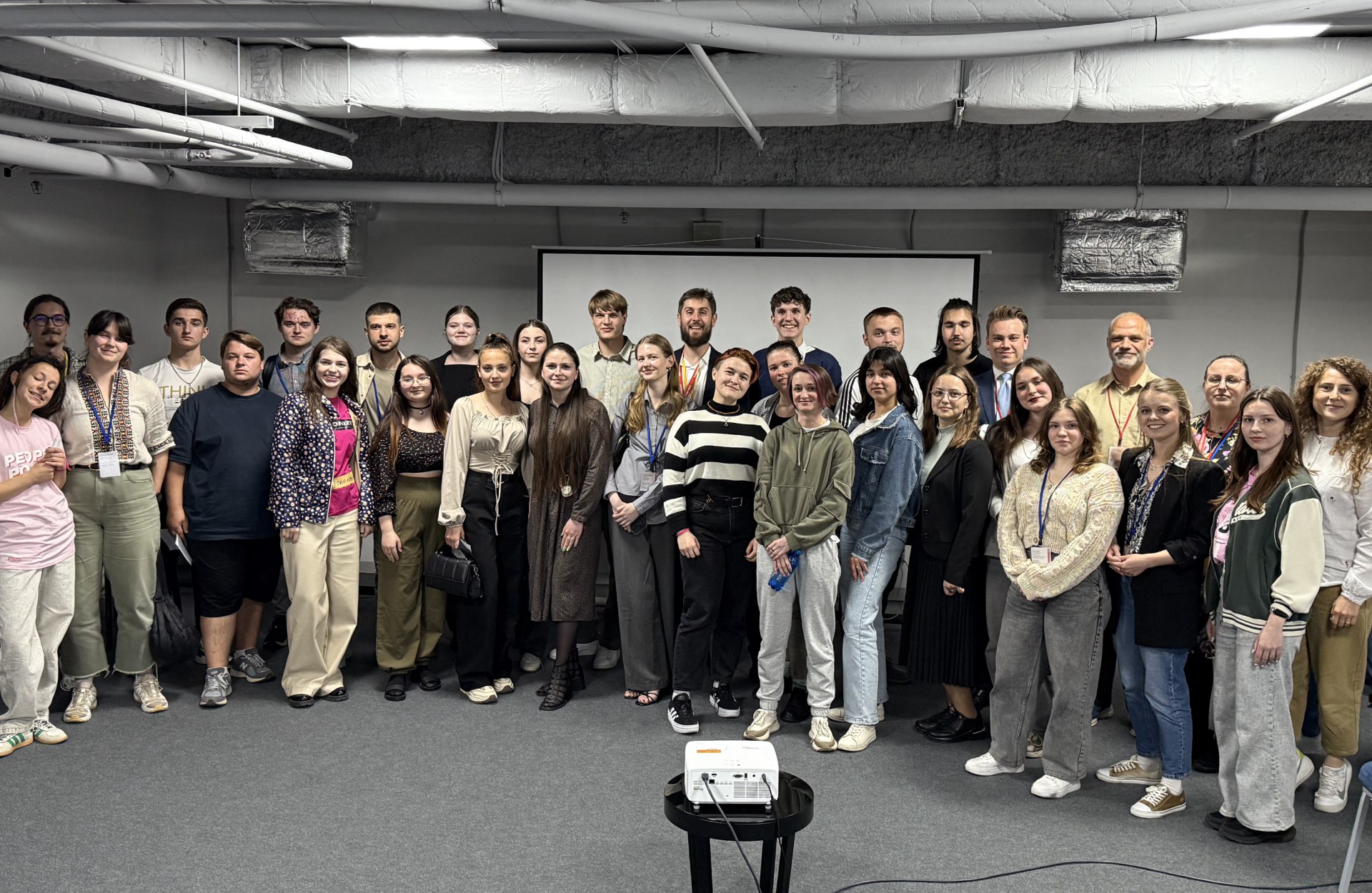
Regional coordinator from Ivano-Frankivsk Viktoriia Illesh also noticed that initiative among participants did not appear at the very beginning of the program:
“Only toward the end did initiatives from the young people themselves begin to emerge — to hold meetings for the local group on their own. Ideas started appearing: let’s throw a Halloween party, let’s organize a drawing meetup, maybe a film screening at STAN’s space. And eventually, everything worked out.”
This is confirmed by Maria Kelii from STAN as well:
“Some young people in Frankivsk have already created their own small initiatives. They independently propose and organize events in our resource center. Ambassadors have organized creative workshops, including T-shirt painting. But alongside the creative process, they discuss pressing issues in the region and think about how they can influence these problems or get involved in solving them. They no longer wait for STAN to suggest, ‘Let’s gather.’ They come to themselves and say, ‘Let’s do this.’ We ask what resources they need, provide the space — and they do it.”
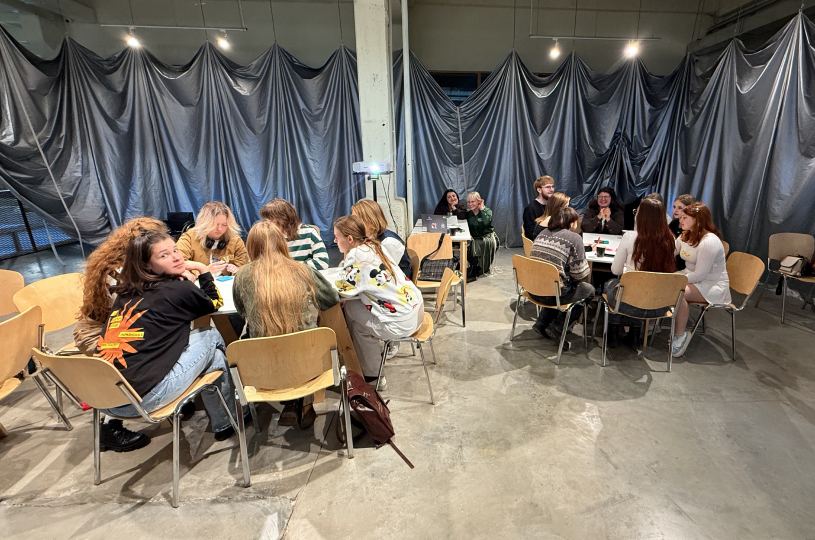
It is precisely the Ivano-Frankivsk case that STAN considers one of the successful ones. Although, to a large extent, this happened thanks to an unfortunate coincidence of circumstances.
Storm Drains of Ivano-Frankivsk
The work in Ivano-Frankivsk developed along several tracks. The first was to bring activists together and help them get to know one another, organizing networking events on different topics. This was followed by an educational component with lectures and trainings — discussions focused on decolonization, feminism, inclusion, and human rights. The third track was identifying the main issues in the region.
Most often, young people spoke about the lack of inclusivity in urban infrastructure, the shortage of opportunities for creative and professional development, and insufficient cooperation with local authorities. Two of these issues had to be addressed first.
“There was an incident when our friend, Chernivtsi-based activist Maria Nikitina, was returning home after an event in Frankivsk in her wheelchair. One of the wheels got stuck in a storm drain — a kind of open rainwater gutter. Unfortunately, Maria fell and was seriously injured. When we heard about it, we of course decided we had to do something,” recalls regional coordinator Viktoriia Illesh.
The ambassadors began studying the State Building Codes and realized that although the regulations are not clearly formulated, there still should have been a grate — otherwise it is unsafe. The young people then started researching how many such gutters there actually are in the city. They created a map and realized that this was a major problem: there are many uncovered storm drains.
As a result, the participants themselves identified insufficient accessibility of public spaces as one of the key issues in the region. And when this lack of accessibility led to an accident involving someone they knew, it became a powerful incentive to tackle a very concrete issue.
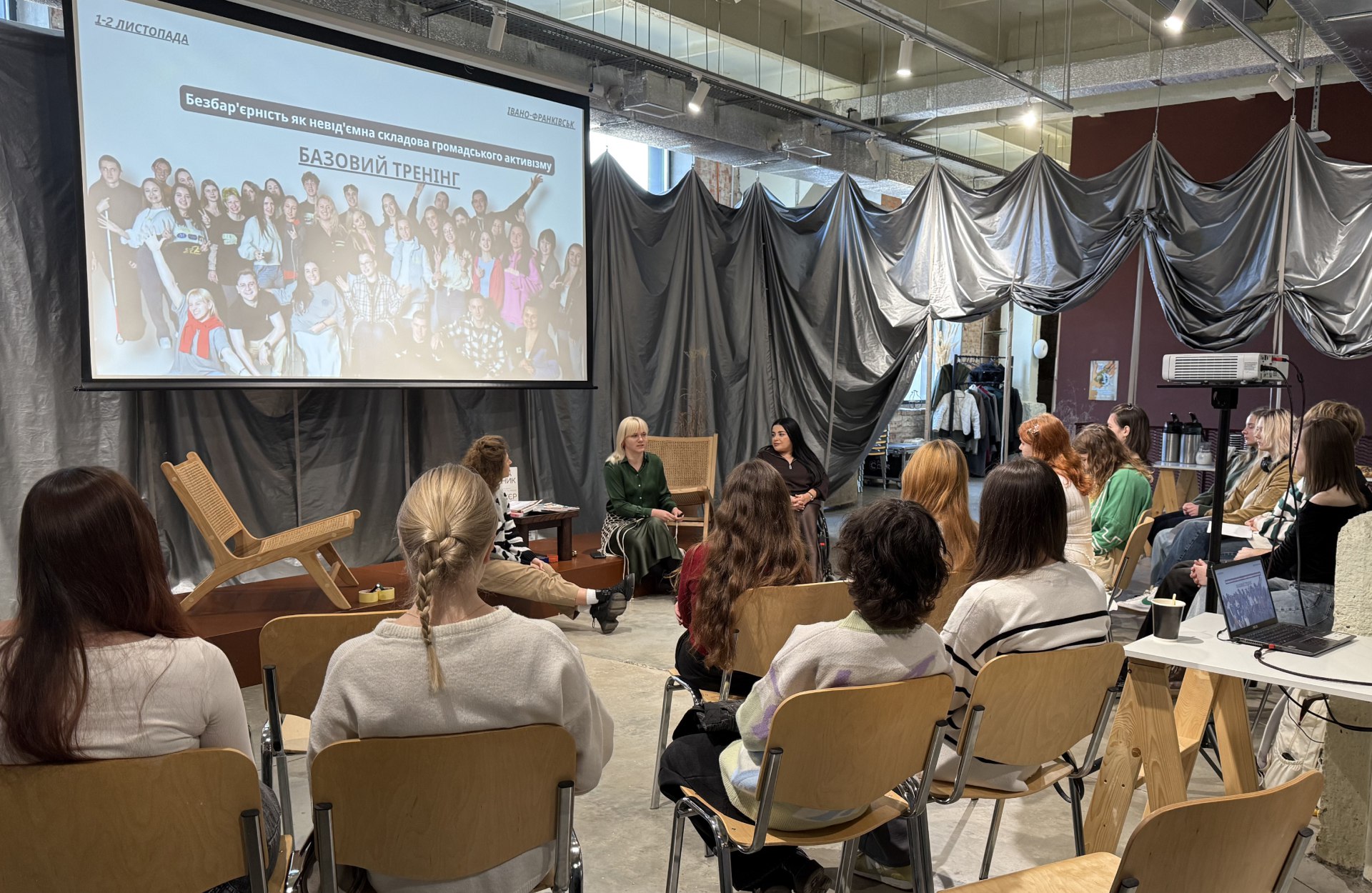
The ambassadors have already contacted the city council regarding covering the storm drains. The Department of Municipal Services has promised to make 10–15 of these structures safer.
“I am sure this is our victory. We had very little experience communicating with the authorities, but still we managed to achieve real changes in the city,” Viktoriia Illesh says happily.
“They united around an incident that became a trigger for working together on accessibility. A concrete case emerged. Before that, they mostly gathered to talk about the future, about what interested young people in the region. Now they were working on a real problem and had a shared goal,” notes Maria Kelii from STAN.
However, other regions also have successes to share.
Achievements
In Volodymyr, in Volyn region, it was still possible to open a dedicated youth space. Today, people who resonate with STAN’s values gather there — or simply those who want to spend time or work, but who, one way or another, find themselves in an environment of activism.
In Mykolaiv region, 11th-grade students organized an environmental project to make their town cleaner and to establish an eco-park where each graduate would plant trees. It is already being called the “Graduates’ Park,” and young people hope that this way the memory of them will remain in their hometown for decades.
In Cherkasy region, efforts to combat bullying in schools were intensified. Together with a local history club, activists also launched a project to popularize contemporary figures whose names replaced Soviet-era street names. Every few weeks, videos are released to highlight the importance of Ukrainian identity. After workshops and trainings, young people became more interested in their own culture and family history.
All of this represents tangible results. And at STAN, they say they plan to continue the program, making it even more effective.
Lessons Learned
“We are currently working on revising the program and its methodology. There is an understanding that some changes are needed. Next, we plan to reformat our work with the pool of trainers and experts. We also want to expand the range of topics we work with. We will definitely continue bringing people together, but we can’t yet say in what format — first, we need to narrow our focus and understand which approaches we require. The overarching idea, however, is to connect initiatives with one another, and to link young people with NGOs and local self-government bodies, so that they can influence change at the local level,” says STAN project manager Maria Kelii.
Anastasiia Pasalska from Volyn also emphasizes the importance of this last point:
“At the beginning, when we entered the city, we didn’t present ourselves fully. We were working, but we didn’t communicate our activities sufficiently. Probably, we should have gone to educational institutions from the start, contacted the departments of youth and sports or education, introduced ourselves, talked about all of STAN’s awards, so that they would send letters to schools explaining that this is a serious civil society organization that can be useful.”
Another important factor is the presence of a physical space. In Volodymyr and Ivano-Frankivsk, for example, such spaces existed. In Mykolaiv and Cherkasy, there were none — only other youth hubs or spaces affiliated with local councils, which young people may not have perceived as “their own.”
One of the lessons learned from the program is the need to cooperate more closely with existing spaces and invite young people to base their activities there. Perhaps this was an area where the STAN team did not do enough — it would have been worth building such partnerships more deliberately from the outset, Maria Kelii admits.
At the same time, she emphasizes that this was largely an experiment, full of questions from the very beginning: should the local groups be closely coordinated, or given more autonomy? Are they branches of the organization or independent groups? Should they register as NGOs or remain initiatives? “We were simply observing how this could work,” Maria Kelii acknowledges.
“The most valuable thing is that we managed to reconnect people and create space for interaction. We saw that some program alumni did not simply complete the training and move on, but truly identify themselves as diversity ambassadors. And they are ready to work systematically.”

The project “Network for Democracy: Building the Future with Europe’s Leaders of Tomorrow” is implemented by STAN and ActionAid, in partnership with the Center for Social Transformations TENET, Insight, and the Chernivtsi Association Zakhyst, with support from the Ministry of Foreign Affairs of Denmark. It is part of the Young Diversity Ambassadors program.
This program supports youth and youth workers in strengthening social cohesion to create an inclusive, peaceful society, minimize conflicts between different groups, and accelerate the integration of internally displaced young people. It is implemented by STAN in partnership with ActionAid, with support from the Disasters Emergency Committee (DEC), Global Fund for Children (USA), Terre des Hommes (Germany), and IM Swedish Development Partner (Sweden).
Any opinions expressed in this publication belong to Platfor.ma and STAN and do not necessarily reflect the views of ActionAid or the Government of Denmark.