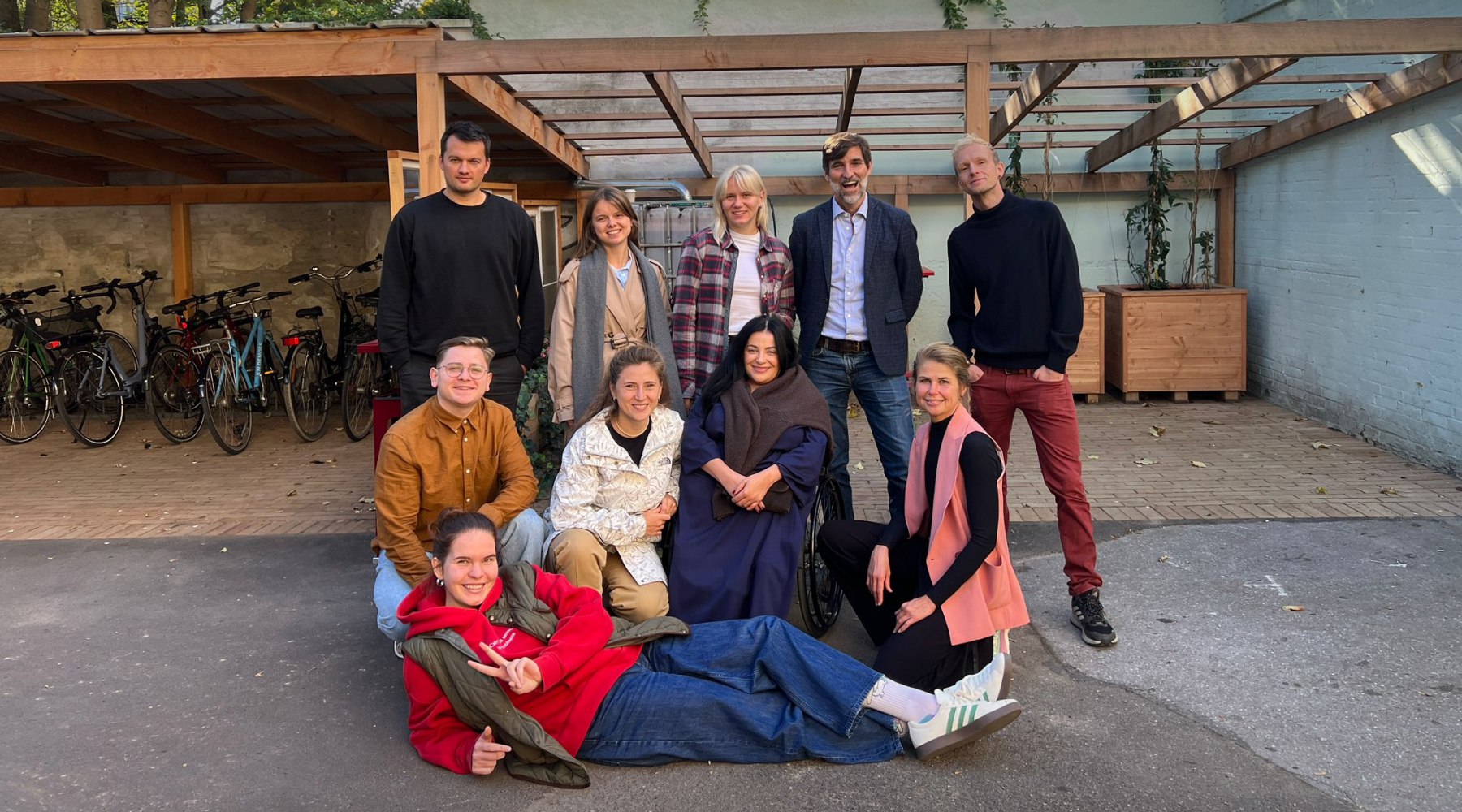
Against the backdrop of competition among many civil society organizations, STAN decided to do the opposite. It all began in 2021 with an ecosystem of partner NGOs, friendships with which later grew into large joint projects. Since the start of the full-scale invasion, STAN has begun cooperating with the international organization ActionAid, which made it possible to scale up the youth activism development program — Young Diversity Ambassadors (YDA). Gradually, some participants joined the STAN team or became full-fledged partners of the organization. Today, many of them take part in events that bring together activists from different countries. In this way, they not only strengthen the visibility of Ukraine, but also reinforce international connections. The STAN team shared with Platfor.ma their experience and the advantages of building such diverse, yet equally important, partnerships.
Cooperation between STAN and ActionAid began in 2022. The first step was the relaunch of their program “Diversity Ambassadors in Prykarpattia,” which, thanks to ActionAid, transformed into a nationwide program — “Young Diversity Ambassadors.” These are thematic workshops, international visits, and other useful tools that provide young people with a foundation for starting out in activism.
Overall, together with ActionAid, STAN has implemented several projects within which the team works with young people through non-formal education. In addition, together with invited experts, they provide youth initiatives and civil society organizations with internship opportunities.
“Moreover, in partnership with ActionAid, we issued grants, thanks to which young people were able to turn their ideas into full-fledged projects. For many, this was a completely new experience, as they were used to acting as volunteers — without resources. Here, they received both small-scale funding and an understanding of reporting mechanisms,” says STAN project manager Maria Kelii.
The organization also provided individual support. This was a separate activity: young activists could submit a request to receive assistance to continue their activities. Some took mediation courses, others learned video editing or English, and for some STAN partially covered the cost of work equipment.
There were cases when young people moved from occupied territories and did not even have a computer — then funds were allocated to purchase a laptop.
“This was very helpful, because the resources of young activists are often limited, and sometimes they are completely dependent on their parents, who unfortunately do not always understand the value of activism: sometimes they do not support it, and sometimes they even forbid it. That is why we saw a need for individual grants and implemented them together with ActionAid,” Maria shares.
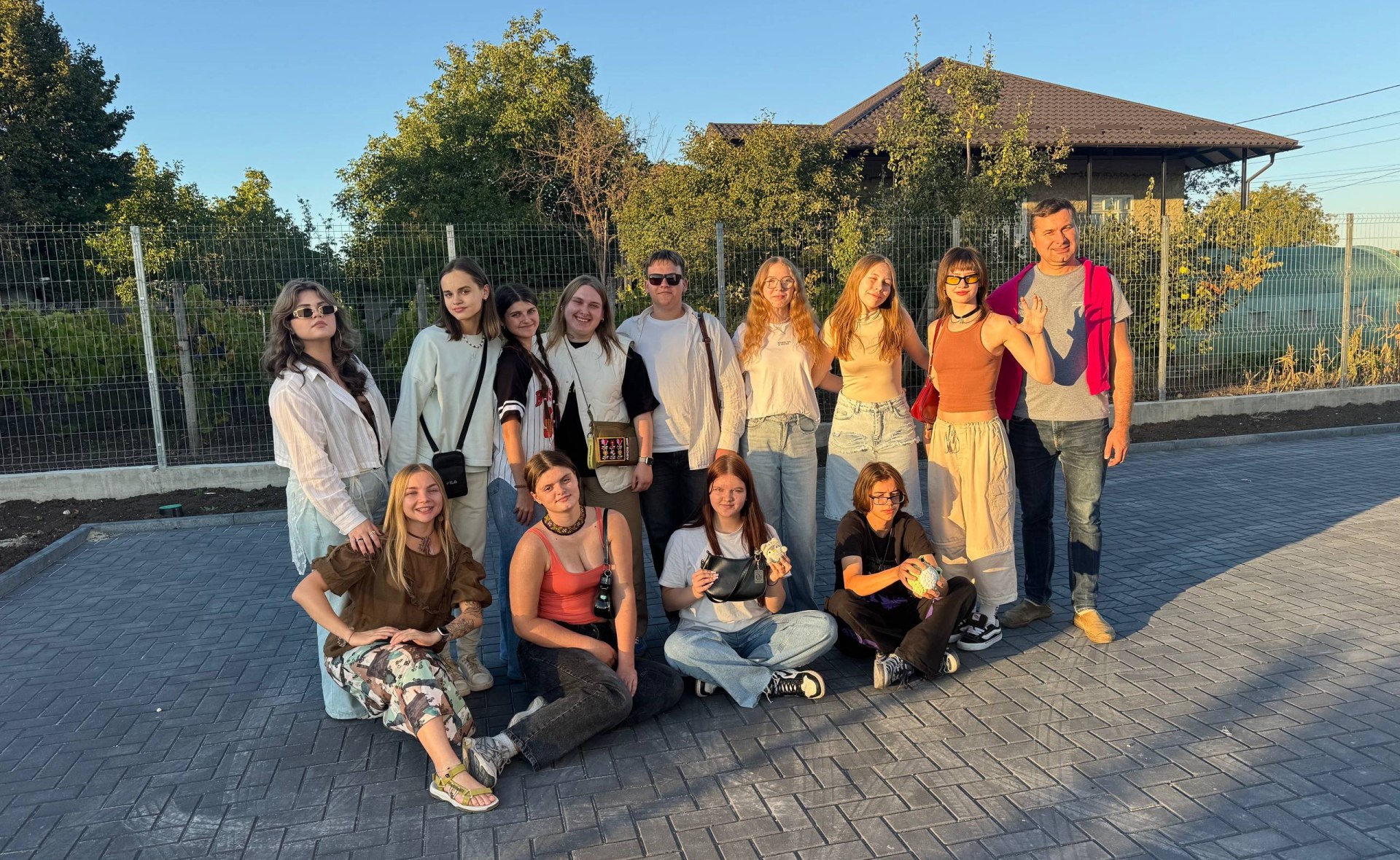
Another component is international trips. For example, participants of STAN programs travelled to Moldova and exchanged community development practices with civil society organizations working on issues of inclusion, gender equality, and decolonization. In particular, they spoke about Ukraine through personal stories.
“In cooperation with ActionAid, we realized that the organization already had strong practices, methods, and values in working with young people. But it was precisely under their high-quality support that we were able to further articulate the methodology of the YDA program. And then we involved other partners to implement specific activities,” Maria explains.
Also thanks to ActionAid, STAN joined Global Platforms. This is ActionAid’s network for youth activism that supports movements, organizations, and individuals promoting progressive social, political, and economic change. As a result, the team gained the opportunity to send trainers who work with young people abroad. Some travelled to Tanzania, others to Kenya, to study local experiences and at the same time tell activists from different countries what is really happening in Ukraine.
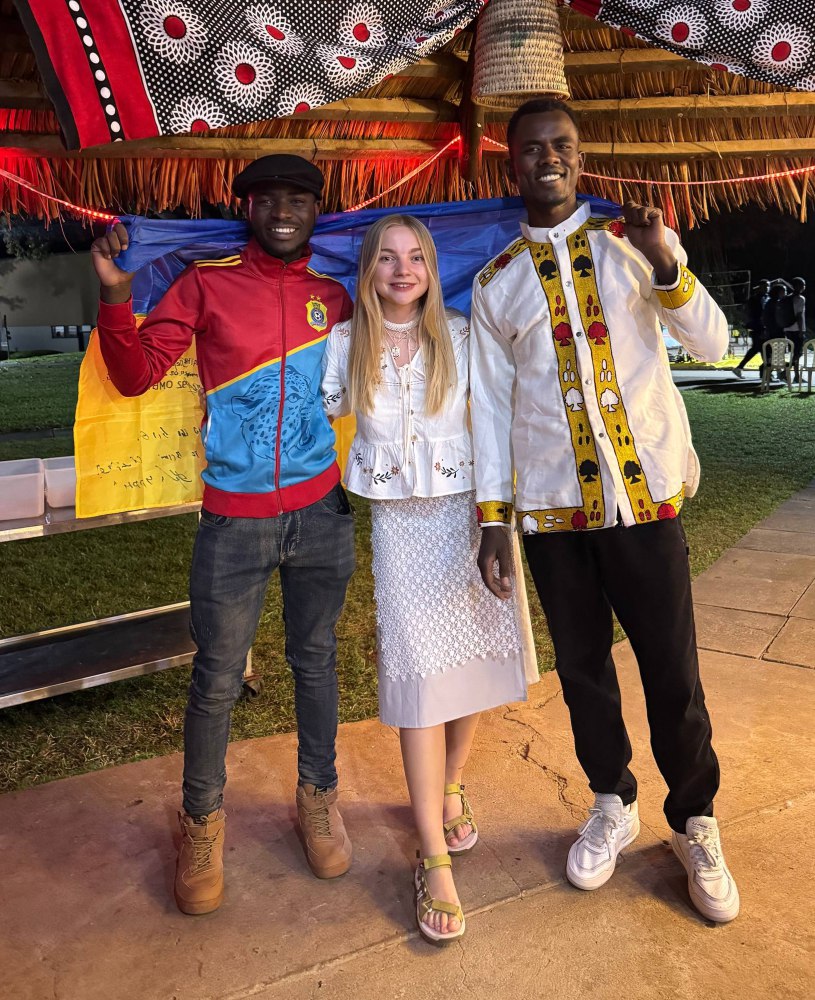
“Recently, we had a similar but online meeting where we shared basic facts: that bombings are happening, that we live without electricity, in crisis. For many activists from African countries, these things are not obvious at all. Therefore, the opportunity to be the voice of Ukraine is extremely important. ActionAid truly facilitates this,” says Maria.
Coalition Instead of Competition
Over the past two years, STAN has begun cooperating with other civil society organizations within the framework of the BAF project (A Network for Democracy: Building a Future with the European Leaders of Tomorrow) — this is how a coalition was born, which includes:
‣ STAN — strengthening grassroots initiatives and active citizens through non-formal education;
‣ Chernivtsi Association “Zakhyst”, which lobbies for inclusion and accessibility;
‣ Tenet, which works on protecting the rights of the Roma community;
‣ Insight, which focuses on protecting the rights of the LGBTQ+ community.
According to Maria, this is the first experience where friendly partnerships between organizations were translated into a project format: memorandums were signed, processes were defined, and work began in a more strategic way. This is also one of the results of cooperation with ActionAid and their team in Ukraine.
Moreover, if, for example, they already had partnership relations with “Zakhyst,” for “Tenet” the STAN team became mentors — advising on documentation, policies, and procedures. Ultimately, thanks to the cooperation, “Tenet” grew significantly from a young organization.
“With ‘Insight’ and ‘Zakhyst,’ we saw another value — we were able to mix our target audiences. Each organization has its own ‘bubble.’ And here we managed to bring them together,” says Maria.
As a result, people from the LGBTQ+ community became more visible at STAN’s workshops. And those who did not belong to the community were able to show solidarity and even implement joint initiatives.
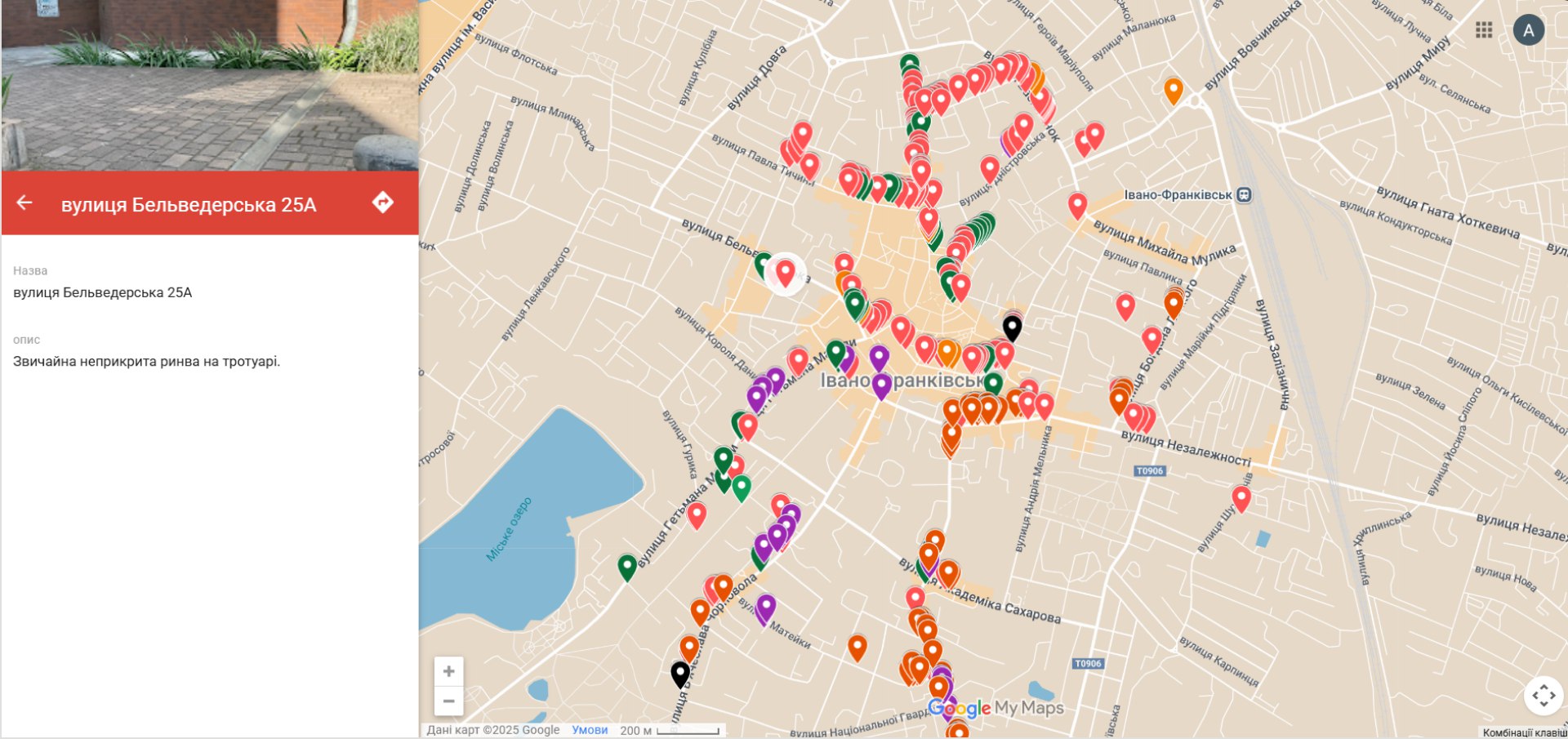
Another example is the initiative “Ivano-Frankivsk Without Barriers.” It was implemented by activists who do not work in the field of accessibility, yet they were able to unite and achieve concrete changes. Therefore, according to Maria, if you close yourself off within your own bubble, it will not work as effectively as bringing together different audiences.
From Ambassadors to Partners
In addition to intersectionality, one of STAN’s important goals is to “grow” future partners out of program ambassadors. This is what happened with participants of one of the workshops who came together as an initiative group, then completed internships, and later registered their own civil society organization — the “Me.We.Women Youth Association.”
STAN is now thinking about how to involve them in various activities and projects. While the young organization is gaining experience and building its capacity, it can function as a partner initiative — in order to later fully share responsibility.
“What’s significant here is that we don’t want to ‘multiply’ new civil society organizations. I hear from many colleagues in other NGOs that there is a huge shortage of personnel — they can’t find people for their teams. We realized that we can help young people join already existing NGOs, gain experience, and work with different topics. We often advise them to go into volunteering. Because our goal is not for everyone to register their own NGO, but to strengthen civil society,” Maria explains.
This year, STAN once again supported an entire cohort of ambassadors who implemented six important initiatives within just one project. Among them was an initiative by activists from Odesa region, who created informational materials to show that the Roma community is not only marginalized images, but people who study, work, and start businesses.
This year, there were also several projects dedicated to accessibility:
‣ “Barrier-Free Movement” in Khmelnytskyi, which aimed to motivate young people to get involved in solving accessibility issues;
‣ “Barrier-Free Space” in Slavutych, where activists engaged local self-government bodies in events, discussed social inclusion, support for the Roma community, the importance of non-discrimination, and more;
‣ “Accessibility” in Ivano-Frankivsk, within which the team developed a practical guide for testing public spaces for accessibility, held several events, and created media content about the importance of an accessible environment.
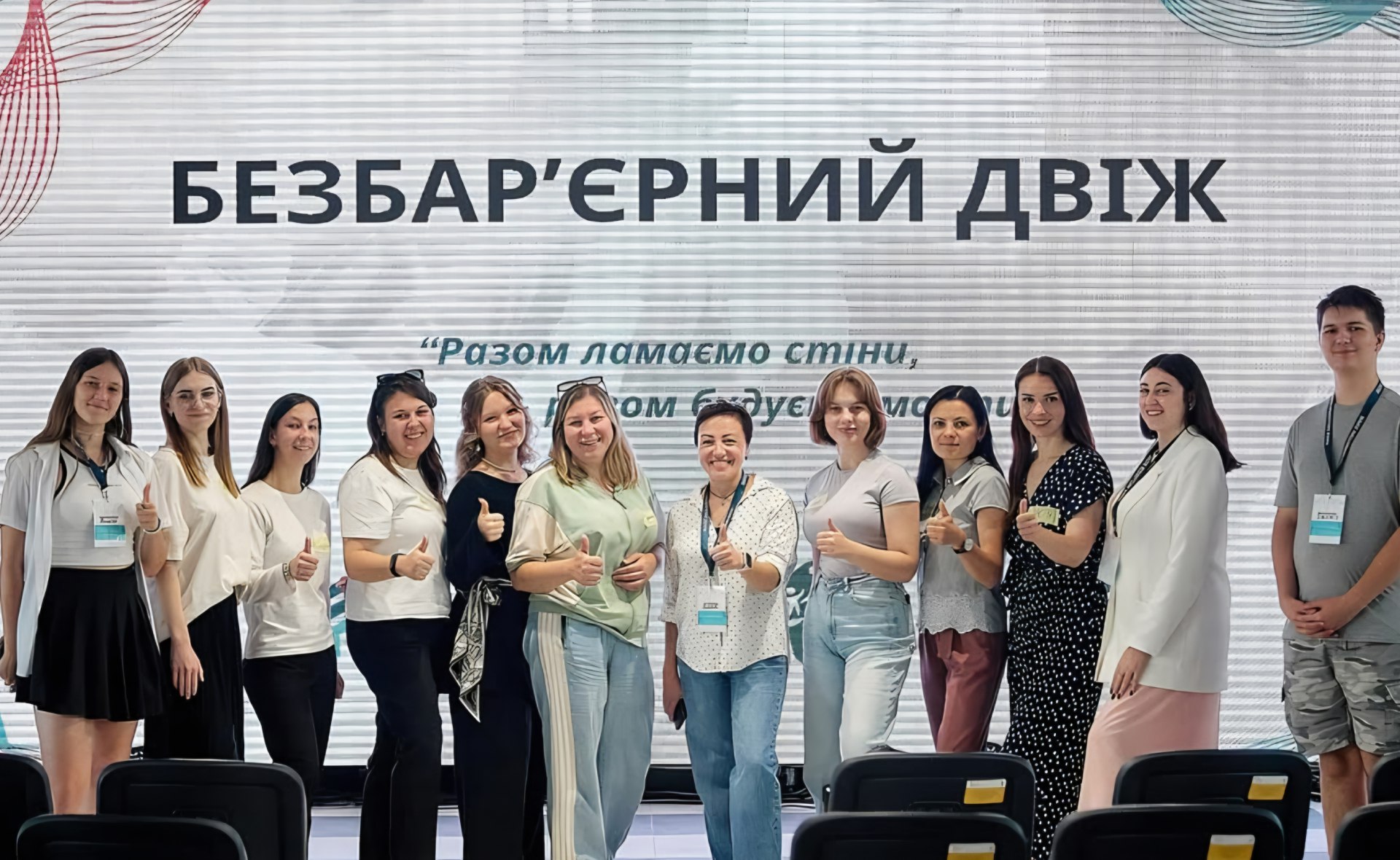
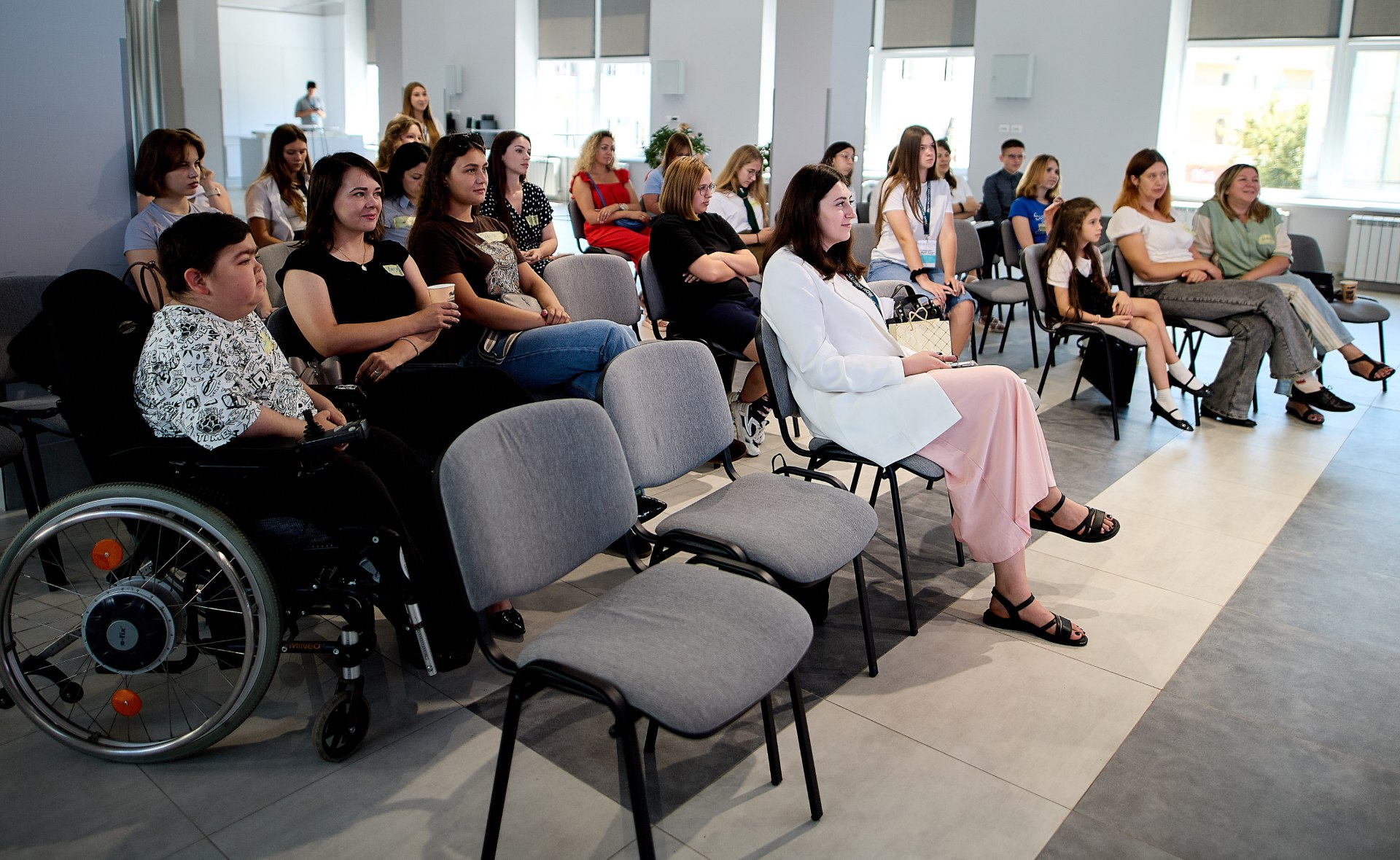
“The main idea emerged even before the training, but it fully took shape during the learning process. First, I completed a two-day accessibility training in Frankivsk organized by ‘Zakhyst.’ Later, we took part in a hackathon by STAN — there we were taught project management, financial and communication aspects of project implementation, and so on. The name of our project is ‘Accessibility for All.’ That is, we approached accessibility not only in a physical sense, but also in informational, economic, and other dimensions,” shares Marta Olishevska, one of the project’s initiators.
Overall, Marta’s journey with STAN began last year. At that time, she first joined the Young Diversity Ambassadors program as a participant in a basic workshop. Later, she took part in thematic workshops, collaborated with the organization as a photographer, and together with her initiative “Vidchaidukh” held events at STAN’s resource center in Ivano-Frankivsk.
This year’s training by “Zakhyst” helped Marta dive deeper into the topic of accessibility. Previously, she had not been involved with it at all — the “Vidchaidukh” initiative she leads focuses on culture, non-formal education, and volunteering. However, thanks to the training, Marta learned how important it is to work with accessibility, which terminology is correct, how to test spaces for accessibility, and more.
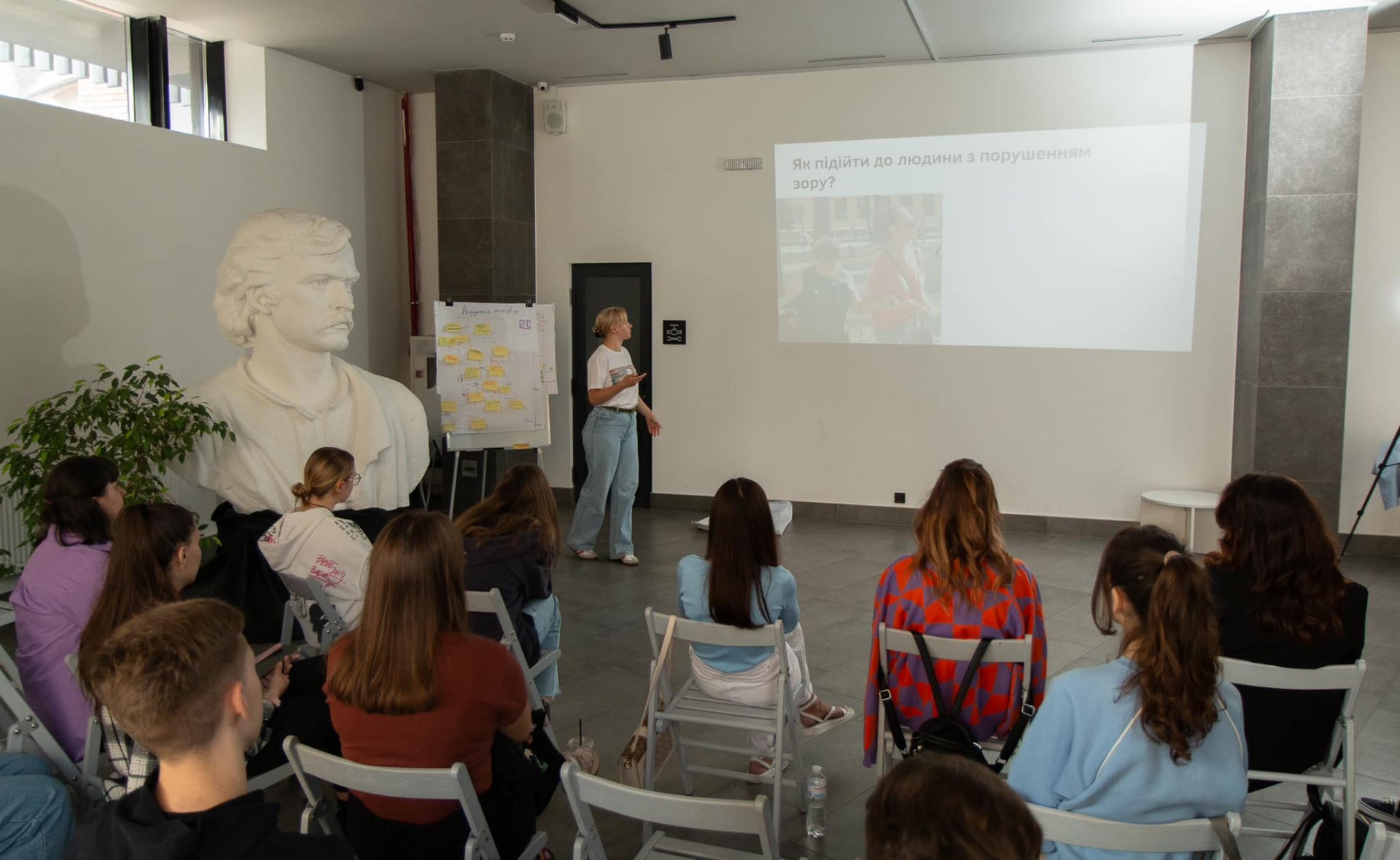
“So our team decided to take part in the grant program — and we are implementing our idea thanks to this funding. Our project is a large information campaign to help people realize that barriers surround us and to start noticing them. Even for me personally, before the training there were things I didn’t perceive as barriers at all, although now I understand how much they complicate life,” Marta says.
Overall, the project consists of three parts. The first is an accessibility guide that the team developed from scratch — content, design, and structure. It includes information about what accessibility is, who it is needed for (spoiler: everyone), and what types of accessibility exist.
The guide also contains a section on how to implement accessibility in one’s own life. The team created a map that allows anyone to check their day for barriers — from the moment they wake up at home to their commute to university or work.
The guide’s target audience is young people. However, it was adapted for everyone — they even gave it to younger brothers and sisters to read and tested whether the content was understandable for them. The guide has already been presented at many events, such as the Youth Alley of Civil Society Organizations at “Faine Misto” and the NGO fair in Lviv during the ceremony announcing the European Youth Capital 2028.
“As for the results — we can already see them. People come up, listen, ask questions, and are genuinely surprised: ‘Wow, I didn’t know this was a barrier too.’ A particularly meaningful moment for me was at ‘Molodvizh,’ when an eight-year-old girl came up to our stand with her mom. We explained everything as simply and accessibly as possible, showed the guide, played games, and screened a short film. And then she said: ‘Now I understand. Accessibility is important to me.’ It was very touching and confirmed that we are moving in the right direction,” Marta recalls.
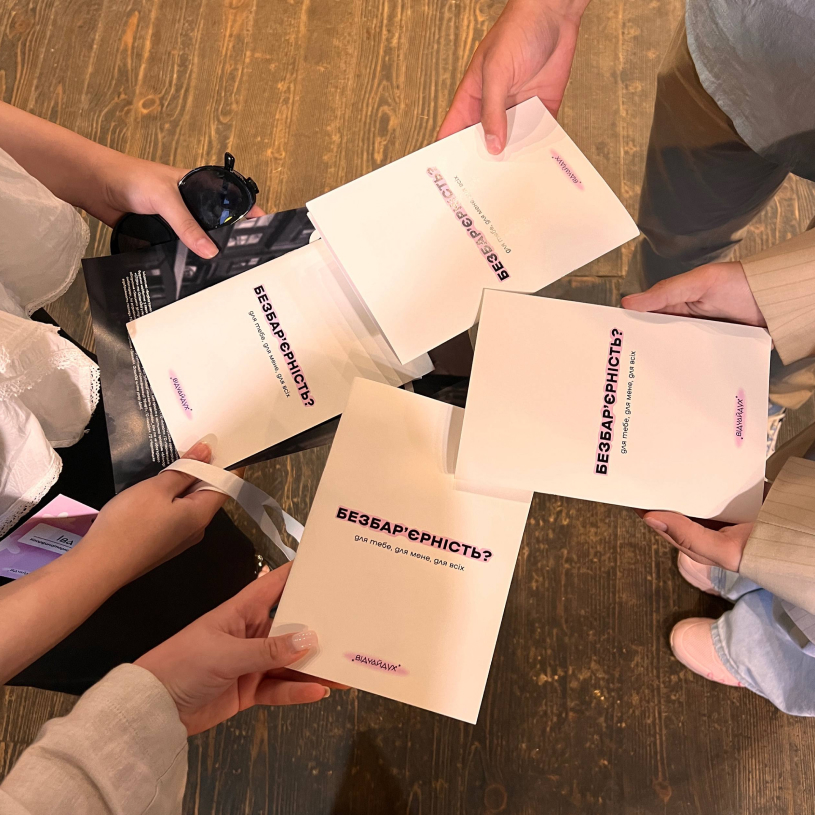
The team has an online version of the guide to distribute it as widely as possible. The printed version has a limited print run, so they are now cooperating with the Student Self-Government City Council in Ivano-Frankivsk, which allows the guide to be distributed among educational institutions in the city. But the activists do not plan to stop there — they aim to reach all of Ukraine.
The second component of the project is a poster campaign with the motivational phrase “Don’t Be a Wall, Be a Door.”
“This is about the fact that accessibility concerns each of us. There is a saying: if people with disabilities are comfortable, everyone will be comfortable. This is not only about ramps or elevators. It’s also about heavy doors that a person with bags can’t open, narrow passages, or the lack of clear navigation. We wanted people to see these barriers in their own lives and stop perceiving them as mere ‘inconveniences,’ and instead call things by their proper names,” Marta explains.
The third component is a video that also explains the importance of a barrier-free environment.
“STAN is my great love. I truly admire how the team implements projects — with heart, openness, and enormous support for young people. They are always ready to answer questions, help, and consult. I am especially proud that they have a resource center in Frankivsk — it is truly a valuable space. And the ‘Young Diversity Ambassadors’ program introduced me to people with whom I am still in touch. It’s about opportunities, community, and a very cool entry point into civic activism,” Marta says.
The Voice of Ukraine in the World
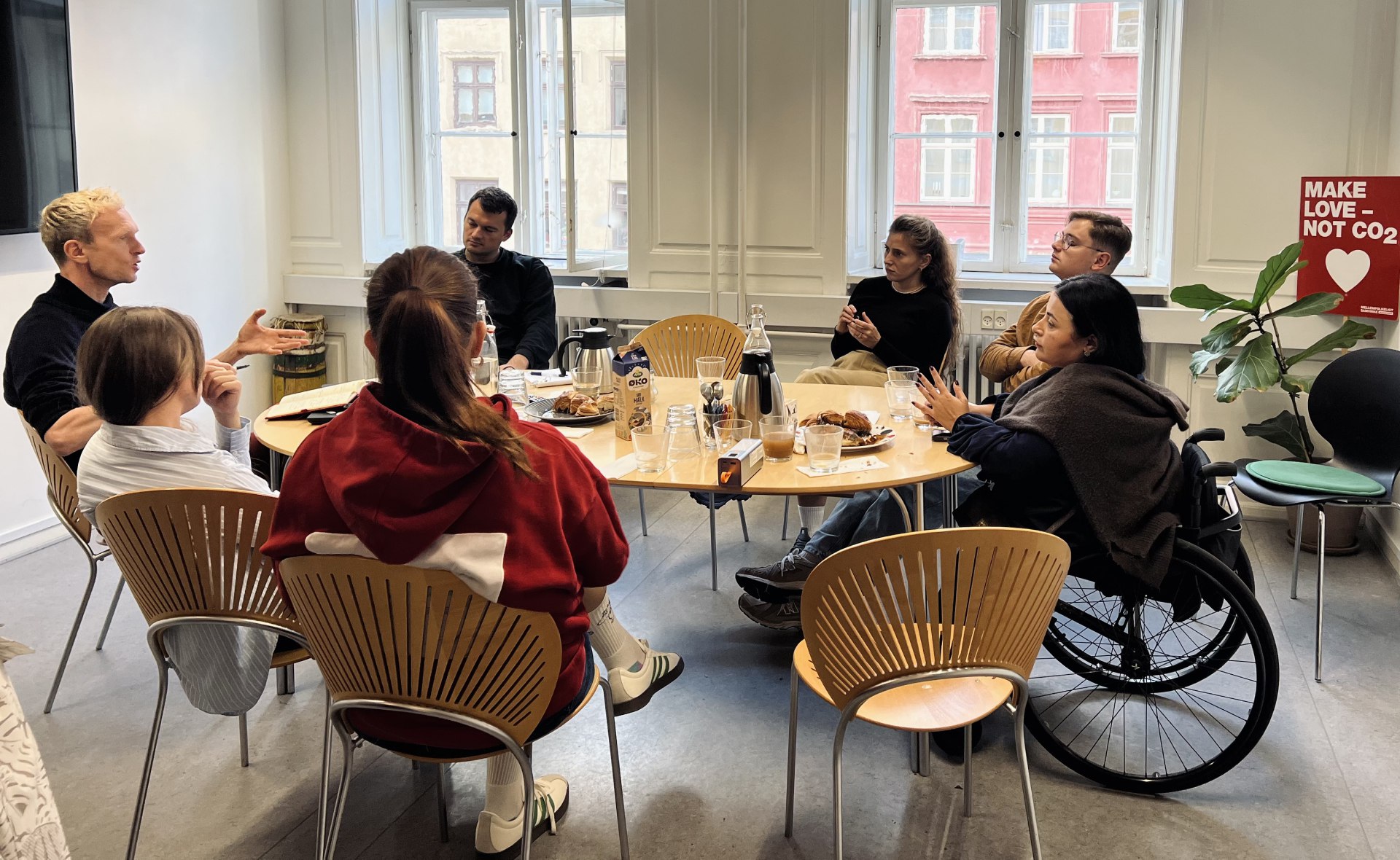
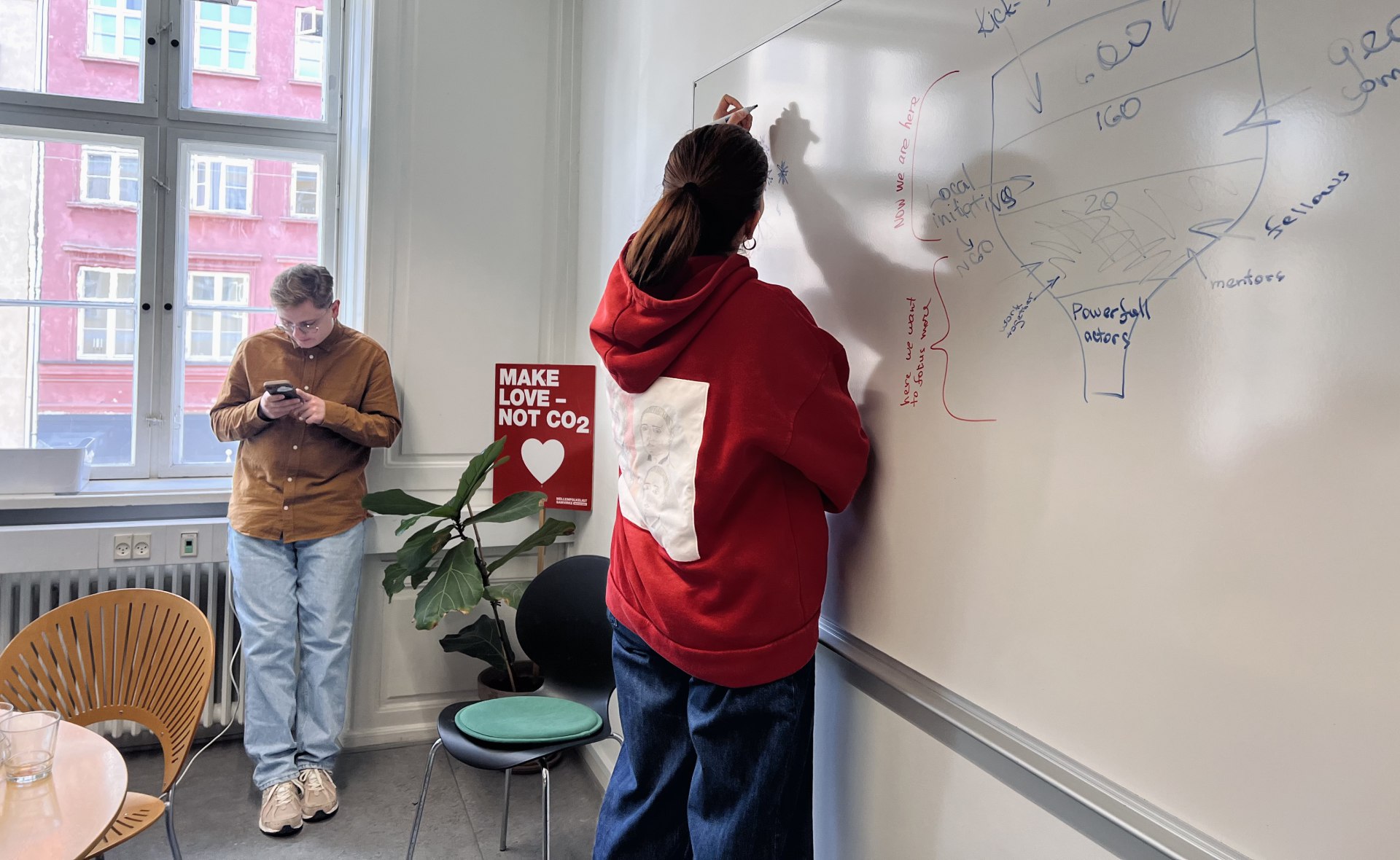
Another important area of partnerships that STAN develops is international visits. This year, together with “Zakhyst,” the organization visited Copenhagen, where they met at the ActionAid office and planned future cooperation. In turn, the ActionAid team organized a meeting at the Danish Ministry of Foreign Affairs to discuss the organization’s development, work with youth, and the Ukrainian context.
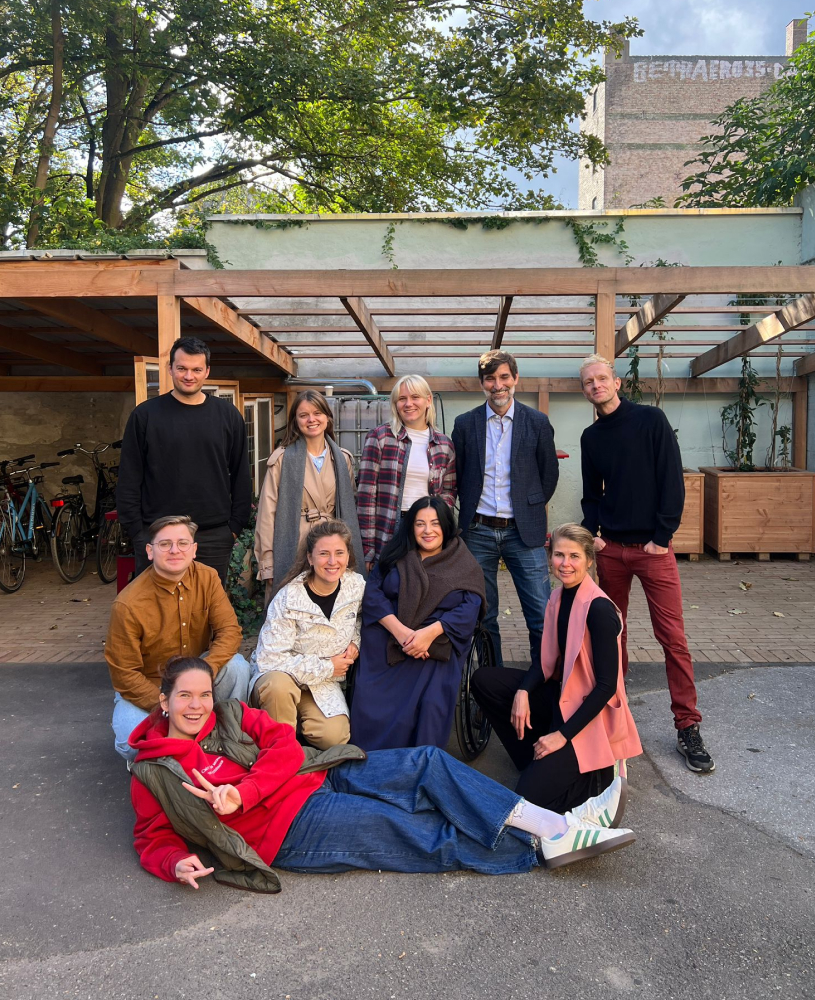
During another trip to Copenhagen, activists strengthened their knowledge of advocacy and movement-building, finding allies, as well as learning how to sustain or dismantle certain “pillars of power” and strengthen institutions.
“In Copenhagen, we worked on storytelling. And it turned out to be a powerful strategy. Storytelling works best when it is based on real experience — and every Ukrainian now has dozens of such personal stories. They can be about occupation, loss, combat. But each one should have a hero or heroine, a challenge they overcome, and a result that gives hope. Only then can you end with a call to action. In parliament, I opened the meeting precisely with a personal story about losing my brother in the war. And I saw how strongly it resonated with the group. For example, participants from Serbia came up to me and said: ‘We are ashamed. We didn’t know what was really happening in Ukraine. We have such propaganda that we thought it was “brother against brother” there,’” shares Anastasiia Netrebytska, a member of the STAN team, trainer, and facilitator of the YDA program.
In addition, ActionAid invited activists to attend the Danish People’s Summit, which also included representatives from Moldova, Georgia, and other countries. From STAN, the ambassador of their program, Kseniia Kolova, joined — she is now already practicing as a trainer within the program.
“During this event, participants staged a performance called ‘What’s in the Bags of Activists from Different Countries?’ It was very telling. For example, Kseniia took out a tourniquet and a power bank and explained why exactly these items were in her bag. Someone from Georgia had a large bottle of water to explain how, during protests, activists had to rinse their eyes after tear gas. And this is also important: ActionAid gives young people from Ukraine the opportunity to be heard in the world,” Maria explains.
In 2025, STAN also took part in a trip to Berlin. There, together with participants from other countries, the Ukrainian team worked on creating a guide with tools for working with youth abroad. This is significant because many people around the world still do not know how to work with Ukrainians after 2022, and often may unintentionally retraumatize them.
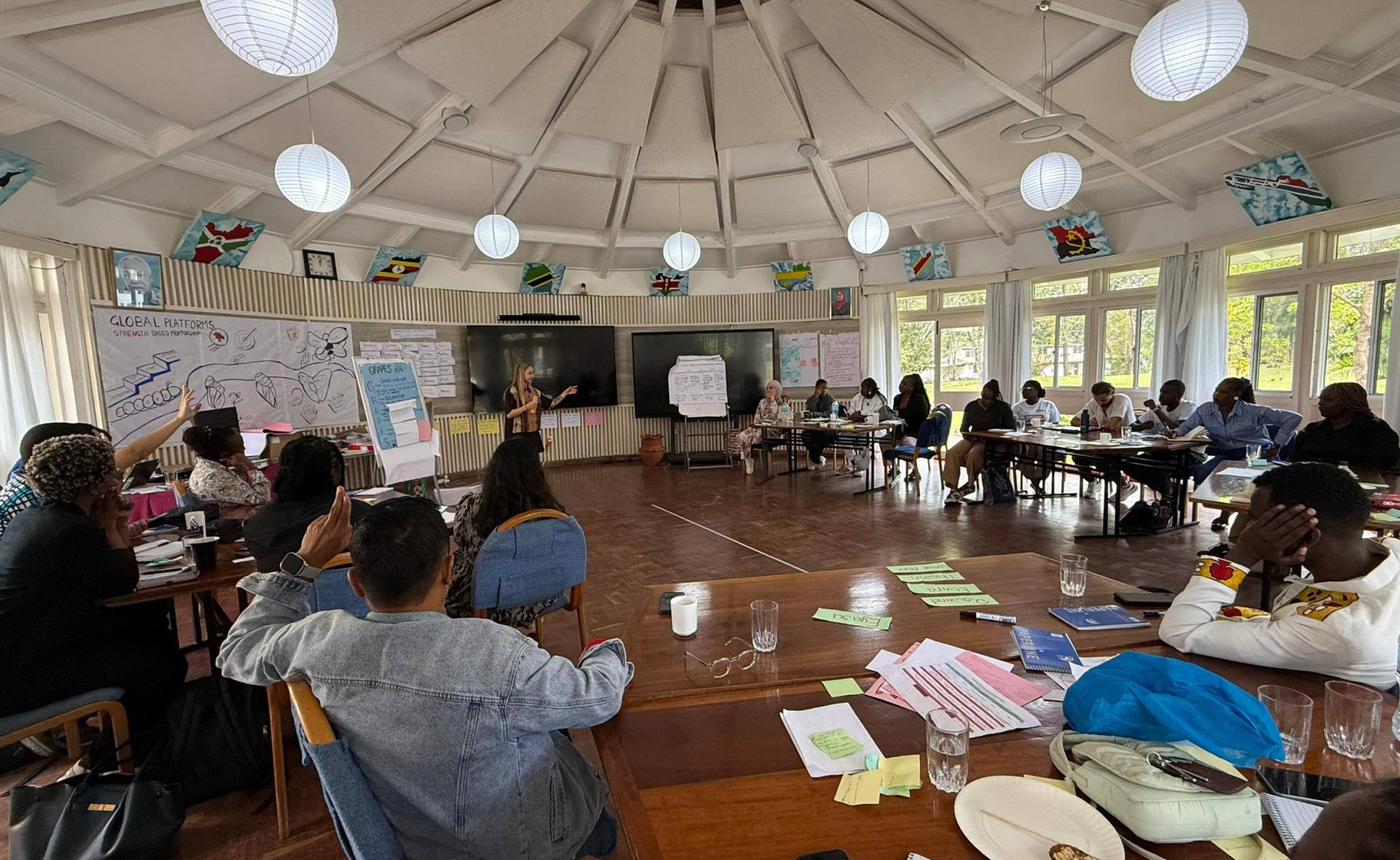
Another influential visit this year was a meeting in Tanzania with Global Platforms and activists from Georgia, Moldova, Lebanon, Palestine, Armenia, and African countries. There, they worked on the topic of mentorship based on the strengths of young people, studied methods and approaches, networked, and discussed how participants could cooperate with each other.
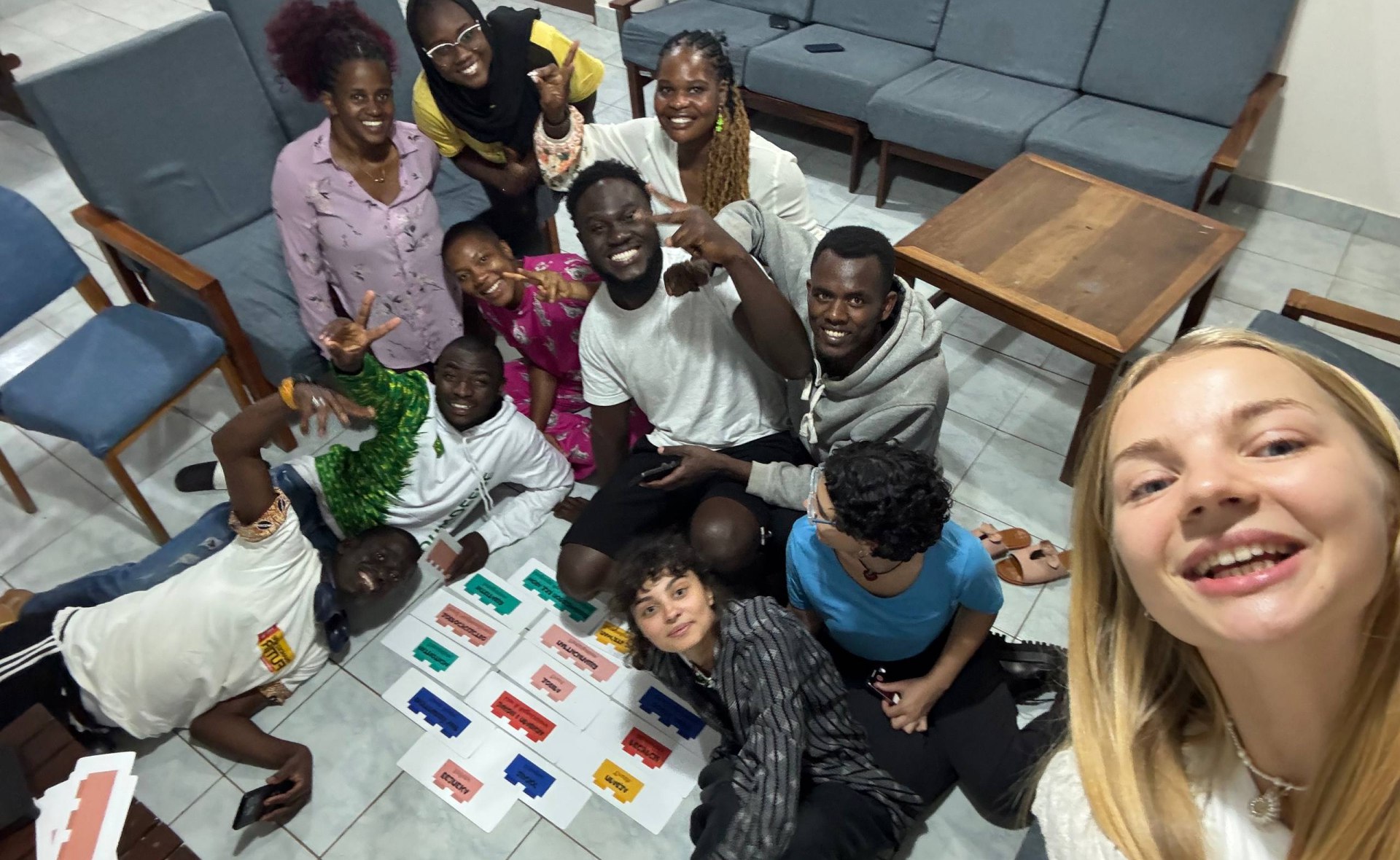
“I was invited to join the development of a session on the trauma-informed approach and to help the facilitators, because they didn’t have someone with that expertise. So I shared my experience of working with Ukrainian youth who are experiencing trauma and stress, and together we designed the session. I also shared a simple self-care practice, because in activist environments this topic is frequently ignored. Activists work a lot, and the risk of burnout is especially high. So we decided that this should be part of the training,” Anastasiia says.
Among the activities Anastasiia facilitated was the game “Open Dialogues about Peace,” developed by Yaroslav Minkin, founder and board member of STAN. It consists of cards and various concepts through which participants “build peace.” In this way, the STAN representative spoke about their work with youth.
“Even before we started playing, the topic of restoring peace touched many people. About ten people came, and we immediately began talking about what was happening in their countries: about brutality, injustice, risks for activists, elections, censorship,” Anastasiia recalls.
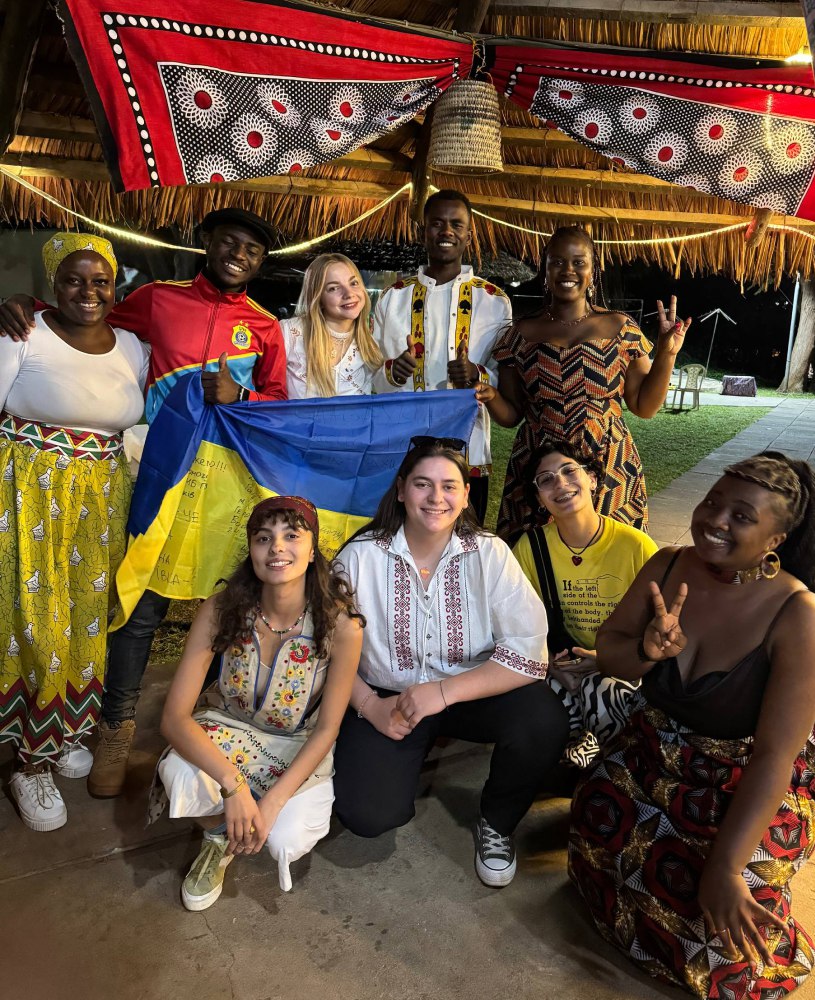
They also held an intercultural evening where countries presented themselves, and Anastasiia spoke, among other things, about the war in Ukraine.
One of the stories that stayed with her the most was told by a young man from Congo, whose home was destroyed twice. He lost his first home, then moved to a town for military families, which was also bombed. Later, he moved again and once more lost his home. Today, he is a climate activist working on flooding issues in his region.
“For me, this trip was truly a major discovery, because I knew very little about the African context. I had read some things, heard some things, but live communication gives a completely different understanding. They are now investing a lot in helping young people understand their role in decision-making processes. In African countries, there is a lot of injustice and corrupt systems that do not change,” Anastasiia shares.
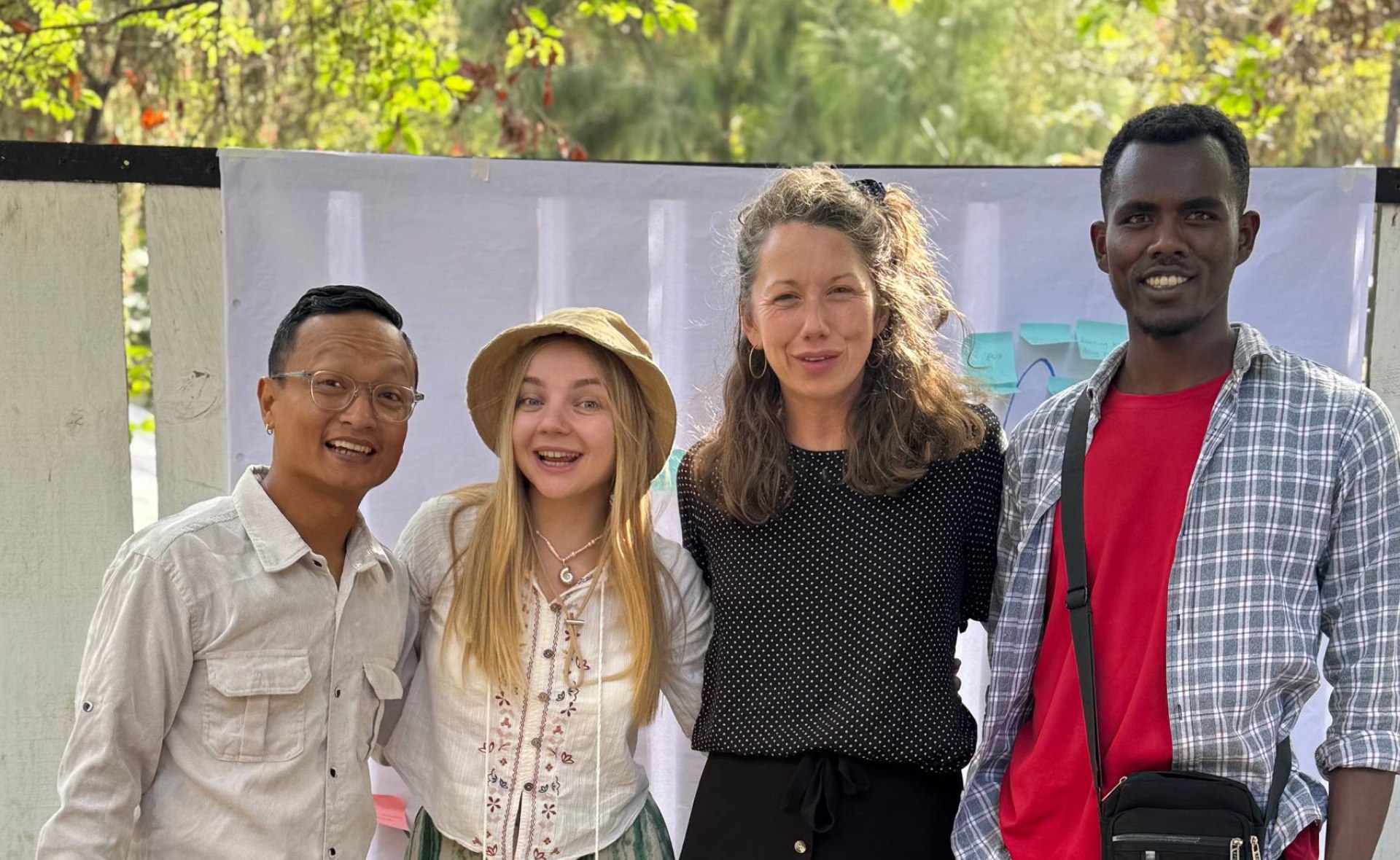
An interesting tool was shared by participants from Nepal — they stage performances on social issues and invite politicians and decision-makers to attend. It is something like forum theatre, where you can change the course of events during the performance. In the process, they show how a problem can be solved, and decision-makers see this live and can take it into practice.
Anastasiia also facilitated this year’s trip of STAN ambassadors and program participants to Moldova.
Over the course of a week, they explored local civil society organizations and various social spaces, including:
‣ “Woman to Woman,” which provides support and helps women implement their own initiatives;
‣ a queer café — a space for the queer community that hosts a festival and various artistic events;
‣ a social enterprise catering service that works with people with Down syndrome, training and employing them in a small town.
“After getting to know these projects, many people returned to Ukraine with their own ideas. For example, a girl from Odesa was inspired by the organization ‘Woman to Woman.’ She feels close to the topic of supporting girls from small settlements who need help with self-realization. She had been searching for ‘her’ topic for a long time, and after the visit she said that now she knows exactly what she wants to do,” Anastasiia explains.
One of the key stops was a trip to the EcoVillage run by the organization EcoVisio, which works with youth on climate and environmental awareness. They organized and implemented an eco-settlement project in a village: built a house from natural materials, created permaculture gardens, and grow fruits and vegetables without chemicals. When they saw that it worked and attracted attention, they also built a training center. Now they host groups and show how natural resources can be used.
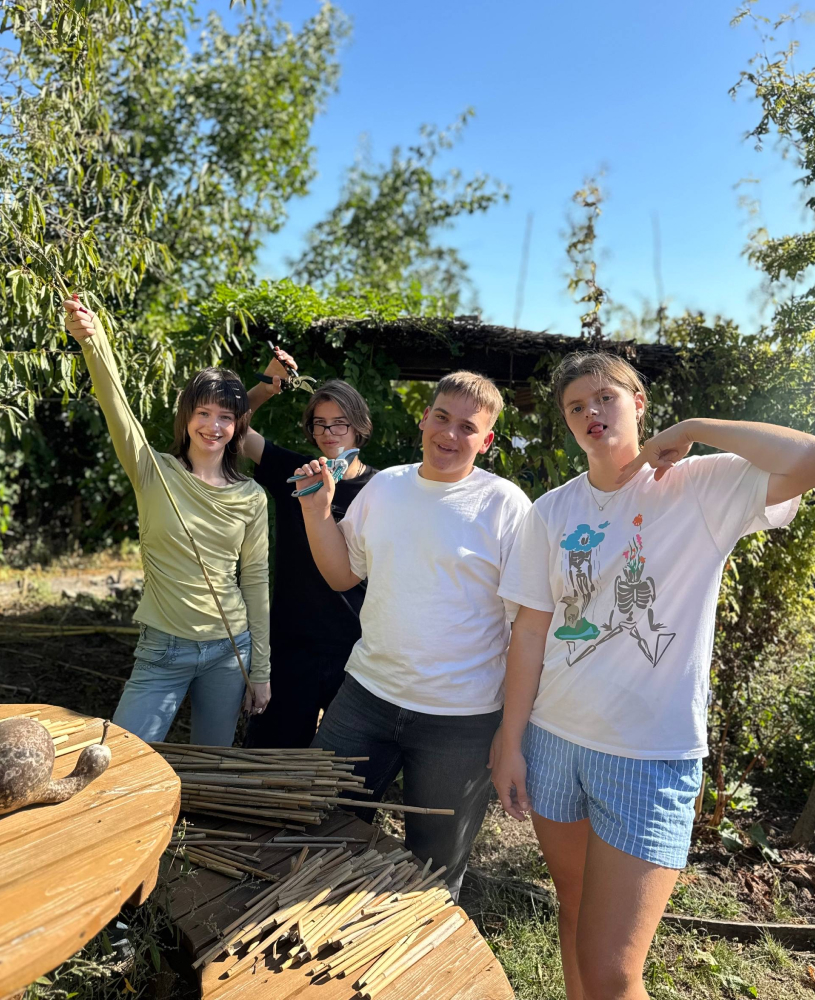
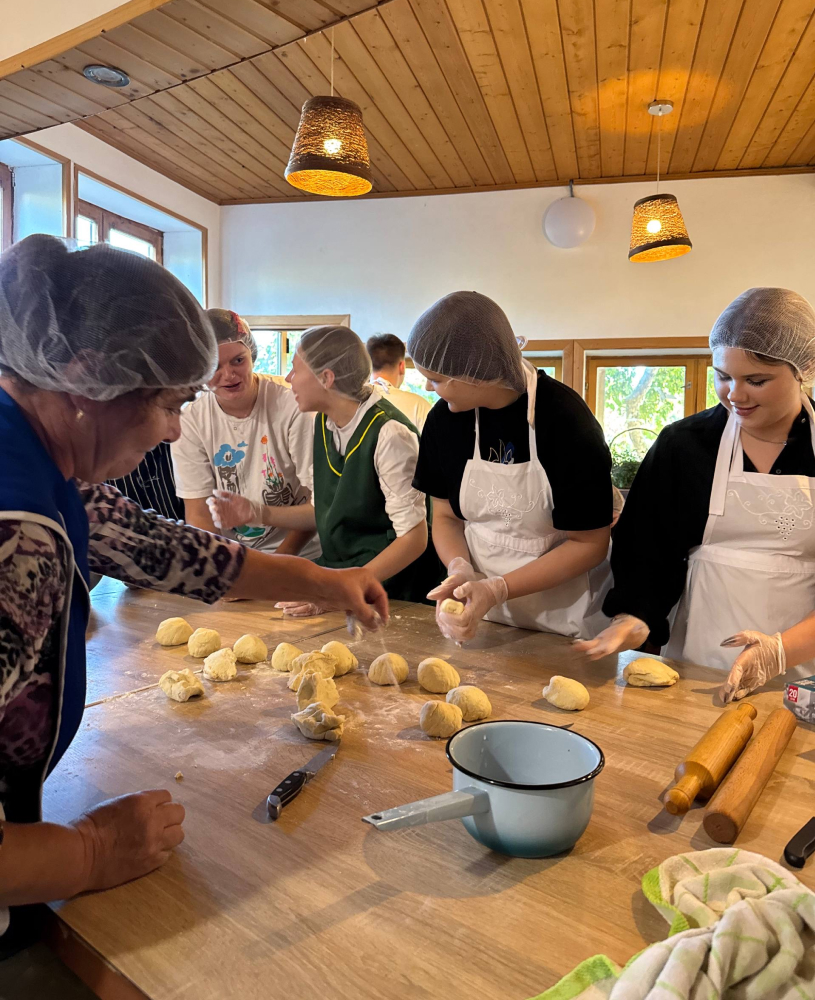
“We did team-building there in the format of making dumplings together. And a very emotional moment happened: one participant from Kherson shared her experience of occupation. She was 16 at the time, and together with her mother, they worked underground. Now she creates documentary short animations; the first one is called ‘Attack of Watermelons on Kherson’ — a metaphor for ‘bombs.’ And that evening, she wanted to show the film to the whole group. It deeply touched the owner of the EcoVillage, who said: ‘Invite me to Ukraine. I will help you rebuild your space,’” Anastasiia recalls.
International visits are not only about exchanging experience, but also about laying the groundwork for joint projects with civil society sectors in other countries. This happened after a trip to Croatia, where STAN studied the experience of the Human Rights House and the organization Documenta, which work on memorialization of war crimes. After that, they jointly applied for small funding and implemented a project — artists from Ukraine created works about the war and presented them at an exhibition in Vukovar.
The organization’s plans include a trip to Poland, where STAN will connect with Global Platforms Poland, as well as international training for trainers, which will take place in several stages, including in Germany and France.
“Developing international partnerships is important not only for Ukraine, but for everyone. We see that such partnerships are built not only by democratic states, but also by Russia, China, and others. We must remember this and build our own connections in order to jointly counter propaganda and the influence of those who are not interested in stability, human rights, and freedom,” Anastasiia concludes.
Strategic Goals of STAN and How to Achieve Them
In the near future, the organization primarily aims to form a high-quality alumni network for its programs and to further develop networking. So that in one, two, or three years there will be even more examples of young people uniting to solve problems at the community and state levels.
The second goal is to continue working within a strong coalition of partner organizations, and the third is to increase the number of cases that demonstrate what the team has been able to achieve in terms of changes in state policy.
“For this, it is important that donor funding for the civil society sector continues, and that people have the opportunity to take care of themselves. We are already discussing this with some international partners: that we cannot work ‘to the point of exhaustion.’ Another significant resource is human interaction without total aggression and distrust — both within civil society, between NGOs, and in interaction with the state. This is not a financial resource, but rather a moral readiness and understanding that the civil society sector is not about opposing someone, but about helping,” Maria adds in conclusion.

The project “Network for Democracy: Building the Future with Europe’s Leaders of Tomorrow” is implemented by STAN and ActionAid, in partnership with the Center for Social Transformations TENET, Insight, and the Chernivtsi Association Zakhyst, with support from the Ministry of Foreign Affairs of Denmark. It is part of the Young Diversity Ambassadors program.
This program supports youth and youth workers in strengthening social cohesion to create an inclusive, peaceful society, minimize conflicts between different groups, and accelerate the integration of internally displaced young people. It is implemented by STAN in partnership with ActionAid, with support from the Disasters Emergency Committee (DEC), Global Fund for Children (USA), Terre des Hommes (Germany), and IM Swedish Development Partner (Sweden).
Any opinions expressed in this publication belong to Platfor.ma and STAN and do not necessarily reflect the views of ActionAid or the Government of Denmark.