


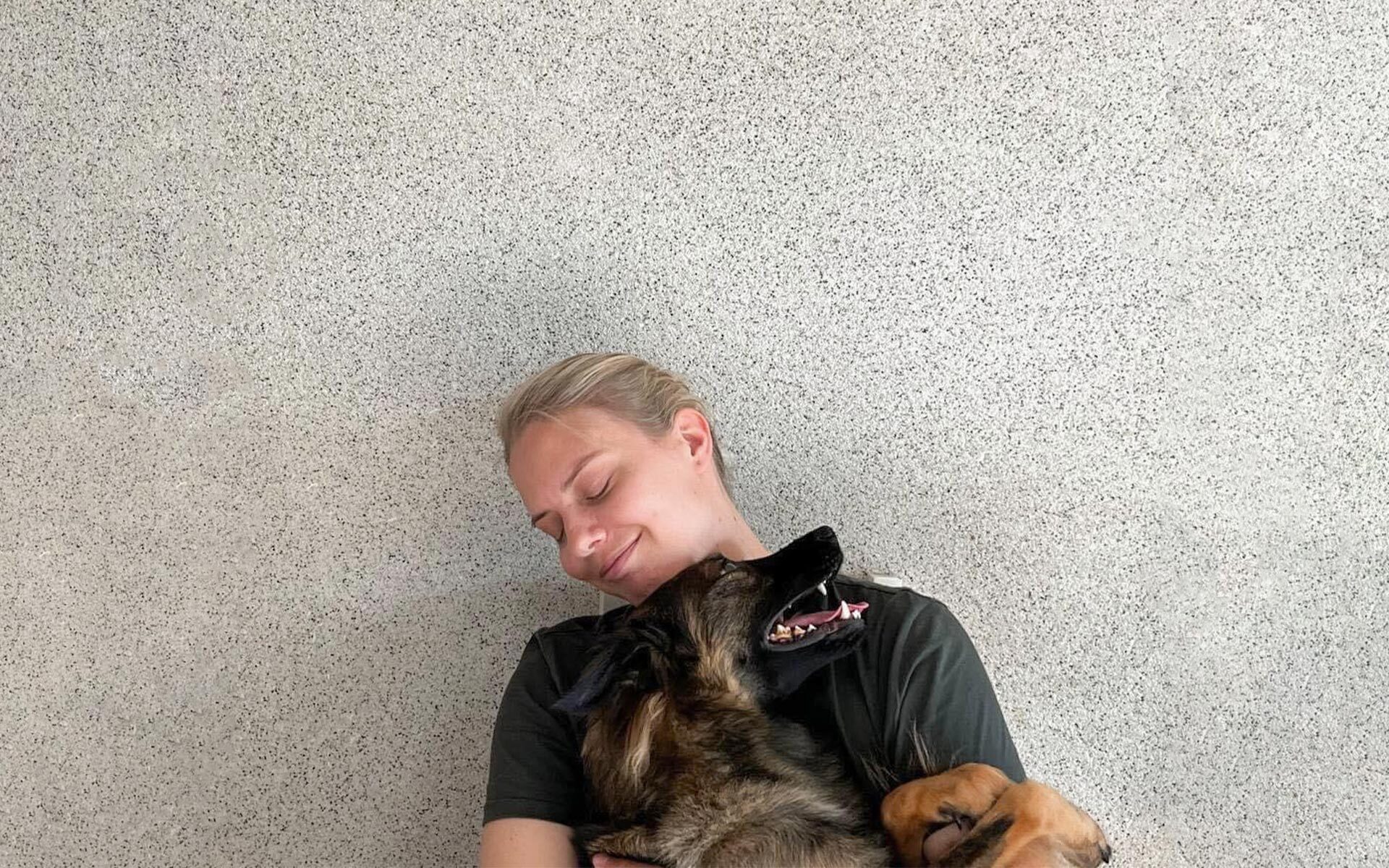
Before the full-scale war, art space Halabuda in Mariupol was the center of the local activism as long as a significant place in the town, that during the blockade saved the lives of people and animals. Halyna Balabanova, the founder of Halabuda told Platfor.ma how they cooked borscht in buckets for both female and male defenders, helped to evacuate zoo shops, and how they saved citizens.
You can also read this text in Ukrainian.
— What did you do first after begging for a full-scale invasion?
— My team and I gathered in Halabuda to blockade the windows and conducted coordinating meetings for almost all activists of Mariupol. At that time, I realized that some people will leave the city quickly, but some are ready for a long and victorious fight. We stayed in Halabuda till late at night, reconstructing the space, so it can be a storage for groceries and other stuff. All the materials and food were brought by Mariupol citizens, who remembered 2014-2015. Then I was thinking that soldiers will need the most help, not civilians. I didn’t believe that someone can destroy cities and kill civilians, as terrorists do. At that time, we made up a plan for how to make the nearest temporary bomb shelter usable and started to clear out a basement near Halabuda. Water and aid kits were brought there, as long as a lamp that worked from a generator.
Then in cooperation with local business settled 3 storage of groceries, medicines, hygiene products, and clothes. We started to give out accumulate help (not humanitarian, there wasn’t any humanitarian help in the city) to the armed forces and first victims. More and more people came to the space each day. After one of invasion the space was visited by up to 2000 people. During the month the shelter worked around 25 000 citizens received help as long as all members of the Ukrainian Armed Forces and volunteer soldiers, city, defending forces of city and region.
— How much have people helped you? What type of work did they have to do?
— Each day more and more volunteers came to help, and I transferred to positions that were crucial for survival and helping others – drivers, loaders, and coordinators of storage. 200 volunteers joined the organization during 1 month of work. We baked bread until we had gas and yeast then – on the electric stove which worked on a power generator made flatbreads (lavash). The bread was given out to soldiers and civils. Moreover, it was transported to Azovstal until we had an opportunity to get there. With the help of Karitasu’s (charity organization of Ukrainian Greek Catholic Church. — Platfor.ma) field kitchen we manage to cook hot food in the big cauldron for the police and for those soldiers, who were able to pick it up themselves. Also, the food and groceries were delivered to the biggest shelters, which were established by the initiation of Mariupol citizens (including Drama Theater).
Additionally, we added information brochures to every food pack, so citizens had at least any information.
— How did the work change with time?
— In a few days after the 24th of February houses of some volunteers were destroyed, thus they must live in Halabuda. Later we arranged 2 more shelters suitable for living. Mostly women, kids, elderly people, and volunteers. Of course, we tried to provide volunteers with hot food, medicines, and hygiene products.
Also, we helped deliver medicine to a hospital, later – bags for dead bodies. When the first victims (at first people from the houses around and then volunteers) of explosions near the previous art space we quickly arranged a medical corner with sanitized materials, a bright lamp, and surgical suture material. The team agreed to constantly have medical workers on duty –pathologist, dentist, and vet.
Every day our team organized trips outside the city to deliver aid and cooperation with the police. Other volunteers stayed in Halabuda to help people that were convinced we are a Red Cross organization. If talking honestly, I want to swear right now.
— What stories impressed you the most?
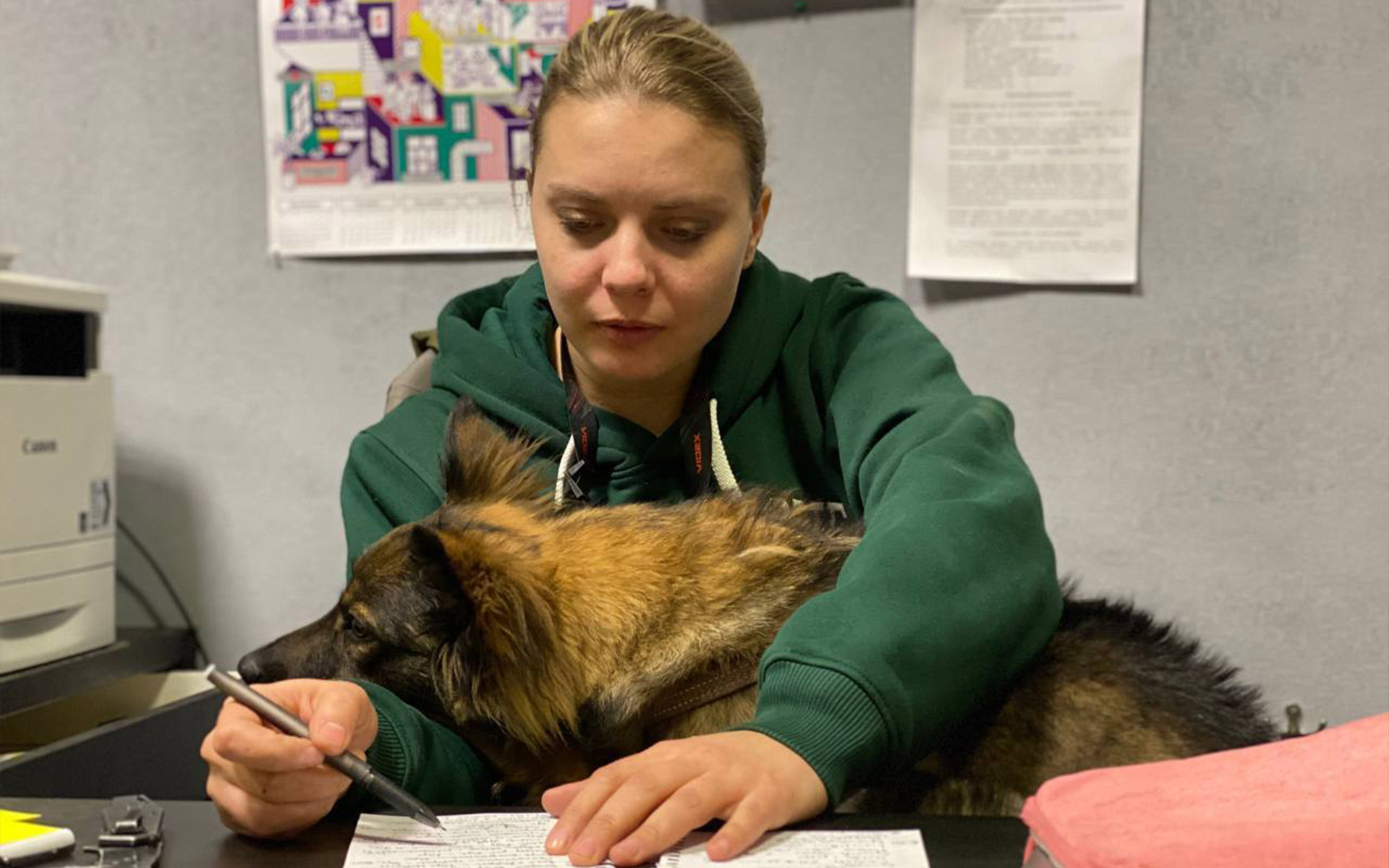
— At the beginning of March, my team and I realized that we are neighboring a giant zoo shop with stuck animals in it. Our business coach, Dasha, who has a cynologist education lead safe operation.
Unfortunately, all animals from first floor.: rodents and fish, water lizards, and snakes were dead. That’s not it, during these days rabbits began to eat hamsters and others too. But our brave girls went straight into the center of the giant mall where they were able to find still-alive dogs, a kitten, birds, and even turtles.
Volunteers looked after all these animals that were placed into Halabuda right after the saving. Small dogs got into the quarantine zone, the kitten was cured of its eye infection after which joined a group of other 10 cats and other volunteers lived in the art space after losing their homes. Big parrots screamed so loudly at that point that we needed to place them in the further part of the building. Moreover, when the team started to leave Mariupol, each one of the volunteers took an animal with them.
That’s how turtles ended up in Ivano-Frankivsk, kittens — in Lviv, parrots in Zaporizhia, etc. Only one fish didn’t survive evacuation.
— How did you try to run from being under military occupation?
— Some part of our team was able to leave by a green corridor the day before Russian soldiers get to the city center. However, as we get to know later, it wasn’t a green corridor at all. I was convinced to stay in the center until I knew about prisoning of Tayira and the Russian checkpoint block away from us. The decision to leave was made quickly, so after half an hour I was sitting in a car full of people and animals.
We spend one and a half days getting to Zaporizhia through destroyed checkpoints and villages. We didn’t go by the main corridor, but straight off the road. We ended up on a destroyed bridge, and unexpectedly found a different path that lead to Vasylivka. Additionally, all the way, I felt like a traitor for leaving my city.
— What are you doing now?
— When finally, 90% of our team successfully evacuated from the city, we regathered again. We thought that it is time to start new projects, not just focus on humanitarian aid. We found a suitable space in the center of Zaporizhia. Furthermore, we managed to conduct a lot of projects through both our initiation and with the help of donors and our friends. It was this until the bombs started to explode 10 meters away from us. This time we decided not to wait and leave immediately for another part of Ukraine after remembering the horrors of Mariupol.
In November, Halabuda reopened again in Cherkasy as a physical space with both online and offline events. Moreover, we are conducting educational courses and provide with expert opinions for the Lviv region’s youth and relocated activists. In the future, we plan to support Mariupol’s «diaspora».
Translation by Anastasiia Apanasenko. You can also read this text in Ukrainian. Please support Ukraine here.